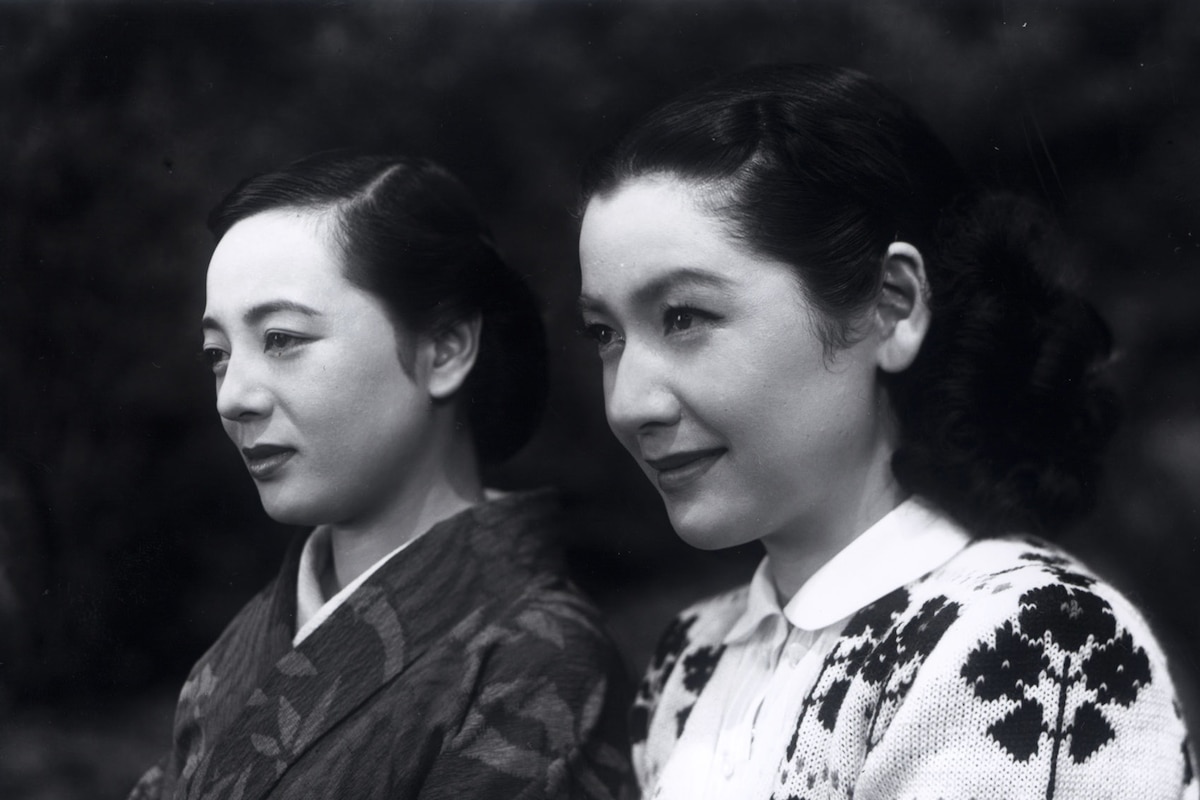
Early Summer (1951), like all of Yasujiro Ozu's greatest films, demonstrates the emotional power that can be attained through a simple, well-structured narrative, a restrained directorial style and unemphatic performances. Noriko (Setsuko Hara), still unmarried at the age of 28, is living with her brother Koichi (Chishu Ryu) and their parents (Ichiro Sugai and Cheiko Higashiyama). Her boss, Mr. Satake (Shuji Sano), offers to set her up with Mr. Manabe, a well-to-do businessman in his forties. However, against the advice of her family and seemingly on an impulse, Noriko decides instead to marry Kenkichi (Hiroshi Nihonyanagi), a neighbor whom she has known since childhood, even though his financial prospects are not nearly as strong.
Early Summer is a classic example of the "home drama," a Japanese film genre devoted to contemporary domestic life; the home drama was one of the Shochiku studio's specialties and Ozu its most revered practitioner. What sets Ozu apart from most other directors is his wealth of mundane details and the unhurried way in which his plots unfold, showing an unparalleled sensitivity at portraying daily life. The underlying thrust of this film is dramatic enough: the breakup of a family, which is the key theme of Ozu's work, as scholars such as Donald Richie and David Bordwell have pointed out. At the same time, the serious subject matter is balanced throughout with humor, from the childlike games of the adults (Noriko and her unmarried pal Aya's verbal sparring with their married friends, the adults in the Miyama household hiding pieces of cake under the table when a kid enters the living room) to the boys' potty humor and even some vulgar innuendoes having to do with clams. In that respect, Early Summer is a fully rounded articulation of its director's worldview, in the same way that The Wild Bunch is for Sam Peckinpah and Fanny and Alexander is for Ingmar Bergman.
Stylistically, the film is characteristically Ozu, from its exclusive use of straight cuts rather than wipes or dissolves, low camera setups for interior shots, and the frequent use of "pillow shots"--empty compositions of settings or objects that serve as transitions between scenes or pauses in the action. While Ozu is commonly associated with a static camera, this film also has judiciously placed camera movements, including a subtly expressive crane shot during the beach sequence. This is unquestionably one of Ozu's most visually fluent and confidently directed films.
Early Summer is also marked by excellent performances. At front and center is Setsuko Hara as the unwed daughter Noriko. Devoted, polite and modest, but at the same time independent-minded, Hara embodies the complex interaction of tradition and modernity in postwar Japan, and thus serves as the thematic fulcrum for this and the other Ozu films in which she appears. With her winning smile, it's not difficult to see why she was arguably the best-loved Japanese actress of her day and a figure of identification for many young Japanese women at the time. Ozu's favorite male actor, Chishu Ryu is fine in a somewhat unsympathetic role as the dour brother. Ozu fans may also recognize Cheiko Higashiyama (Noriko's mother) and Kuniko Miyake (Noriko's sister-in-law) from Tokyo Story (1953). Shuji Sano, who plays Noriko's boss, is a bit stiff compared to the other actors, though his awkward laugh does somehow fit his character. In the final analysis, I would rank Early Summer perhaps just a notch below Late Spring (1949) and Tokyo Story, which is to say that it is merely exceptional.
Criterion's new transfer is gorgeous, with rich contrast and detail. A few shots appear to be taken from inferior film elements, but overall the print is in good condition for a Japanese film of this vintage. The mono sound is clearly reproduced. Special features include: liner notes essays by Jim Jarmusch and leading Ozu scholar David Bordwell; a typically insightful audio commentary track by Donald Richie; and a 47-minute documentary entitled "Ozu's Films from Behind the Scenes," consisting mainly of a conversation between an actor/sound technician, assistant cameraman and producer involved with Ozu's films. While their recollections are invaluable, the style of the documentary too self-consciously imitates Ozu for my taste. The Criterion Collection is releasing a slew of great titles this year, but don't let Early Summer slip through the cracks--it's a must-have for any serious film buff and it repays multiple viewings.
For more information about Early Summer, visit Criterion Collection. To order Early Summer, go to
TCM Shopping.
by James Steffen
Early Summer on DVD
by James Steffen | October 15, 2004
SIGN UP FOR OUR NEWSLETTERS

CONNECT WITH TCM