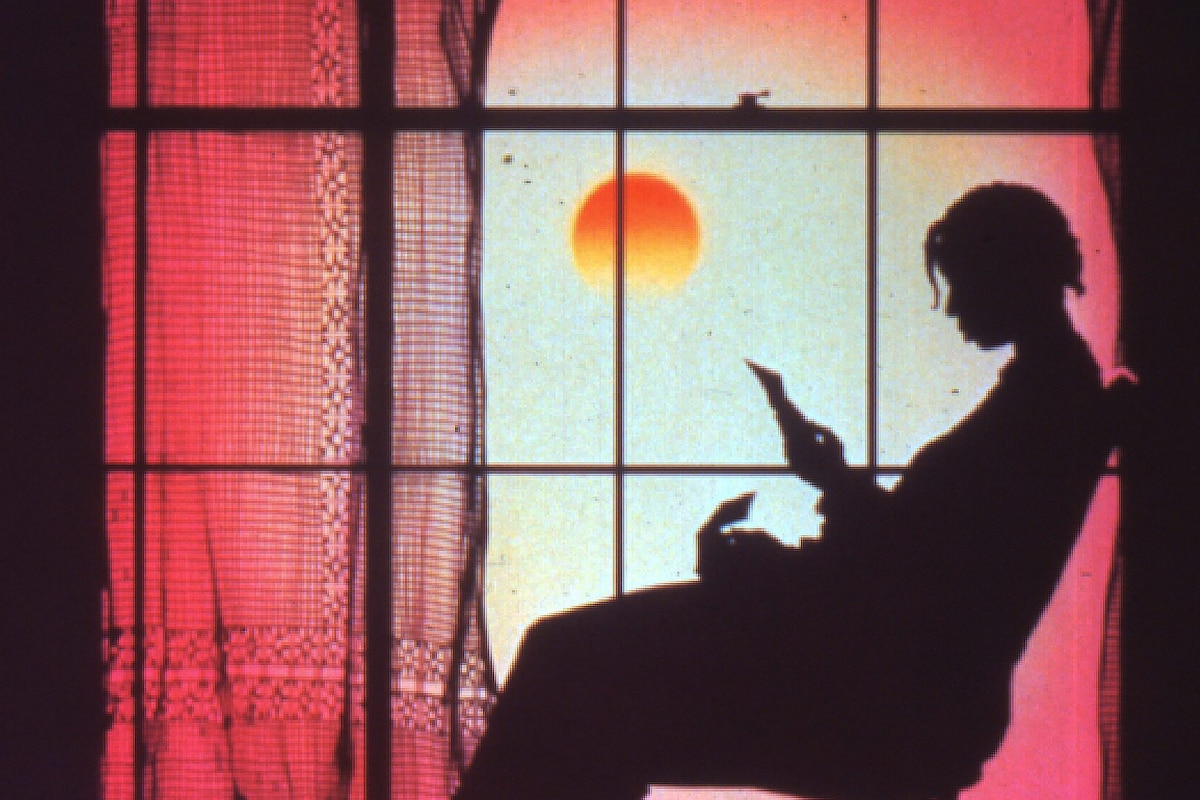
Racism, male chauvinism, incest, and domestic violence - all present in The Color Purple (1985) - were not typical Steven Spielberg themes in the mid 1980s. His recent directorial hits included Raiders of the Lost Ark (1981), Indiana Jones and the Temple of Doom (1984), and E.T. (1982). So Spielberg was definitely an unexpected choice to direct the screen adaptation of Alice Walker's novel. But after Amblin Entertainment partner Kathleen Kennedy handed him the novel to read, he knew it was the next challenge he wanted to tackle.
The film begins in 1909 when a teenaged Celie gives birth to two children and is married off to Albert. He despises Celie and actually wants her sister, Nettie, but the latter wants nothing to do with him. As an adult, Celie lives a life of servitude and abuse with Albert. She attempts to communicate with her sister through letters, but Albert intercepts Nettie's replies and deprives Celie's life of any human affection. She eventually meets the strong-headed Sofia who marries Albert's son from a previous marriage. Celie also befriends Albert's mistress, Shug, who inspires Celie to stand up to her husband and leave to find a life of her own.
Casting for the film brought two talented newcomers to the screen. Whoopi Goldberg was a well-known comedian at the time. She had read the novel and felt such a personal connection to it that she wrote Alice Walker requesting the role of Sofia. Walker saw her one-woman show in San Francisco and thought she would be perfect - for the role of Celie. Then, Spielberg invited Goldberg to perform a private show for him and some friends. To Goldberg's surprise, his screening room in his office complex on Universal's back lot was absolutely packed with people, including Walker, Quincy Jones, Michael Jackson, and Lionel Richie. Spielberg loved the act, including a parody of E.T., and asked her to play Celie even though she had her heart set on Sofia.
Tina Turner was strongly considered for the part of Sofia, but turned it down. Instead, the role went to a local TV talk-show host recommended by Quincy Jones. He was in a Chicago hotel room when he saw Oprah Winfrey on her TV show, AM Chicago. He immediately saw Winfrey as the stout, proud, no-nonsense Sofia. Her debut in this film helped catapult her to the national TV superstar status she enjoys today. Winfrey was apprehensive about her first movie role and felt a little intimidated by the director. And she did have some difficulty with a scene which required her to cry on cue, but quickly adapted to film acting and gave a natural performance.
In a key scene where Celie asserts her independence from Albert, after years of silence and humility, Sofia begins to quietly laugh. She was only supposed to have one line, but ended up improvising the scene. Winfrey told Thomas Morgan of The New York Times, "I remember having sat there for three days of shooting, rocking at the table. Mine was the last angle to be shot. I had been sitting there watching everybody else. I had a lot of time to think about the years Sofia spent in jail, and the thousands of women and men, all the people who marched in Selma, who were thrown in jail and what those years must have been like. Sofia finally speaking was a victory for all of us, and for me." Her improvised speech became one of the most memorable moments in the film.
Many critics immediately questioned what was a white male doing directing a passionately feminist story of a black woman in the Deep South. Some said it was a calculated attempt to win an Academy Awar®. Others believed he was seeking greater respect by making a mature film from a Pulitzer Prize-winning novel. In the biography Adult Truths by Joseph McBride, Spielberg himself explained that he wanted to "challenge [himself] with something that was not stereotypically a Spielberg movie. Not to try to prove anything, or to show off - just to try to use a different set of muscles."
Even Alice Walker had her doubts. When Spielberg was first proposed as director, she confessed that she was not familiar with his name and requested an interview with him. For the first time in eleven years, Spielberg had to pass an interview to direct a film. He visited her home in San Francisco with Quincy Jones and ultimately impressed the author. According to McBride's Adult Truths, Walker explained in her journal, "Quincy had talked so positively about him I was almost dreading his appearance - but then, after a moment of near, I don't know what, uneasiness, he came in and sat down and started right in showing how closely he had read the book. And making really intelligent comments." He had an "absolute grasp of the essentials of the book, the feeling, the spirit."
Despite Walker's approval, several groups adamantly contested the film when it went into release. One of the most vocal oppositions came from the Coalition Against Black Exploitation. This twenty-member group based in Los Angeles boycotted the film and organized picket lines outside theaters where it was being shown. The coalition accused the film of degrading black men, black children, and black families. The NAACP's Hollywood branch also asserted a similar protest. Many feminist groups, including Alice Walker herself, later criticized the film for downplaying the novel's lesbian themes as well as leaving out some of the more disturbing elements of the plot, such as Celie's molestation by her father in the beginning of the book.
Winfrey defended Spielberg to Lou Cedrone of The Baltimore Evening Sun declaring, "Spielberg said he couldn't include every incident, and that if he had, the film would've been too depressing. As it is, it's a joyous picture, a triumphant one. The essence and spirit of the book are there and that's most important." Winfrey also criticized those who claimed the film portrayed black males in a negative light. According to George Mair's biography Oprah Winfrey: The Real Story, Winfrey retorted, "The movie was not for or against men. It's egotistical and macho for men to even think it's about them. The Color Purple is a novel about women. If this film is going to raise issues, I'm tired of hearing about what it's doing to black men. Let's talk about the issues of wife abuse, violence against women, and sexual abuse of children in the home."
Most of the film's reviews, however, were very positive. Many critics put it on their top ten lists for 1985. It also received 11 Academy Award® nominations, famously winning none of them, including Best Actress for Goldberg and Best Supporting Actress for Winfrey and Margaret Avery. The film was nominated for Best Picture and also received nominations for its screenplay, cinematography, makeup, costumes, art direction, score, and original song. A nomination for Spielberg's direction, however, was shamelessly missing. He did not respond to the situation until after he won an award from the Directors Guild of America for the film. Only twice before had the DGA winner not won the Oscar® as well. After accepting the award, he told the press backstage, "Certainly anyone would feel hurt to be left out of a category of richly deserved nominations, but I'm not bitter or angry about it." Warner Bros. did not take the snub as well. The production studio issued a statement congratulating the nominees but adding, "At the same time, the company is shocked and dismayed that the movie's primary creative force - Steven Spielberg - was not recognized."
Despite all the controversy, audiences all over the world embraced The Color Purple. It grossed over $142 million at the box office worldwide with a production cost of only $15 million, setting it among the top grossing films of the year.
Producer: Peter Guber, Quincy Jones, Kathleen Kennedy, Frank Marshall, Jon Peters, Steven Spielberg
Director: Steven Spielberg
Screenplay: Menno Meyjes, Alice Walker (novel)
Cinematography: Allen Daviau
Film Editing: Michael Kahn
Art Direction: Robert W. Welch
Music: Quincy Jones, Andrae Crouch, Jeremy Lubbock, Caiphus Semenya, Rod Temperton
Cast: Danny Glover (Albert), Whoopi Goldberg (Celie), Margaret Avery (Shug Avery), Oprah Winfrey (Sofia), Willard E. Pugh (Harpo), Akosua Busia (Nettie).
C-152m. Letterboxed. Closed captioning.
by E. Lacey Rice
The Color Purple
by E. Lacey Rice | May 25, 2004
SIGN UP FOR OUR NEWSLETTERS

CONNECT WITH TCM