In the late 1940's, after nearly two decades of portraying intense, vivid characters in such films as High Sierra (1941), The Hard Way (1943), and Road House (1948), actress Ida Lupino and her then-husband Collier Young formed their own production company, The Filmakers, and began turning out a series of remarkable low-budget films dealing with social issues. On the very first production, Not Wanted (1949), Lupino, who co-wrote the screenplay and was co-producing, took over as uncredited director when Elmer Clifton had a heart attack. Eventually, she would direct all six films produced by The Filmakers. The provocative subjects of the films were shocking for the era: unwed pregnancy, rape, bigamy. Shot on location in black-and-white, with mostly novice actors, they nevertheless had an immediacy and impact that few of the more polished studio products were able to achieve. Lupino told an interviewer that she wanted to "do pictures with poor, bewildered people, because that's what we are."
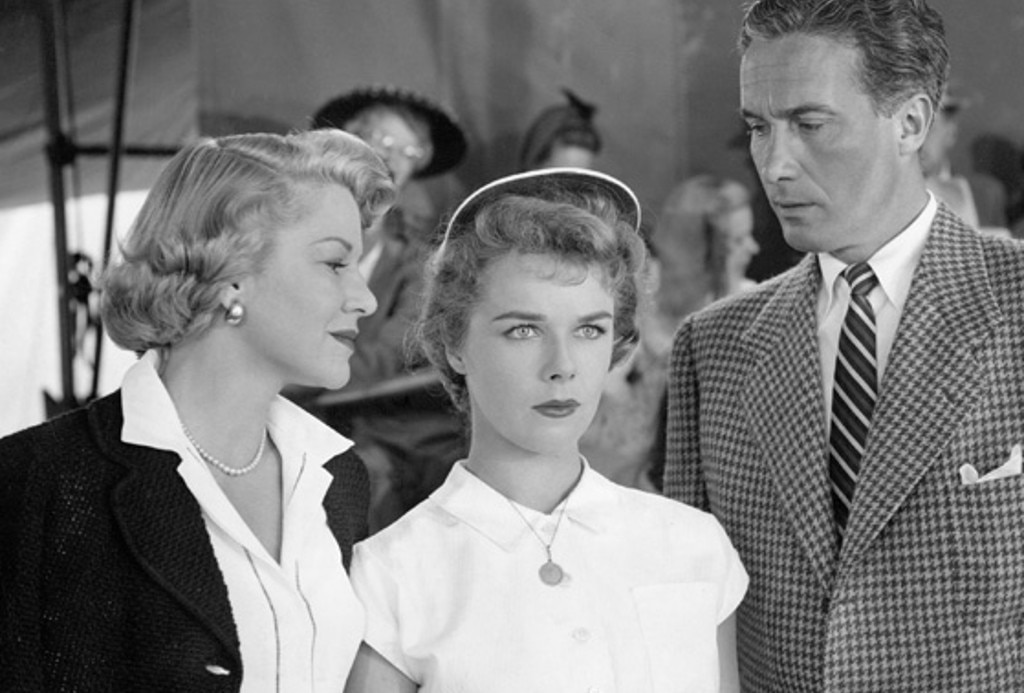
Hard, Fast, and Beautiful (1951) is about a talented tennis player whose greedy, ambitious mother pushes the girl up the ranks in professional tennis. Lupino later said that the characters were based on fact, but would not reveal who the real-life models were for the tennis champ and her grasping mother. She did say that the daughter abandoned her career though.
Sally Forrest, who had starred in two previous Lupino films, Not Wanted as the unwed mother, and Never Fear (1949) as the polio-stricken heroine, played Florence, the young tennis champ. Most of the remaining cast was made up of lesser-known character actors and newcomers. (Lupino herself and actor Robert Ryan made unbilled cameo appearances in Hard, Fast, and Beautiful as audience members at a tennis match.) But Lupino was lucky to have the services of Oscar®-winning actress Claire Trevor as the mother, Millie Farley. Trevor was a veteran of the same kind of tough, world weary roles Lupino had played, and she resisted any attempt to soften Millie's hard edges, while making her pitiable in her ruthlessness and drive.
The Filmakers' films had been distributed by RKO. Eventually, Lupino's partners in the company decided to try distributing on their own, but the effort was unsuccessful, and the company folded after The Bigamist (1953). Lupino turned to the small screen, and had a long and successful career as a television director. She also acted sporadically, both in films and television. She directed one last (atypical) feature, The Trouble with Angels (1966).
With the advent of the women's movement, some feminists tried to claim Lupino as one of their own, a label which Lupino herself rejected. And indeed, her Filmaker films hew very closely to accepted 1950's conventions of the role of women. It may be more accurate to call her work "humanist." In an appreciation written after Lupino's death in 1995, director Martin Scorsese wrote of her films, "they addressed the wounded soul and traced the slow, painful process of women trying to wrestle with despair and reclaim their lives. Her work is resilient, with a remarkable empathy for the fragile and the heartbroken. It is essential."
Director: Ida Lupino
Producer: Collier Young
Screenplay: Martha Wilkerson, based on a novel by John R. Tunis
Cinematography: Archie Stout
Editor: George C. Shrader, William Ziegler
Art Direction: Albert S. D'Agostino, Jack Okey; Set Decoration, Harley Miller, Darrell Silvera
Music: Roy Webb
Principal Cast: Claire Trevor (Millie Farley), Sally Forrest (Florence Farley), Carleton G. Young (Fletcher Locke), Robert Clarke (Gordon McKay), Kenneth Patterson (Will Farley), Marcella Cisney (Miss Martin).
BW-78m.
by Margarita Landazuri
Hard, Fast and Beautiful
by Margarita Landazuri | May 24, 2004
SIGN UP FOR OUR NEWSLETTERS

CONNECT WITH TCM