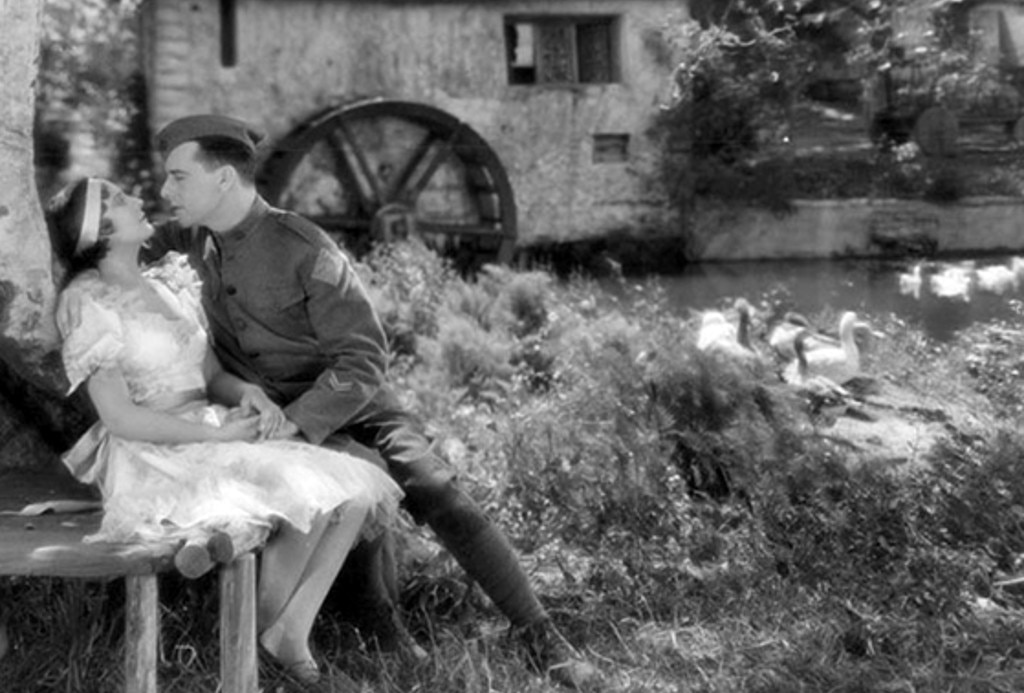
Harry Langdon was long considered an also-ran after silent comedy's holy trilogy of Chaplin, Keaton, and Lloyd, but during his heyday the soft-faced clown was still an impressive box office draw, having earned a $1.5 million personal fortune from films like The Strong Man (1926). But by the sound era his star had begun to fade, a letdown accelerated by Langdon's complicated personal life (after being blackmailed by the husband of his still-married lover, she ended up marrying Langdon, divorcing him, and suing the now penurious actor for alimony.) Desperate for work, in May 1930 Langdon signed on for his first sound picture Soldier's Plaything, a lark about two buddies (Ben Lyon and Langdon) who join the Army to flee a sticky situation back home. Langdon, with the auspicious help of director Michael Curtiz, did the best he could with the movie's broad gags -- some suspiciously recycled from Langdon's Mack Sennett short All Night Long (1924) -- but the movie tanked at the box office. Langdon had to muddle through a few more lean years before regaining some footing in Hollywood, but the adroit Curtiz went on to direct Casablanca (1942).
By Violet LeVoit
A Soldier's Plaything
by Violet LeVoit | October 22, 2013
SIGN UP FOR OUR NEWSLETTERS

CONNECT WITH TCM