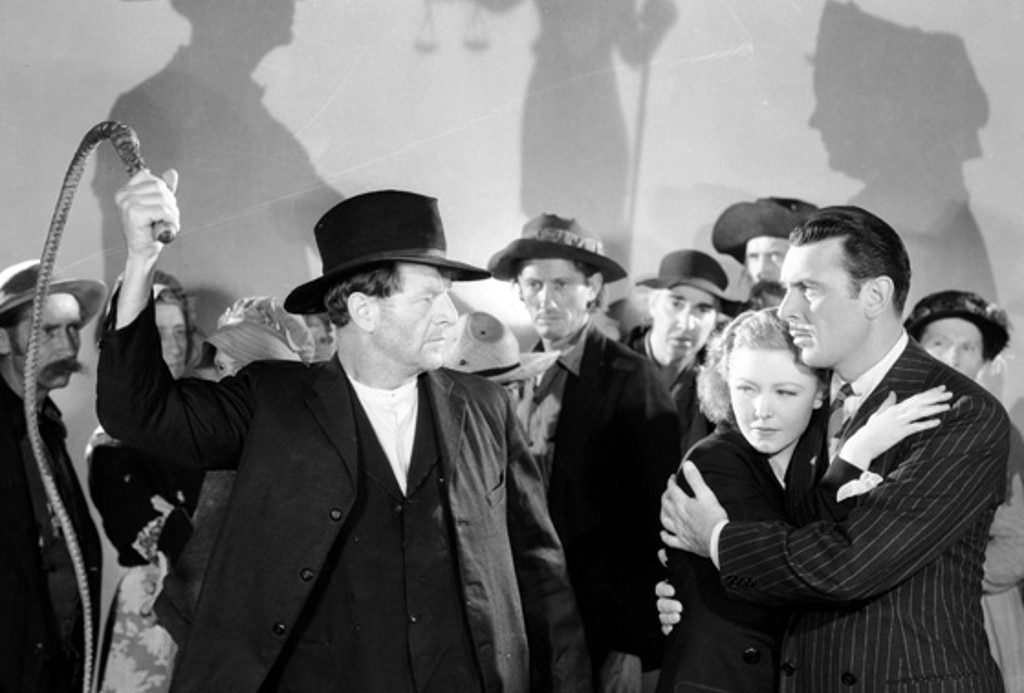
The November 1935 murder trial of 21 year-old Wise County, Virginia schoolteacher Edith Maxwell, who would serve four years in prison for slaying her blacksmith father in a purported act of self-defense, was tailor-made for Warner Brothers, a studio whose stock-in-trade was fact-based motion pictures "torn from the headlines." Originally adapted as a vehicle for Bette Davis, Mountain Justice (1937) was moved farther from the facts by rewrite man Norman Reilly Raine; to discourage the possibility of a libel suit, the pivotal character (renamed "Ruth Harkins") was made a nurse rather than a teacher. When Warners declared Davis too upmarket to play an Appalachian (the studio plugged her instead into Lloyd Bacon's Marked Woman, which also ends in a dramatic trial), stage actress Josephine Hutchinson was cast in her stead. George Brent was brought onboard to play a big city lawyer drawn to the case and the supporting cast was filled out by Margaret Hamilton, Guy Kibbee, Fuzzy Knight, and Robert Barrat (as Ruth Harkins' whip-wielding father). Director Michael Curtiz squeezes the drama for its weight in superstition and xenophobia while pushing the narrative towards a climactic mob scene that puts Mountain Justice in the company of Fritz Lang's Fury (1936) and Mervyn LeRoy's They Won't Forget (1937). 20th Century Fox rushed into production their own spin on the Maxwell case, Lewis Seiler's Career Woman (1936), which beat Mountain Justice into cinemas by four months.
By Richard Harland Smith
Mountain Justice
by Richard Harland Smith | October 10, 2013
SIGN UP FOR OUR NEWSLETTERS

CONNECT WITH TCM