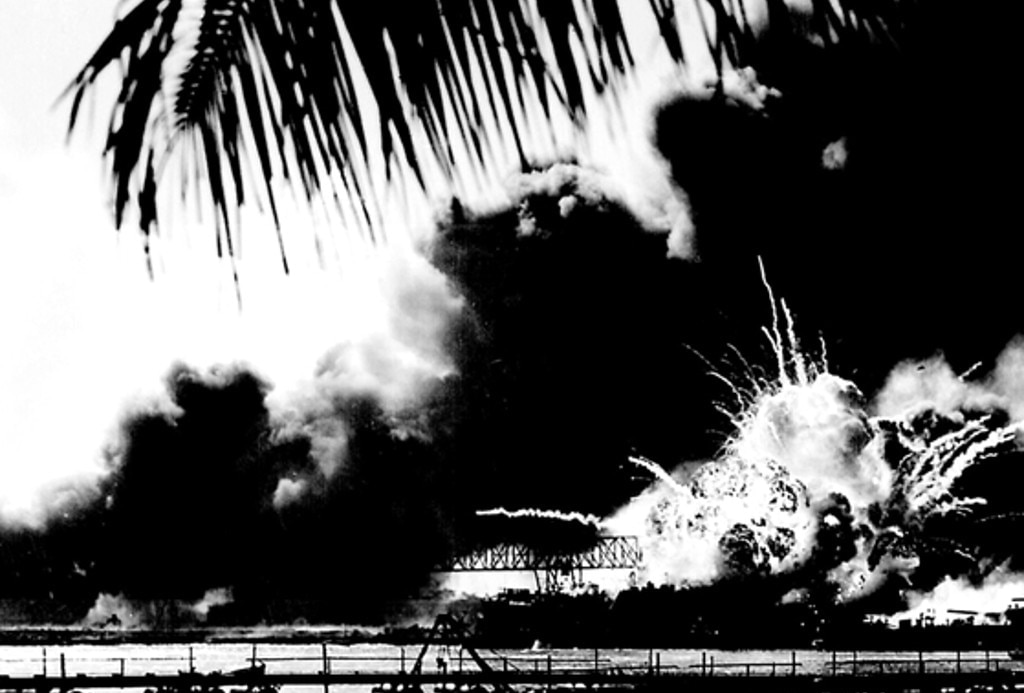
Though he specialized in feature films that were critical of politicians and big business, Frank Capra was one of the first Hollywood personalities to volunteer for the war effort after the Japanese bombing of Pearl Harbor on December 7, 1941. Too old for active duty, Capra (who had emigrated with his family from Sicily in 1903) was put to work doing what he did best - making films. Assigned as a major to the Office of War Information, Capra reported directly to Chief of Staff George C. Marshall, for whom he directed seven informational featurettes whose aim was to explain to the American G.I. Why We Fight (1942-1945). Capra's first, Prelude to War (1942), won the 1942 Academy Award for Best Documentary and was followed by The Nazis Strike (1943), Divide and Conquer (1943), The Battle of Britain (1943), The Battle of Russia (1943), The Battle of China (1944) and War Comes to America (1945). The final entry in the series, War Comes to America details the creation of the United States of America, its forging as a republic in the crucible of conflict (curiously left out of the conversation, the American Civil War), and the guiding principles of "one nation, indivisible with liberty and justice for all." With narration split between Walter Huston and Lloyd Nolan, War Comes to America is unbridled patriotism, lyrical, and rhapsodic. Screenwriters Julius and Philip Epstein were the authors of Michael Curtiz's wartime classic Casablanca (1942).
By Richard Harland Smith
War Comes to America
by Richard Harland Smith | October 10, 2013
SIGN UP FOR OUR NEWSLETTERS

CONNECT WITH TCM