Behind the Camera on PAPILLON
Lack of a complete script before shooting began was the least of the many problems that plagued the production of Papillon. The script required big scenes with hundreds of extras and supporting players, shot on location in Spain, Guyana and, for most of the shoot, Jamaica, where tough jungle conditions and bad weather caused several costly delays.
The film was shot in sequence, unusual for a production of this size but allowing McQueen the luxury of building his character in stages.
The prison set was the largest in the film, an 800-foot expanse resulting from two years of research by production designer Anthony Masters. It was built near Falmouth on the north shore of Jamaica.
The crew took advantage of the abundant marijuana that was readily available in Jamaica. Not content to merely smoke it, they boiled it down to mix in drinks at a party. Several people got sick from that, particularly Schaffner, causing a day's delay in shooting.
Reportedly, the producers began taking raw footage to backers in Paris and getting just enough cash to keep things rolling. For a period of three weeks, money ran out and nobody got paid, and it looked as though the production would be shut down altogether. When McQueen found out, he told the producers, "Unless everyone gets paid, I don't work." The situation improved after that.
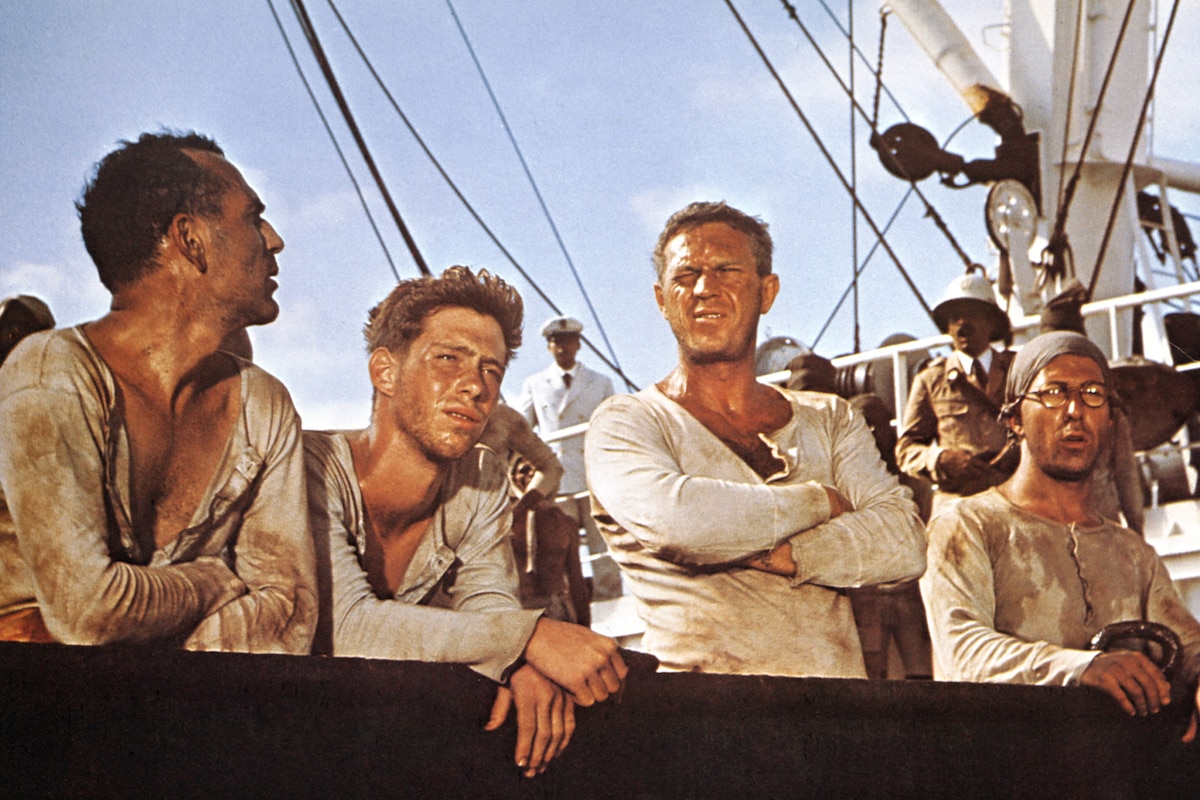
Hoffman became angry and uncooperative for a period of time after he discovered that although he and McQueen would receive equal billing, he was actually making $750,000 less than his co-star. Although they didn't really speak to each other between takes or after principal photography was completed, they behaved professionally on the set for the most part.
McQueen and Hoffman did have some difficulties, despite their determination to behave professionally toward each other. When Hoffman began one speech at breakneck speed, McQueen stopped him and said, "Less, man, less. Toss that shit out, you don't need it. Keep it simple." Another time, Hoffman invited a few close friends to watch a day's filming. McQueen had them thrown off the set. Nevertheless, Hoffman called their relationship "friendly rivalry" and later said his co-star "was a wonderful guy. Off screen, he was the nicest, classiest man. On the set itself he became very intense." Another time, however, he referred to McQueen as "that son of a bitch."
When Hoffman's driver hit a pedestrian and caused serious injury, the actor, not the driver, began receiving death threats from the locals.
Theft and pillage by the locals were a constant problem. When the production ended, before properties could be packed and shipped, locals raided and stripped the set, making off with costumes (600 pairs of shoes alone), machinery, and lumber. In all, $30,000 was lost.
Schaffner would get up at four in the morning and meet with Trumbo for an hour or so for a last look at the pages to be filmed that day. When the day's shooting was finished, the director returned to the hotel to meet with the writer until late in the night to see what he had written that day.
Trumbo never grumbled about the demanding schedule, but illness forced him to leave the production before the script was completed. He was found to have lung cancer, scotching any possibility that he could return to the set after visiting his doctors in California. The script was completed, under a fortuitous arrangement with the Writers Guild, by Trumbo's son Christopher, who already had one movie and some TV credits by that time.
Hoffman had to wear special contact lenses to balance his vision, which was severely distorted by the Coke-bottle glasses his character was required to wear.
Schaffner and editor Robert Swink had to cut the film under great pressure from the producers and backers in order to have it ready for simultaneous holiday-season openings in New York, Paris and Tokyo.
Charriere was present for the shoot in Jamaica, but he died of lung cancer in July 1973, a few months before the film was edited and released. He never got to see the finished product.
by Rob Nixon
Behind the Camera - PAPILLON (1973)
by Rob Nixon | September 15, 2004
SIGN UP FOR OUR NEWSLETTERS

CONNECT WITH TCM