James Hilton published Random Harvest in 1941. Like his earlier
books Goodbye, Mr. Chips and Lost Horizon, it became a
runaway best seller.
Hilton took the title from a British war report: "According to a
British Official Report, bombs fell at random." He motivated the
connection by naming the protagonist's family manor Random
Hall.
MGM bought the rights to Hilton's novel for $50,000 the year it came
out, thinking it might be a good vehicle for contract star Spencer
Tracy.
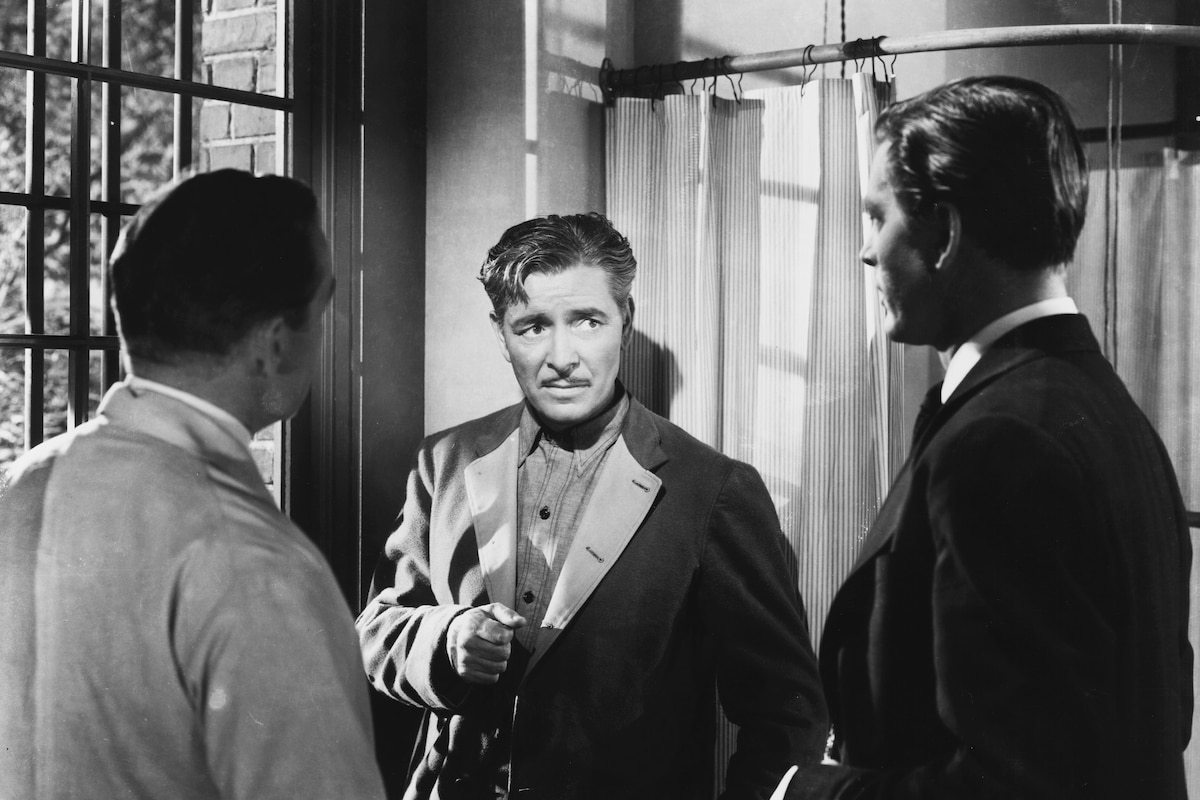
After notable hits in the '30s -- including the first Bulldog Drummond
film (1929), A Tale of Two Cities (1935), Lost Horizon (1937)
and The Light That Failed (1939) -- Ronald Colman's career had
faltered when his first two films of the '40s, Lucky Partners (1940)
and My Life With Caroline (1941), fared poorly with fans and
critics. Now in his '50s, Colman feared his career was drawing to a close
until he scored a hit with George Stevens' The Talk of the Town
(1942). The film put him back on the radar and encouraged MGM to cast him
in his most popular film of the decade, Random Harvest. It was his
first MGM film since A Tale of Two Cities seven years
earlier.
When Colman's services became available after the success of Talk of
the Town, MGM dropped plans to star Tracy in Random Harvest and
rushed to sign Colman instead.
Colman's life paralleled the character's in many ways. Both had grown
up in the same part of England. Both had served in World War I and been
released with medical discharges (Rainier, a shellshock victim; Colman with a shattered
ankle). Both had faced postwar life with a degree of alienation and a
sense of loss and had overcome those feelings through artistic work:
Charles as a writer; Colman as an actor.
Colman had been one of Greer Garson's idols when she was a young girl. She was delighted with the chance to finally work with him.
Both Colman and Garson had scored hits in earlier adaptations of
Hilton's works: Colman in Lost Horizon (1937) and Garson in Goodbye,
Mr. Chips (1939), which made her an overnight sensation in her first
American film.
The other plum role in the film was Colman's fianc¿ Kitty. LeRoy
cast young Susan Peters, hoping he could mentor her to stardom as he had
done with Loretta Young, Ginger Rogers and, most notably, Lana Turner.
Although she would turn in a fine performance and win an Oscar®
nomination, her career would be cut short a few years later when she was
paralyzed in a hunting accident. She played a few roles in a wheelchair --
including the title heroine of Miss Susan (1951), a television
series about a lawyer detective that preceded Raymond Burr's
wheelchair-bound Ironside by almost two decades. -- before she died
in 1952 at the age of 31. Some observers suggested she had died of a
broken heart.
Shortly after Franklin signed Peters for the role, MGM hired a young
Australian actress named Ann Richards, who looked enough like Garson to
have been her younger sister. Since Kitty's resemblance to Paula was a key
plot point, Franklin told Richards that he should have waited and cast her,
but he wasn't going to go back on his agreement with Peters. Instead, he
cast Richards as another family member. She and Colman felt like family
anyway; she had gone to school in Australia with his brother, Eric's,
children.
The Production Code Administration demanded certain changes in the
novel to make it acceptable for filming. In particular, they demanded that
Rainier's first wife be omitted so the character would not be a bigamist,
however unwittingly, and that there be no indication that he and Paula had
intimate relations before their first marriage.
by Frank Miller
The Big Idea - Random Harvest
by Frank Miller | May 18, 2004
SIGN UP FOR OUR NEWSLETTERS

CONNECT WITH TCM