SYNOPSIS
Amnesia costs the heir to a manufacturing fortune his family -- twice --
until true love finally brings him back the happiness he had lost. Charles
Rainier's first bout of amnesia follows his shelling during World War I,
bringing him to an asylum in the English countryside. When he escapes, a
beautiful music hall performer, Paula, takes him under her protection,
calling him "Smithy" in the absence of his real name. The two fall in love
and marry. On a business trip to Liverpool, Smithy is struck by a cab and
regains his memory, only to forget his life since the war. Paula and
Smithy are eventually reunited when she gets a job as his secretary, now
calling herself "Margaret." But she dare not reveal their true
relationship for fear of triggering a complete mental breakdown. Then
Rainier, who can't commit emotionally to any woman as long as he has a
three-year gap in his memory, proposes a marriage of convenience to
Margaret so he can enter politics with the perfect wife by his side. The
stage is set for a reconciliation if only his wife can find the right
trigger to help him regain his memory on his own.
Director: Mervyn LeRoy
Producer: Sidney Franklin
Screenplay: Claudine West, George Froeschel, Arthur Wimperis
Based on the Novel by James Hilton
Cinematography: Joseph Ruttenberg
Editing: Harold F. Kress
Art Direction: Cedric Gibbons
Music: Herbert Stothart
Cast: Ronald Colman (Charles Rainier/John "Smithy" Smith), Greer Garson
(Paula/Margaret), Philip Dorn (Dr. Jonathan Benet), Susan Peters (Kitty),
Reginald Owen ("Biffer"), Edward Fielding (Prime Minister), Henry Travers (Dr.
Sims), Margaret Wycherly (Mrs. Deventer), Alan Napier (Julian), Norma
Varden (Julia), Rhys Williams (Sam), Henry Daniell (Heavy Man), Arthur
Shields (Chemist), Peter Lawford (Soldier), Una O'Connor (Tobacconist),
Aubrey Mather (Sheldon)
BW-125m.
Why Random Harvest is Essential
Random Harvest is often cited as one of Hollywood's all-time
greatest tearjerkers. It's also considered the definitive treatment of
amnesia in a romantic film.
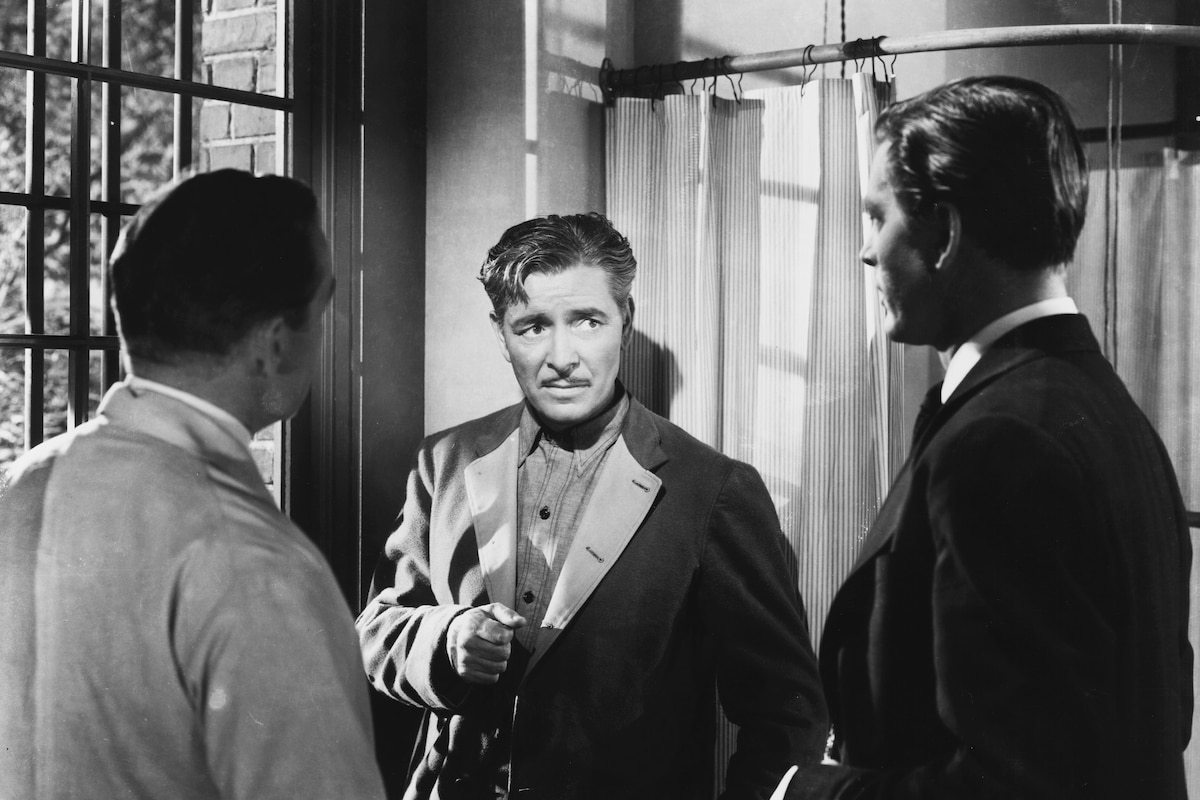
Spurred by the success of Goodbye, Mr. Chips, MGM bought the rights to Hilton's Random Harvest in 1940, as soon as the book appeared. Initially, however, it was planned as a vehicle for Spencer Tracy. When producer Sidney Franklin and director Mervyn LeRoy learned that Ronald Colman was available, however, they jumped at the chance to sign him for the picture. His image of British sincerity was perfect for the role of a shell-shocked World War I veteran who marries while suffering from amnesia, then recovers his memory only to forget the wife he adores. With two bona fide Brits in the cast, LeRoy could boast that "the English Language was never spoken more beautifully on film."
With the success of Random Harvest, Ronald Colman proved he could
still play a romantic hero, even at the age of 51. The film ensured his
continuing popularity through the rest of the decade, climaxed by his
Oscar® win for Best Actor in 1947's A Double Life.
With this film and Mrs. Miniver, 1942 was definitely "The Year
of Greer," as some industry insiders dubbed it. Not only did she win the
Oscar® for Best Actress for the latter, but the combined success of both films made
her the top female star on the MGM lot, a position she would hold through
the '40s.
Like most Hollywood films of the '40s, Random Harvest was shot entirely at the studio, where technicians turned MGM's stock English village into a facsimile for Medbury, the small town where Colman and Garson build their life together after he's first lost his memory. They also had to make some minor script changes to please the Production Code Administration, Hollywood's self-censorship organization. In particular, they had to avoid any suggestion that Colman and Garson were intimate before their marriage and eliminate his character's first wife, which would have made him a bigamist. Despite the changes, however, Hilton was so thrilled with the film that he agreed to record the opening narration himself.
Random Harvest was a major box-office hit, bringing in $4.5 million on a $2 million investment, and breaking attendance records at the Radio City Music Hall, where it premiered. Audiences during the desperate first days of World War II were drawn to its story of the effects of war on the home front and its affirmation of the importance of love and family life.
by Frank Miller
The Essentials - Random Harvest
by Frank Miller | April 30, 2009
SIGN UP FOR OUR NEWSLETTERS

CONNECT WITH TCM