Pop Culture 101 - SINGIN' IN THE RAIN
Singin' in the Rain drew as much from past popular culture as it did from contemporary references and attitudes. Most of the songs were drawn from past musicals: "You Were Meant For Me" and "The Wedding of the Painted Doll," were warbled in The Broadway Melody (1929), while "Good Morning" was crooned in Babes in Arms (1939). The title song first appeared in The Hollywood Revue of 1929, with MGM's stable of stars decked out in raincoats, singing in unison to the tune. "All I Do Is Dream of You" was featured in Sadie McKee (1934); "Should I?" showed up in Lord Byron of Broadway (1930); "Beautiful Girl" was banged out by Bing Crosby in Going Hollywood (1933); "You Are My Lucky Star," "Broadway Rhythm," and "I've Got a Feelin' You're Foolin'" were all part of Broadway Melody of 1936 (1935); and "Would You" is from San Francisco (1936). "Make 'em Laugh" shamelessly draws upon Cole Porter's "Be a Clown," which was featured in The Pirate (1948), also starring Gene Kelly. One of the popular favorites in Singin' in the Rain is "Moses Supposes," which was an original composition written by Betty Comden and Adolph Green.
Just as Kelly and co-director Stanley Donen reused a huge repertoire of popular songs from earlier musicals, the duo also looted the MGM warehouses for props and vehicles. The car Debbie Reynolds drives at the beginning of the film was actually Andy Hardy's old jalopy. The mansion in which Gene Kelly lives was decorated with tables, chairs, carpets and other items that were used for John Gilbert and Greta Garbo's passionate romantic drama, Flesh and the Devil (1926).
Even the costumes were based on old Hollywood styles. Costume designer Walter Plunkett devised Lina Lamont's wardrobe by duplicating his own gown designs for silent screen star Lilyan Tashman, who was, according to Plunkett, "the epitome of chic at that time." In addition, Kelly and Donen grilled MGM employees on their memories of the silent era. Some veterans on the set still remembered the problems of early sound recording, and the art directors actually unearthed filmmaking equipment from the past, including an "icebox" to house the sound camera from old specifications and designs. A neglected soundstage used during the silent era was also located and brought back into active service for the production.
The song "Singin' in the Rain" has been featured in many films, but it was Stanley Kubrick who made ironic use of the song in his bleak vision of a dystopian future, A Clockwork Orange (1971). Kubrick mulled for days over a way to shoot the scene where Alex (Malcolm McDowell) brutalizes a woman. Out of the blue, he turned to McDowell and asked, "Can you sing?" McDowell replied, "I only know one song," and he started to do "Singin' in the Rain." Kubrick then left the room and called Warner Bros. in Hollywood to ask if he could obtain the rights to "Singin' in the Rain." He came back to the set an hour later and wryly told Adrienne Corri (cast as the rape/murder victim), "You're playing the Debbie Reynolds part, Corri." Coincidentally, Stanley Donen was in London at the time and not far from the location site for A Clockwork Orange. When Kubrick asked Donen for his opinion of this new use of the song, Donen surprisingly raised no objections.
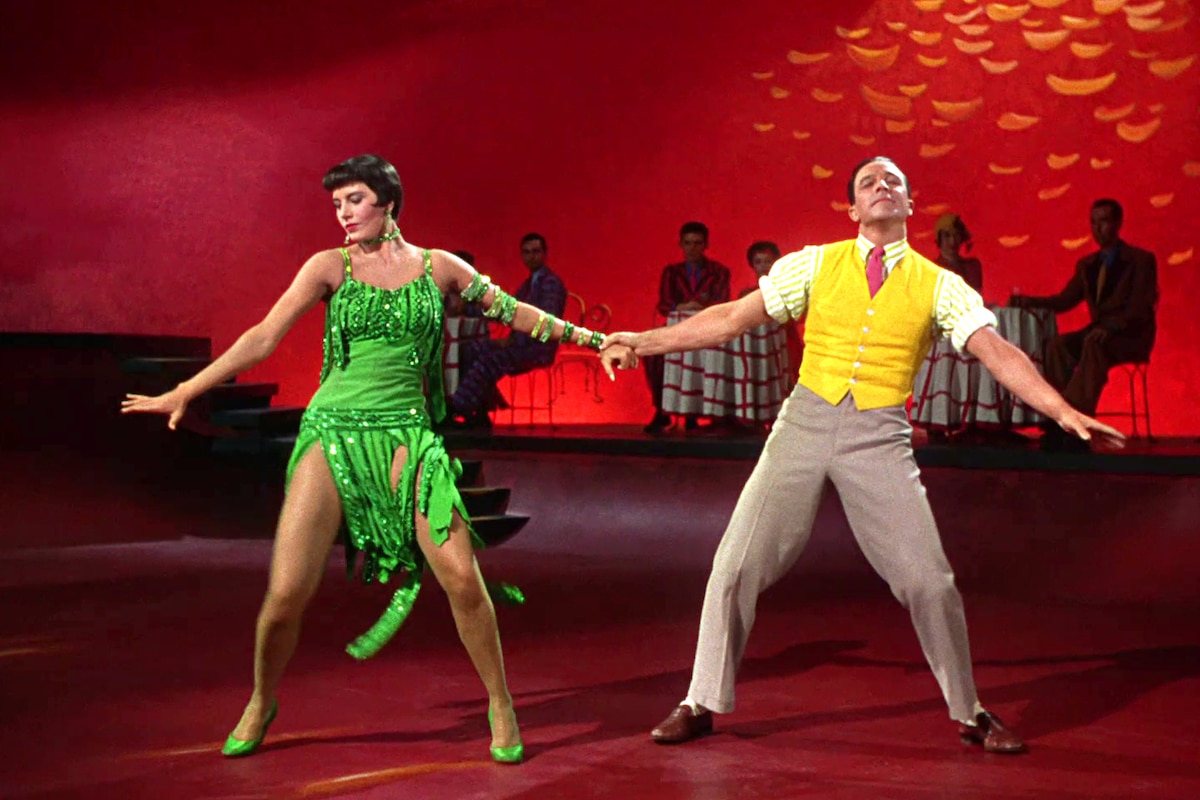
The "Broadway Ballet" sequence was partially based on an idea that was used for Du Barry Was a Lady (1943), starring Red Skelton as a nightclub worker who dreams that he's King Louis XVI.
by Scott McGee
Pop Culture - SINGIN' IN THE RAIN (1952)
by Scott McGee | September 15, 2004
SIGN UP FOR OUR NEWSLETTERS

CONNECT WITH TCM