The Critics' Corner on TO KILL A MOCKINGBIRD
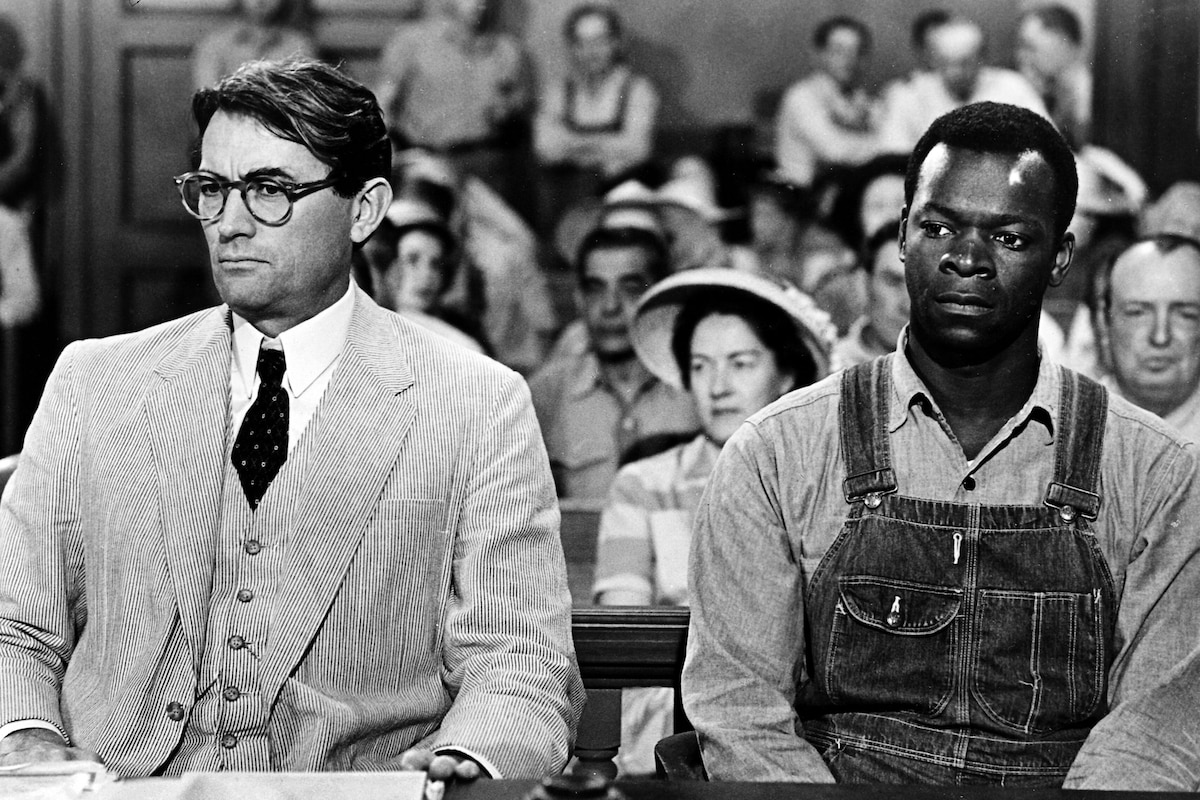
Variety noted in its December 12, 1962 review that To Kill a Mockingbird "is a major film achievement, a significant, captivating, and memorable picture that ranks with the best of recent years." Most popular periodicals echoed Variety' review, while others were not quite as praising. Bosley Crowther of the New York Times wrote in his February 15, 1963 review that "it comes as a bit of a letdown at the end to realize that, for all the picture's feeling for children, it doesn't tell us very much of how they feel." Of course, the problem may have been Crowther's inattentiveness, since he referred to Scout throughout the review as "Scott."
Other movie review samples:
Saturday Review: "To Kill a Mockingbird is so full of small excellences that it requires the somewhat solid presence of Gregory Peck to remind us that it was made in Hollywood at all."
The New York Herald Tribune: "...the scene stealers in this excellent film....are Mary Badham...Phillip Alford...and John Megna...The story may seem slightly sentimental..but its stature and lasting substance stem from the beautifully observed relationship between father and children and from the youngsters' perceptions of the enduring human values in the world around them."
Time magazine: "Mulligan and scenarist Horton Foote have translated both testament and melodrama into one of the year's most fetching and affecting pictures...Mockingbird has nothing very profound to say about the South and its problems. Sometimes, in fact, its side-porch sociology is simply fatuous: the Negro is just too goody-goody to be true, and Peck though he is generally excellent, lays it on a bit thick at times - he seems to imagine himself the Abe Lincoln of Alabama."
Awards & Honors
To Kill a Mockingbird remains a high point in Academy Award history, with multiple nominations and several wins. Gregory Peck certainly deserved his win for Best Actor, while the team of Henry Bumstead, Oliver Emert, and Alexander Golitzen easily stole the Oscar® for Best Art Direction-Set Decoration. Horton Foote won the Oscar® for his screenplay, adapted from Harper Lee's novel. Robert Mulligan's direction won a nomination, as did Russell Harlan's cinematography, Elmer Bernstein's evocative score, and little Mary Badham's performance in a supporting role. Of course, To Kill a Mockingbird was also nominated for Best Picture, but lost out to the monumental epic, Lawrence of Arabia (1962).
In addition to its Oscars®, To Kill a Mockingbird received numerous awards and nominations from such organizations as the American Cinema Editors, the British Academy Awards, the Cannes Film Festival, the Golden Globes, the PGA Golden Laurel Awards, the Writers Guild of America, and the National Film Preservation Board, which placed the film on its National Film Registry in 1995.
Peck's own assessment of his performance? "I'm not falsely modest about it. I think I was good in that picture," the actor said.
To Kill a Mockingbird placed at number 34 in the American Film Institute's 100 Best American Films poll, conducted in 1998.
by Scott McGee & Jeff Stafford
The Critics Corner - TO KILL A MOCKINGBIRD (1962)
by Scott McGee & Jeff Stafford | July 26, 2004
SIGN UP FOR OUR NEWSLETTERS

CONNECT WITH TCM