SYNOPSIS
Small-town poet Longfellow Deeds inherits $20 million from an uncle he
barely knew. His benefactor's big city lawyers expect him to be easily
manipulated as they continue to profit from the estate at the expense of
the poor and downtrodden, but Deeds proves to be an eccentric independent
determined to use his fortune to help Depression America. Complicating
matters is his involvement with Babe Bennett, a beautiful woman he thinks
is just another unfortunate, not realizing she's the tabloid reporter who's
been making a mockery of him in the press. When Deeds' lawyers set out to
have him declared insane, the stage is set for a showdown as inspiring as
it is comic.
Producer/Director: Frank Capra
Screenplay: Robert Riskin
Based on the Story "Opera Hat" by Clarence Buddington Kelland
Cinematography: Joseph Walker
Editing: Gene Havlick
Art Direction: Stephen Goosson
Music: Howard Jackson
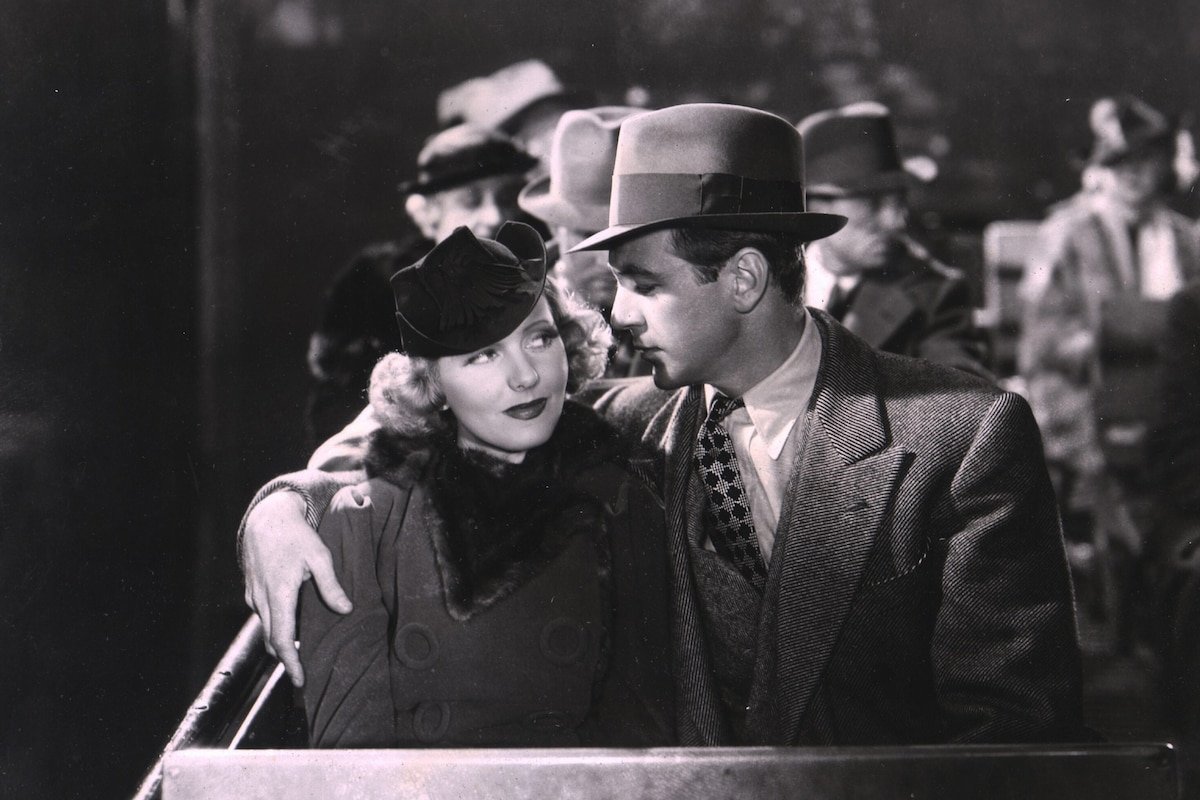
Cast: Gary Cooper (Longfellow Deeds), Jean Arthur (Babe Bennett), George
Bancroft (Mac Wade), Lionel Stander (Cornelius Cobb), Douglass Dumbrille
(John Cedar), Raymond Walburn (Walter), H.B. Warner (Judge May), Ruth
Donnelly (Mabel Dawson), Walter Catlett (Morrow), John Wray (Farmer), Ann
Doran (Girl on Bus), George "Gabby" Hayes (Farmer's Spokesman), Mayo Methot
(Mrs. Semple), Dennis O'Keefe (Reporter in Courtroom), Franklin Pangborn
(Tailor)
BW-115m.
Why Mr. Deeds Goes to Town is Essential
Mr. Deeds Goes to Town marked a change in director Frank Capra's
films. It was the first time he consciously tried to make a social
statement. The film's success would lead him to continue to make socially
oriented films, including You Can't Take It With You (1938), Mr.
Smith Goes to Washington (1939), Meet John Doe (1941) and
It's a Wonderful Life (1946). All of them dramatized the same
theme, which Capra would define as "the rebellious cry of the individual
against being trampled to an ort by massiveness -- mass production, mass
thought, mass education, mass politics, mass wealth, mass conformity."
Some critics have affectionately (and at times not so affectionately)
labeled this viewpoint "Capra-corn."
From this point on, Capra refused to accept just any film that came out
of the writing department. Instead, he insisted on spending six months to
a year getting each of his scripts ready for production. As such, he
inspired other directors to seek more control over their films. That
control and his penchant for stories that tackled society's ills made him
one of the first directors hailed as an auteur when French critics
like Francois Truffaut began focusing their work on the director and his
personality.
This was the seventh of 12 films on which Capra would collaborate with
screenwriter Robert Riskin, who played a key role in the development of Capra's
directorial style. Their other collaborations included It Happened
One Night (1934), You Can't Take It With You and Meet John
Doe. Riskin won a Best Screenplay Oscar® for It Happened One
Night.
Mr. Deeds Goes to Town established the screen persona that Gary
Cooper would play for the rest of his career. Whereas previously he had
been a popular male sex symbol, making screens sizzle as he shared
love scenes with the likes of Joan Crawford and Marlene Dietrich, after
Deeds he was seen as a pure, homespun all-American type. Future Cooper characters would be easily vamped by the likes of Barbara
Stanwyck and Ingrid Bergman. As compensation for losing the smoldering sexuality of his previous screen persona,
he would become one of the screen's most beloved stars and win Oscars®
for playing all-American heroes in Sergeant York (1941) and High
Noon (1952).
Mr. Deeds also made it possible for Cooper to maintain his
independence from the Hollywood studios. It was the first film he made
after completing his contractual obligations to Paramount Pictures and
independent producer Sam Goldwyn. Its success made it unnecessary for him
to sign another long-term studio contract.
Jean Arthur had been making films since 1923, but had made no great
impact before Mr. Deeds except for her appearance in John Ford's
1935 The Whole Town's Talking, starring Edward G. Robinson and
co-written by Riskin. With Mr. Deeds Goes to Town, she finally
burst through to screen stardom.
Capra would re-team with Cooper for Meet John Doe, another tale
of a simple man who takes on the powers of corruption. He would use Arthur
as his leading lady again in You Can't Take It With You and Mr.
Smith Goes to Washington.
by Frank Miller
The Essentials - MR. DEEDS GOES TO TOWN (1936)
by Frank Miller | July 26, 2004
SIGN UP FOR OUR NEWSLETTERS

CONNECT WITH TCM