The Big Idea Behind CASABLANCA
Casablanca is erroneously thought to be based on one of the biggest flops in Broadway history. This is not true, simply because the play, Everybody Comes to Rick's, never made it to the Big White Way in the first place. Producers Martin Gabel and Carly Wharton optioned the play in 1940, but the project fell through when they could not come up with a suitable script. The authors shopped the project around Hollywood, where Warner Bros. picked up the rights to the obscure play in late 1941. The property languished in the paper-crammed office of Jack Wilk, story editor for Warner East Coast operations in New York, until Irene Lee, the West Coast story editor, stopped in to rummage through the piles of manuscripts lining Wilk's office. She found only one interesting property: a dog-eared typed manuscript with the title "Everybody Comes to Rick's." Below the title were the address and phone numbers of the producers who had left the manuscript sitting for a year, presumably because they did not see any future in it. Once she got to Hollywood, Lee commissioned a written outline and submitted it to Hal Wallis in December 1941, four days after Pearl Harbor. Lee was a trusted advisor to Hal Wallis, so when she had the idea to turn this unwanted manuscript into a Warner Bros. film, he listened.
Not long after Hal Wallis decided to personally shepherd Casablanca from script to screen, he sat down with Philip G. and Julius J. Epstein, known in Hollywood as "The Boys." They were lanky identical twins who had earned a stellar reputation in the movie business for adapting plays, doctoring weak scripts, and adding memorable wisecracks and colorful dialogue to cliched stories. Mediocre scripts for films like Yankee Doodle Dandy (1942) were energized after the Epsteins got finished with them and went on to become classics. Once Wallis approached them with the idea of adapting Everybody Comes to Rick's, the Epsteins were happy to do it, although they did not think the project was anything special. It was simply an assignment that put food on the table.
After working on Frank Capra's Why We Fight propaganda series, the brothers started working for Wallis, and right away, their distinctive personalities emerged in their work. It was particularly their irreverence for authority that gave the project power and a timeliness that resonated with World War II-era viewers who had loved ones fighting against totalitarian authorities in Europe and Asia. In fact, the Epsteins never took Jack Warner seriously; For example, Julius called Jack Warner, to his face, the "Butcher of Burbank," a dig at the Warner family's former line of work in Youngstown, Ohio.
The Epsteins were not the only wordsmiths hired to write Casablanca. Howard Koch's participation was secured in response to the demanding production schedule and evolving screenplay. Koch was a onetime radio writer whose "War of the Worlds" script for Orson Welles' broadcast on Halloween 1938 made much of the nation panic, thinking it was under attack by Martians. Koch's screenplays for The Sea Hawk (1940), The Letter (1940), and Sergeant York (1941) were evidence enough that he could strengthen the political and dramatic aspects of Casablanca. Wallis then asked Casey Robinson, the studio's most prolific writer of "women's pictures" (like Dark Victory, 1939, and Now, Voyager, 1942) to play up the passion in the love scenes that would compliment the plot and Bogart's tough but romantic persona.
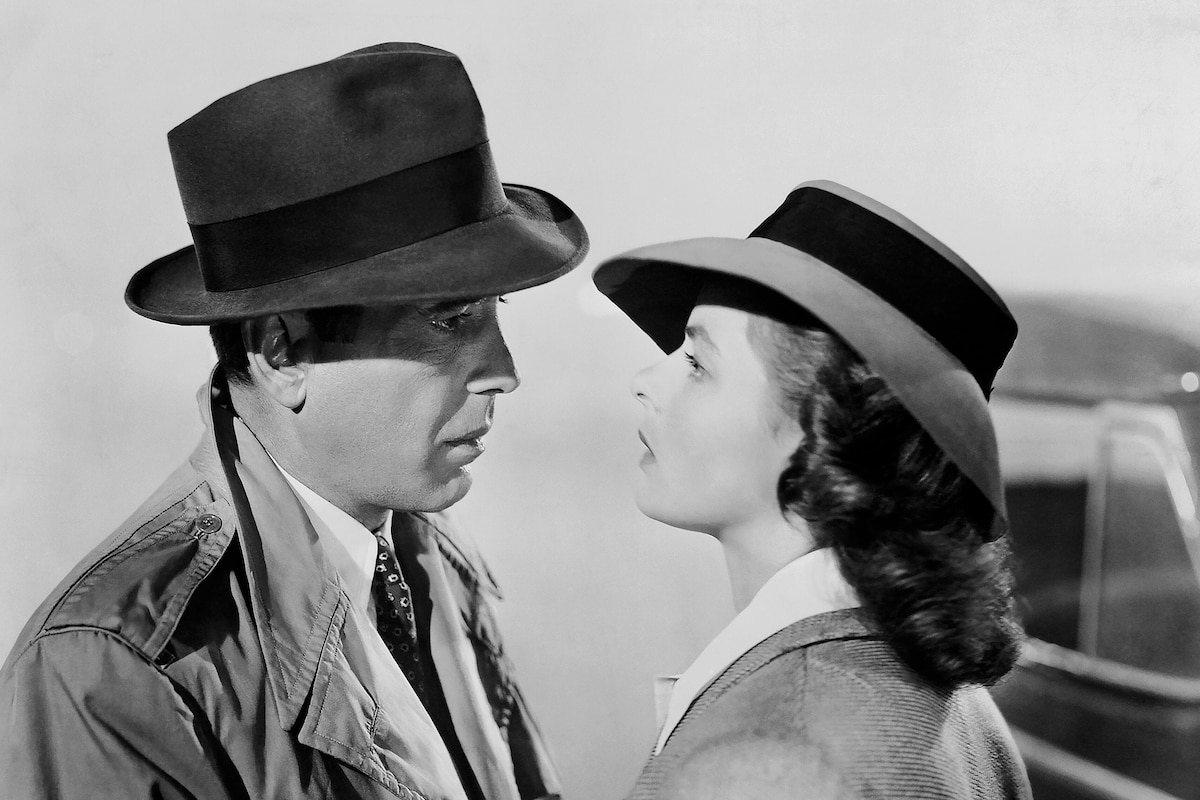
For most of today's Hollywood producers, finding the right cast is half the battle. That little axiom was just as true in 1942 for Hal Wallis, who found that securing the right actress for Ilsa Lund was no less important. After having tried unsuccessfully in teaming Ingrid Bergman with Humphrey Bogart for a project called All Through the Night (1942), Wallis tried again for Casablanca. This time world politics helped Wallis sway producer David O. Selznick into loaning his contracted star out to a Warner Bros. production. Selznick had secretly been mortified by talk of Sweden, Bergman's native land, joining the Axis Alliance. Apparently, the folks at Warners weren't keeping up with their world politics, and Selznick was eager to strike a loan-out deal before they found out that Bergman might be damaged goods. The deal seemed imminent until Selznick started to worry that he might appear too eager to loan Bergman out to another studio. So, he requested to know more about the proposed project before he gave his official signoff. The Epstein brothers were brought in to give Selznick a clue of what the story was about. The only problem is that the Epsteins did not have a story to tell Selznick. No script had been written yet. Wallis suggested for them to "wing it" during their story conference with Selznick. As for what happened next, it is worth quoting at length the biography Bogart by Eric Lax and A.M. Sperber:
The twins were ushered into Selznick's office, where the producer sat..intent on his lunch. "He was slurping soup," Julius Epstein said. "Never looked up at us once. And I start to tell the story. 'Uh, it's about Casablanca, and the refugees are there, and they're trying to get out, and there's letters of transit, and a fella has them, and the cops come and get him' ---- And I realize I'm talking about twenty minutes and I haven't even mentioned the character of Bergman. So I say, 'Oh, what the hell! It's going to be a lot of s**t like Algiers (a film that Casablanca is often compared to).' "And Selznick looked up and nodded. And we had Bergman."
by Scott McGee
The Big Idea - CASABLANCA (1942)
by Scott McGee | February 01, 2007
SIGN UP FOR OUR NEWSLETTERS

CONNECT WITH TCM