The Big Idea Behind THE LION IN WINTER
James Goldman's stage play about the lives and intrigues of the Plantagenets opened on Broadway in March 1966 with Robert Preston as King Henry II and Rosemary Harris (most recently seen as Aunt May in Spider-Man, 2002) as his estranged wife, Eleanor of Aquitaine. Although Harris' performance made her a star and brought her a Tony Award, the production received mixed reviews and closed in less than three months at a substantial loss. But with the recent success of A Man for All Seasons (1966), an epic film about historical England adapted from a much more successful play, film producers were looking for similar material that could offer a combination of prestige and box-office performance. Producer Martin Poll thought The Lion in Winter was a natural and approached Peter O'Toole, who had played the same character to much success (and an Academy Award nomination) in Becket (1964).
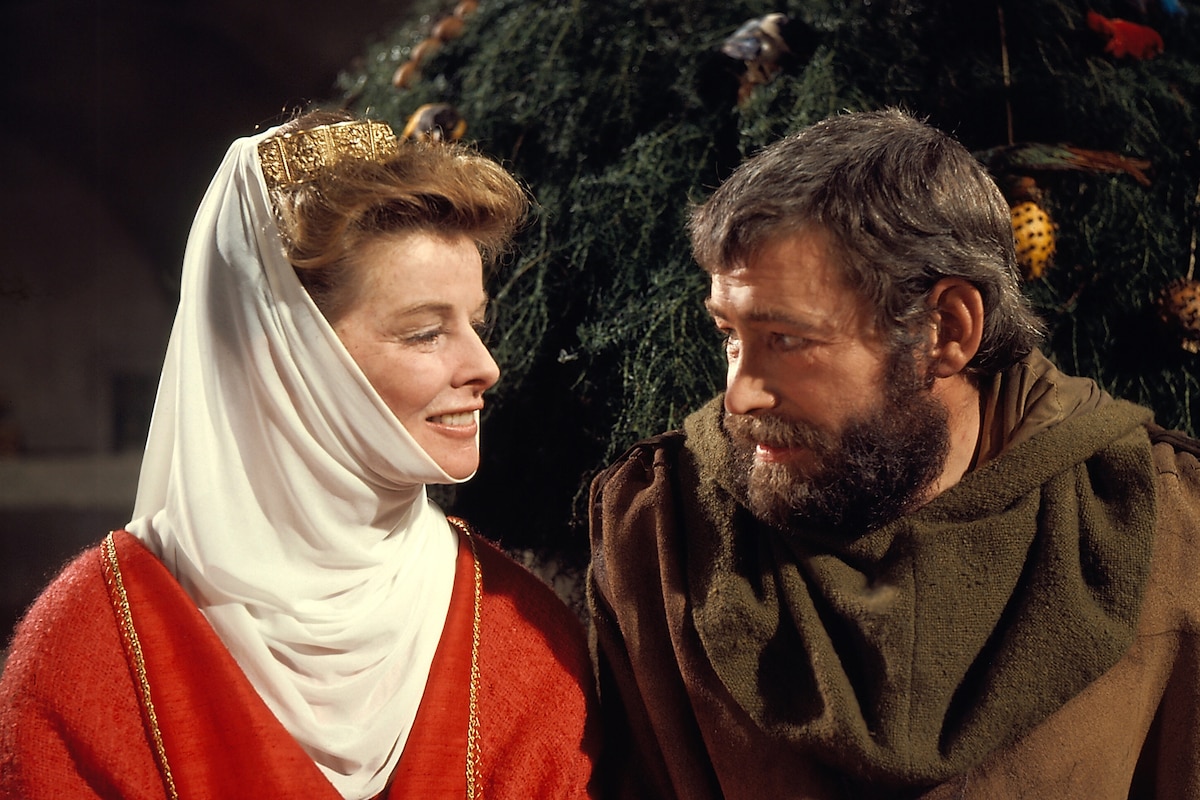
The film version of The Lion in Winter provided Katharine Hepburn with some much-needed focus and a new lease on her long acting career. After Spencer Tracy's death in 1967, many people believed Hepburn would retire from acting. When she received the screenplay (adapted by first-time screenwriter James Goldman from his own play) and learned Peter O'Toole (who she had championed early in his career) would play Henry, she jumped at the chance to return to work.
"What was fascinating about the play was its modernness," Hepburn said, "This wasn't about pomp and circumstance but about a family, a wife trying to protect her dignity and a mother protecting her children."
Hepburn became more excited about the project after seeing a film made by the director O'Toole was favoring. Anthony Harvey's only other directorial effort, Dutchman (1966), was as far removed from Henry and Eleanor as could be imagined -a harsh, contemporary urban drama of racism based on the play by Amiri Baraka. But Hepburn found the film "absolutely riveting. It grabbed you by the throat. Exactly the approach that our material needed. Not that glossy old MGM stuff, but cold people living in cold castles."
Hepburn was also fascinated by Harvey's background as an editor, a profession she admired greatly. The two hit it off instantly and became great friends for the rest of her life.
Even with Hepburn, O'Toole and Harvey on board, producer Martin Poll still had a hard time getting financial backing and guaranteed distribution. Finally, he arranged a deal with independent producer Joseph Levine.
While negotiations dragged on with potential backers and distributors, Hepburn agreed to make the film version of Jean Giraudoux's play The Madwoman of Chaillot (1969). When the financing finally came through, everyone had to rush into overdrive to get The Lion in Winter ready to shoot in time to release Hepburn for the other picture. She undertook research and read everything she could find on Eleanor of Aquitaine, adding many extra touches to the script. She and her assistant also went to France and toured Fontevrault, where Eleanor, Henry II and their son Richard are buried.
O'Toole took charge of the casting, catching many stage productions and calling friends for suggestions. A number of actors were tested with O'Toole present and often supervising their tests, which terrified many of the young hopefuls. He and Harvey decided against well-known film performers for the roles of the princes and Alais and chose relative unknowns from the British stage.
Anthony Hopkins was appearing at London's National Theatre when he was cast as Richard and needed the permission of Sir Laurence Olivier to leave and appear in the film. Olivier was reluctant but finally agreed Hopkins could shoot the film during the day if he flew back from location for his evening stage performances in As You Like It and Much Ado About Nothing.
by Rob Nixon
The Big Idea - The Lion in Winter
by Rob Nixon | July 26, 2004
SIGN UP FOR OUR NEWSLETTERS

CONNECT WITH TCM