Synopsis
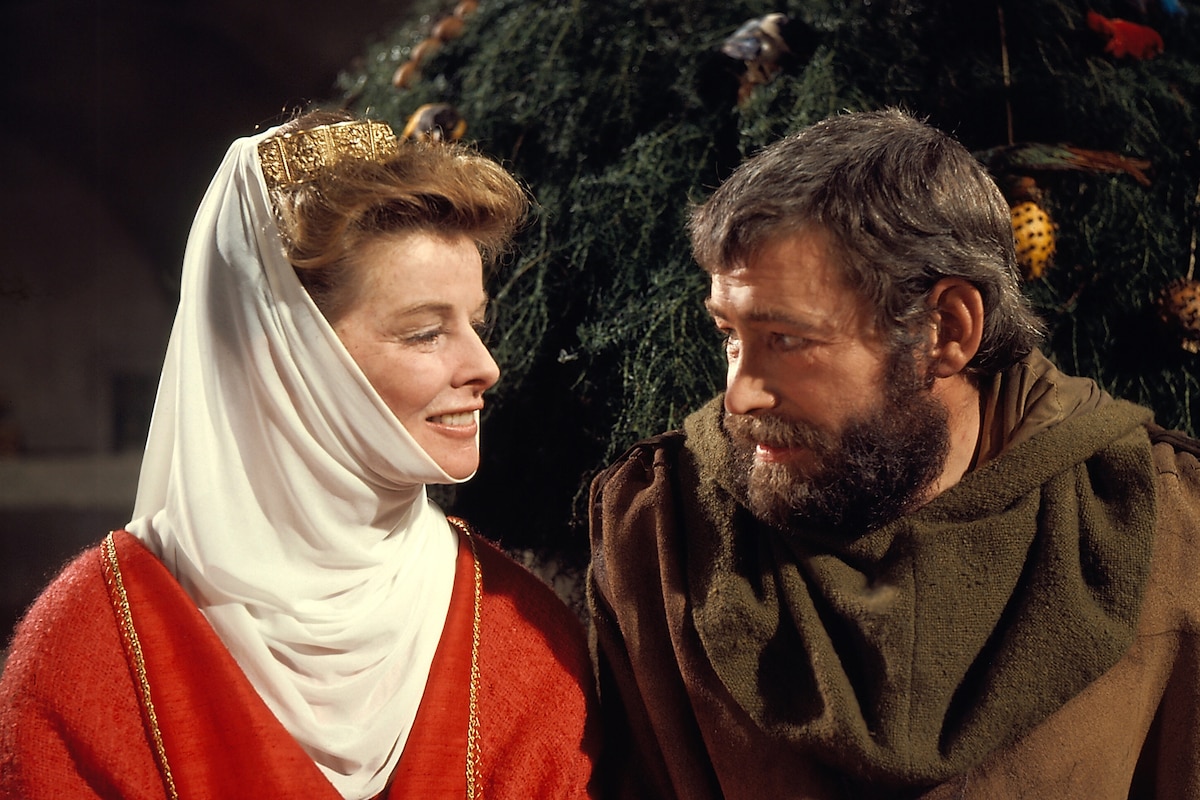
Christmas 1183: King Henry II of England allows his wife, Eleanor of Aquitaine, to join the royal court for the holidays, springing her from the castle in which he has imprisoned her for years for plotting against him. Discussing every aspect of their love-hate relationship, they argue the question of which of their three sons will succeed Henry, a decision that will affect both England and France. They lie, scheme, threaten, use their grown and constantly squabbling children as political and personal pawns, and trade witty, to-the-bone barbs like a medieval version of Edward Albee's George and Martha in Who's Afraid of Virginia Woolf.
Director: Anthony Harvey
Producer: Martin Poll
Screenplay: James Goldman, based on his play
Cinematography: Douglas Slocombe
Editing: John Bloom
Art Direction: Peter Murton, Gilbert Margerie
Original Music: John Barry
Cast: Peter O'Toole (King Henry II), Katharine Hepburn (Queen Eleanor of Aquitaine), Anthony Hopkins (Prince Richard), Nigel Terry (Prince John), John Castle (Prince Geoffrey), Timothy Dalton (King Philip of France), Jane Merrow (Princess Alais).
C-135m. Letterboxed. Closed captioning.
Why The Lion in Winter is Essential
Period pictures featuring real historical characters have often enjoyed great popularity among audiences, especially when they involve the grand schemes and conflicts of England's royal families. This was especially true in the 1960s, when British films experienced something of a revival, hitting big with audiences by trotting out the triumphs and flaws of the country's ruling class: A Man for All Seasons (1966), Anne of the Thousand Days (1969), Camelot (1967), Becket (1964). So The Lion in Winter was destined to succeed. Not only did it have the necessary historical intrigue but it carried the extra bonus of featuring two stars at the top of their form and some brilliant newcomers, all trading barbs and insults in James Goldman's witty and entertaining script. The movie not only delivered the requisite period detail and intrigue but wrapped it in the kind of sparkling, bitchy dialogue rarely seen on screen since All About Eve (1950).
Director Anthony Harvey and his artistic crew avoided the pitfall of over-glamorizing the period, preferring instead to set the story in a more appropriate 12th century reality: cold, sparse, and dirty castles in which royalty share living space with peasants and animals, and not a lavish banquet or rousing tournament in sight. Within this apparently authentic setting, the filmmakers present an often humorous, fast-paced drama of family conflict, no less powerful for coming from the mouths of some of Western history's prime movers and shakers.
For all its great reputation today, The Lion in Winter received mixed reviews on its initial release. Some critics felt the dialogue, full of contemporary quips and sly historical in-jokes, was anachronistic and not "true" to its subject and time period. But this modern feel was just what audiences responded to. And it didn't hurt to have Peter O'Toole and Katharine Hepburn in the leads. Because of their performances -considered by many to be among the top of each of their careers -the film continues to enjoy a great popularity in revival screenings, television airings and video rentals.
by Rob Nixon
The Essentials - The Lion in Winter
by Rob Nixon | July 26, 2004
SIGN UP FOR OUR NEWSLETTERS

CONNECT WITH TCM