Pop Culture 101 - ANNIE HALL
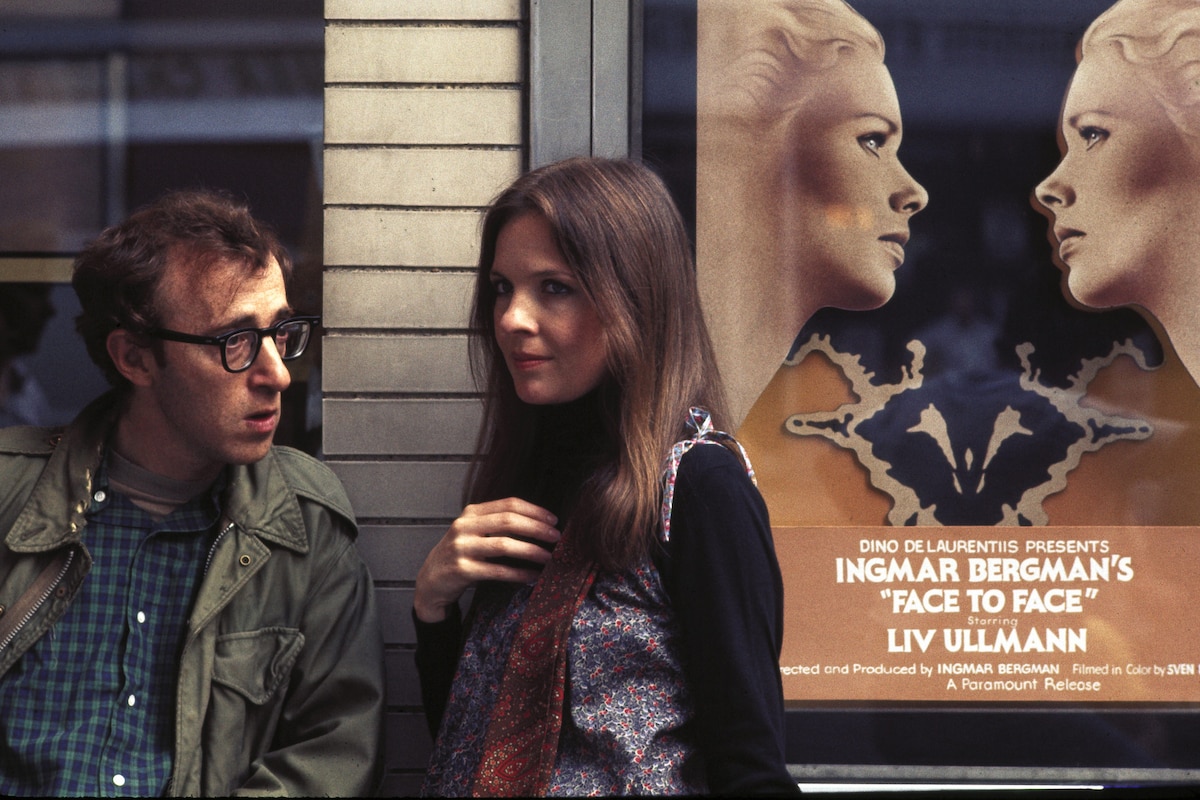
Perhaps the most immediate impact that Annie Hall had on American pop culture was on women's fashion. The female public was completely taken with the "Annie Hall look" that Diane Keaton sported in the movie: floppy hats, oversized men's shirts, vests, baggy chinos and ties, all sporting a hip "unkempt" look. Not since Marlene Dietrich sported a man's tuxedo had men's clothing looked so fashionable on women in the movies.
Who is Marshall McLuhan, the man being discussed by the obnoxious movie patron? McLuhan was an influential writer and critic who proposed many radical and offbeat theories about the media's role and influence in contemporary society. After he filmed his short scene in Annie Hall, McLuhan suffered a stroke in 1976, and continued to battle health problems until his death in 1980. Even several years after his death, McLuhan is still thought to be either a genius or a fool among worldwide intellectuals and scholars. Wired magazine named McLuhan its "patron saint" when the high-tech periodical was founded in 1993.
Woody Allen obviously took a cue from one of his favorite comedians - Groucho Marx - for numerous scenes in this film. Throughout Annie Hall, Allen makes constant asides that only the viewer can see and hear. This gimmick not only sets this romantic comedy above others, it also references Groucho's use of the gag in Animal Crackers (1930). Groucho, in turn, was spoofing the stage play, Strange Interlude, which used dramatic asides, but not for comic effect.
Another Brechtian device that Woody Allen employs in Annie Hall is to allow Alvy to observe the events from his past as they are played out in front of him. This is a nod to one of Allen's favorite filmmakers, Ingmar Bergman, who used a similar structure, though in a much more dramatic vein, for Wild Strawberries (1957).
Take a gander at the many future stars who appeared in small or bit parts in Annie Hall: Jeff Goldblum as a party guest, Sigourney Weaver as Alvy's date outside a theater, Christopher Walken as Annie's off-kilter brother Duane, John Glover as one of Annie's first boyfriends, and Beverly D'Angelo as an actress on a TV show.
Near the beginning of the film, Woody Allen inserts an in-joke on Diane Keaton's behalf. When Alvy is harassed by two rough, autograph-seeking men, he chides Annie for leaving him alone with "the cast of The Godfather (1972)," a film in which Keaton starred opposite Al Pacino as Michael Corleone's wife, Kay.
In an August 22, 1993 article in the New York Times, Maureen Dowd reported that Woody Allen had "long toyed with the idea of picking up the Annie Hall characters to see where they are now. 'I've saved some footage from the original, so I could show them young and old...And Diane and I are both alive and working.'"
Pop Culture - ANNIE HALL (1977)
by Scott McGee | March 30, 2004
SIGN UP FOR OUR NEWSLETTERS

CONNECT WITH TCM