Synoposis
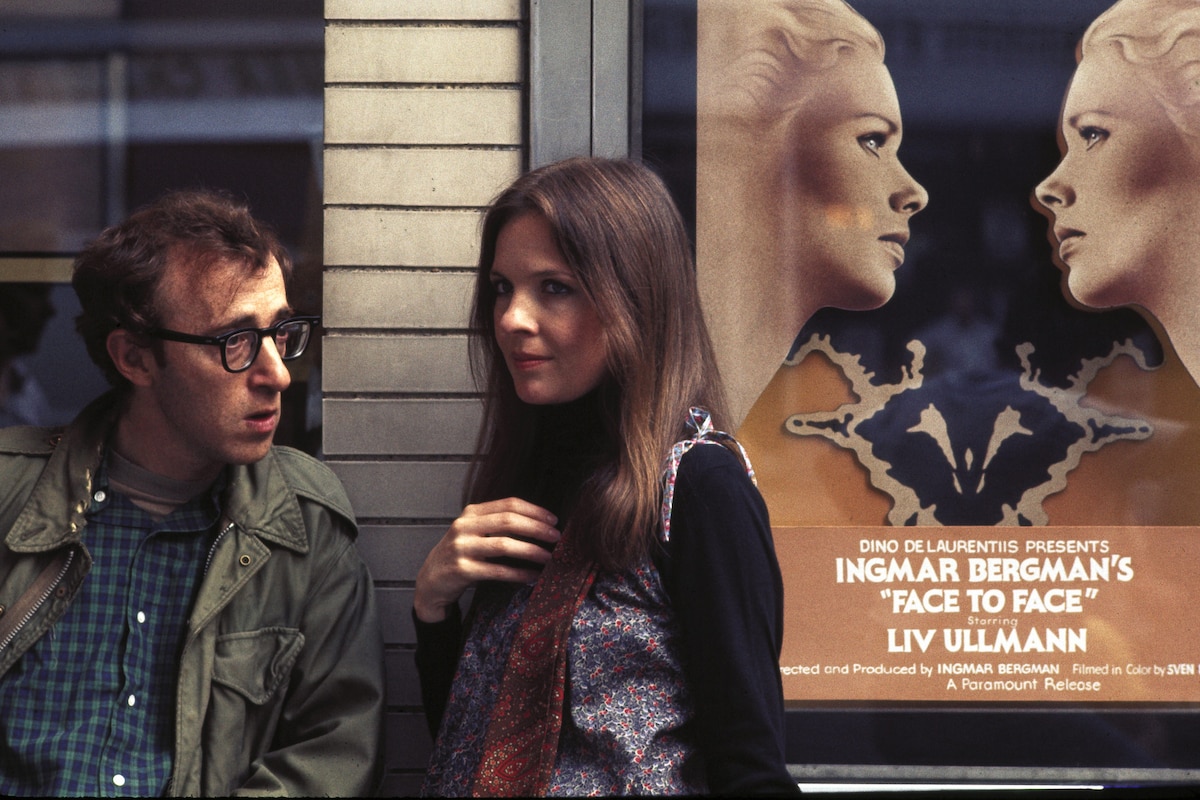
Alvy Singer (Woody Allen) is a neurotic comedy writer who falls madly in love with Annie Hall (Diane Keaton), an aspiring singer. Despite a few obstacles in their burgeoning romance, Alvy and Annie move in together, but Alvy becomes so neurotic about their affair that he begins to cramp Annie's style. A major change in their relationship occurs when Annie is spotted performing a song in a Manhattan club by record tycoon Tony Lacey (Paul Simon), who persuades her to move to Los Angeles. This new development puts an added strain on their relationship since Alvy loathes the West Coast.
Producer: Charles H. Joffe, Jack Rollins
Director: Woody Allen
Screenplay: Woody Allen, Marshall Brickman
Cinematography: Gordon Willis
Costume Design: Ralph Lauren, Nancy McArdle, Ruth Morley
Film Editing: Ralph Rosenblum
Original Music: Gus Kahn
Principal Cast: Woody Allen (Alvy Singer), Diane Keaton (Annie Hall), Tony Roberts (Rob), Carol Kane (Allison), Paul Simon (Tony Lacey).
C-94m. Letterboxed. Closed captioning.
Why Annie Hall is Essential
The 1977 Best Picture Oscar® winner continued a number of themes that Allen had approached in previous films such as Bananas (1971), Sleeper (1973) and Love and Death (1975), wry explorations of romantic angst buoyed by his emphasis on the comic pitfalls that crop up on the path to happiness. In Annie Hall it was not the content that had changed, as much as the form. Allen's earlier films bounce like a pinball between silent-movie slapstick, the Marx Brothers' absurdism and modern self-referentiality as they pay homage to, poke fun at and playfully explore such diverse subjects as television news, old movies, Russian literature, science fiction, religion and, of course, sexual frustration. Annie Hall marks the point at which Allen reined in the unchecked impulses of these delightfully chaotic comedies and began to aim his directorial gaze with greater focus and clarity.
The change, however, was not a simple one. Originally, Annie Hall was a light-hearted murder mystery, then a comedy set in Victorian England (Allen later returned to these impulses with Manhattan Murder Mystery (1993) and Shadows and Fog, 1992). Allen and co-screenwriter Marshall Brickman then transformed their ideas into a reckless comedy of romantic errors entitled Anhedonia. Defined as a form of melancholia under which a person is incapable of enjoying happiness, no matter what the circumstances, Anhedonia was a free-association romp through the perpetually frustrated mind of Alvy Singer (Allen). An early cut of the film ran more than three hours and was no doubt comparable to the episodic comedies that Allen had previously directed.
But when Allen decided to structure the film around Alvy's relationship with Annie (Diane Keaton), the film suddenly cohered into something more than a comedy and more than a romance. Inspired by Allen's own romance with Keaton (whose real name is Hall), Annie Hall charts the rise and fall of Singer's relationship with the titular character, punctuated with bits of unrestrained comedy, celebrity cameos (Marshall McLuhan, Dick Cavett, Paul Simon, etc) and moments of poignant truth. It was a bittersweet blend that was to become Allen's trademark, even as he has tried to escape it with such introspective dramas as Interior (1978), Another Woman (1988) and September (1987).
Other filmmakers have filled the void with thinly-veiled clones of Allen's distinctive comedies (such as Rob Reiner's When Harry Met Sally (1989) and Billy Crystal's Forget Paris, 1995), but Annie Hall stands as a romantic-comedy original upon which there can be no improvement. It was also the first comedy since Tom Jones (1963) to win the Best Picture Oscar, and still holds that honor. It is even rarer still that such a witty comedy could win top honors by ridiculing the Hollywood community, for Allen pulls no punches in skewering the West Coast mentality.
by Scott McGee and Bret Wood
The Essentials - ANNIE HALL (1977) - THE ESSENTIALS
by Scott McGee and Bret Wood | March 30, 2004
SIGN UP FOR OUR NEWSLETTERS

CONNECT WITH TCM