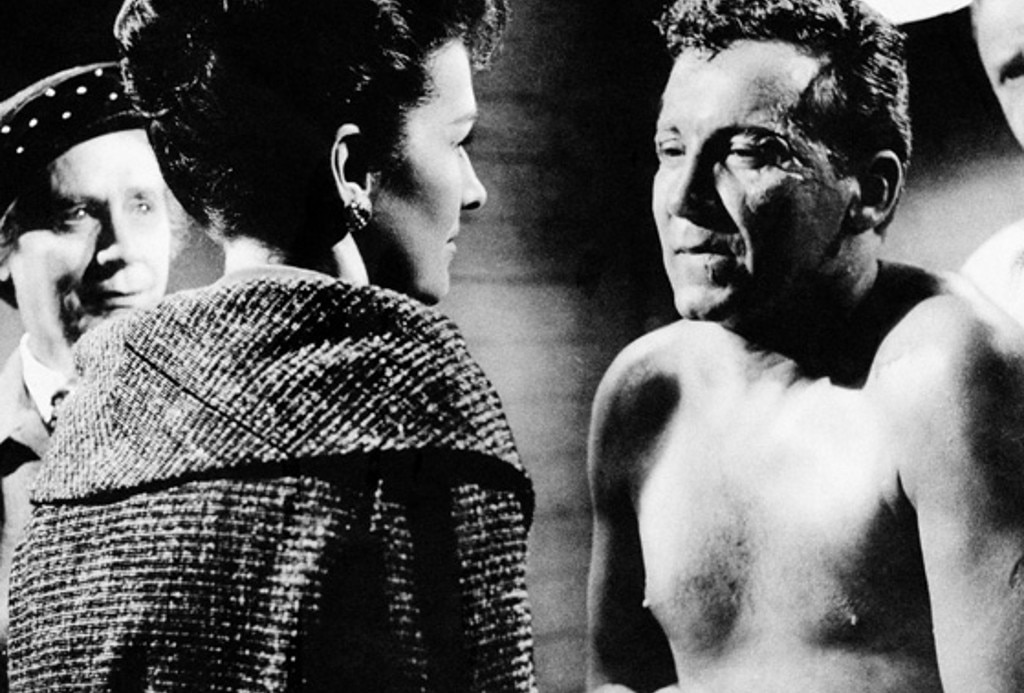
In preproduction, Robert Rossen's Body and Soul (1947), starring John Garfield, was pitched as a fictionalized account of the life of Barney Ross, a champion boxer and war hero who fought with valor at Guadalcanal but developed a crippling addition to opiates. With the depiction of drug use forbidden by the Production Code of America, Body and Soul dropped the heroin angle, leaving a Ross biography up for grabs. A decade later, producer Edward Small optioned Ross' memoirs in hope of attracting Marlon Brando. Likely unwilling to play a character so close to his On the Waterfront (1954) antihero, Brando demurred and Small cast Cameron Mitchell in what was then called The Barney Ross Story. Though Ted Post was set to direct when the film went into production on January 25, 1957, he was replaced on February 8 by André De Toth, who retained sole credit. Released by United Artists as Monkey on My Back (1957), the film's unflinching exposé of intravenous drug use drew condemnation from the Production Code and the feature was released without PCA or MPAA approval (as was Otto Preminger's The Man with a Golden Arm [1955] a year earlier.) Noticeable in a small role as the USMC corpsman who first gives Barney Ross morphine is former Our Gang trouper Scotty Beckett (in his final film), whose own troubles with drugs led to his suicide by barbiturate overdose in May 1968.
By Richard Harland Smith
Monkey On My Back (1957)
by Richard Harland Smith | September 27, 2013
SIGN UP FOR OUR NEWSLETTERS

CONNECT WITH TCM