"Between Europe and Africa stretching from Gibraltar to the Syrian Coast, lies the Mediterranean, land-locked and tideless, known to the ancients as Mare Nostrum -- Our Sea...Upon its bosom mankind spread the first sail, from its depths the seagods were born." -- Opening titles for Mare Nostrum (1926).
Decades before David Lean invented the international spectacle with films
like The Bridge on the River Kwai (1957) and Lawrence of
Arabia (1962), director Rex Ingram spanned three countries to produce
this lavish love letter to the sea and his wife, Alice Terry. Released in
1926 and long thought lost, Mare Nostrum is one of the treasures of
the silent cinema, a psychologically subtle, visually impressive anti-war
story that was years ahead of its time as a thinking-person's film.
Two very different experiences lay behind Ingram's creation of Mare
Nostrum. He had scored one of his biggest successes with his
adaptation of Spanish novelist Vicente Blasco Ibanez's The Four Horsemen
of the Apocalypse in 1921. Ibanez's favorite novel, Mare
Nostrum -- an epic tale of World War I espionage and naval battles
told, like the earlier film, from Spain's neutral perspective -- seemed a
natural choice for Ingram. But after years of fighting to make the best
films he could, Ingram was also disgusted with Hollywood. In 1924 he had
tried unsuccessfully to salvage his friend Erich von Stroheim's
Greed (1924), only to see the studio cut the film into a pale shadow of the
director's original vision. After one too many battles with MGM studio
head Louis B. Mayer, he insisted that all of his films for the studio be
billed as "Metro-Goldwyn" releases, refusing to credit Mayer at
all.
Finally, he fled Hollywood in 1924, shooting The Arab (1924), with
Ramon Novarro and Alice Terry, in Nice, France. For Mare Nostrum,
he bought his own studio in Nice, the Victorine. Although it required
extensive modernization, he got around that by including the costs within
the budget paid by MGM, on proviso that he pay it back should he choose to
purchase the studio for himself (he did, for $5 million, later renting the
space to MGM at a high cost). He could get away with it, however, because
with hits like The Four Horsemen of the Apocalypse, The Prisoner
of Zenda (1922) and Scaramouche (1923) he was considered one of
Hollywood's top directors.
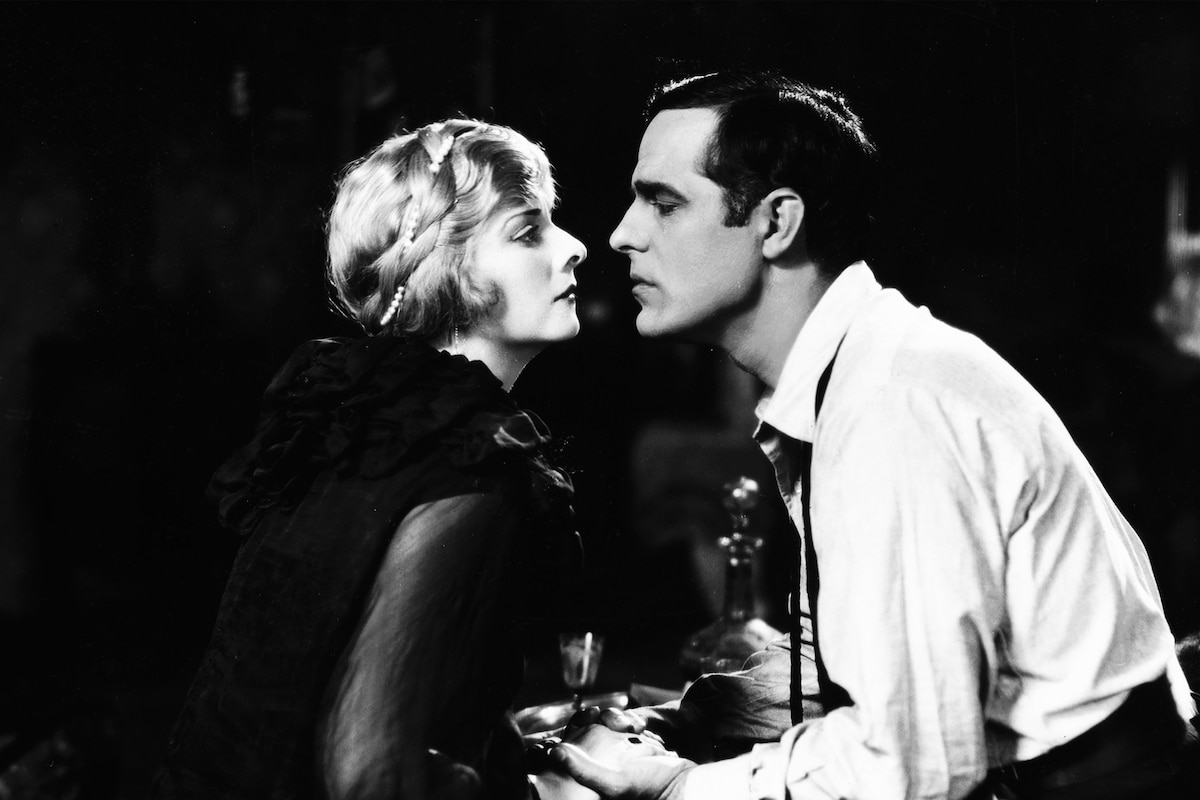
Mare Nostrum gave him the chance to realize two other dreams. Terry
had been begging him to help her break free from her typecasting as an
ing¿e by giving her a femme fatale role. For his new film, she would be
cast as a seductive German spy who seduces a noble sea captain (Antonio
Moreno) from his wife in order to secure his services for the fatherland.
And Ingram finally got to work with the gifted Spanish actor Moreno, who
had been his first choice to play the lead in The Four Horseman of the
Apocalypse. Ingram had been forced to use Rudolph Valentino instead so
that writer-producer June Mathis would agree to his casting Terry in the
female lead.
Everything about Mare Nostrum was big. It was shot in three
countries -- France, Italy and Spain -- on such a massive scale that Ingram
couldn't even direct the Spanish sequences himself. He handed them instead
to cinematographer John F. Seitz. It took so long to make the film -- 15
months -- that Terry managed to complete two other pictures between the
start of shooting and her first day on the set. Ingram secured two
submarines (one captured from Germany during World War I) and a crew from
the French Navy. He also enlisted the large group of White Russians living
in the South of France to act as extras. For the climactic sinking of the
submarine, he got them to perform numerous retakes of their plunge into the
icy waters of the Mediterranean by giving them a shot of vodka each time
they went in. They didn't feel the cold until they finally started
sobering up, long after he'd finished shooting for the day.
But the foreign shoot had more than its set of problems. The glass-roofed
studio became intolerably hot during the day and freezing cold at night,
when most of the scenes were shot. The French, Italian and American
technicians had trouble communicating, which created production delays.
And the equipment kept breaking down. Ingram solved some of these problems
when he plundered the Italian sets of Ben-Hur (1925), which MGM had
just shut down (it would resume shooting in Hollywood), returning with
equipment and new crew members. But he also had problems with the French
labs, which ruined some sequences. As costs rose, he was forced to use
model shots for some of the film's naval scenes.
In addition, Ingram shot much more film than he could have used -- over one
million feet. After much editing, MGM came up with a version running just
under two hours for its New York premiere, then cut it further to get a few
more performances out of the picture. It would take years to put the film
back to any semblance of Ingram's vision.
Even shortened, however, it was a critical triumph. Both Ibanez, who had
been a frequent visitor to the set, and Terry declared it their favorite
film, with Terry saying it was "the only film I ever did really." Although
hard to find for years, it would have a huge influence on other filmmakers.
Orson Welles drew on one sequence, a love scene between Terry and Moreno
played in front of the octopus tank in an aquarium. In The Lady From
Shanghai (1947), Rita Hayworth seduces Welles while in front of a tank
in which one fish preys on another. British director Michael Powell, who
worked on Mare Nostrum as a grip, would cite Ingram as one of the
influences on his own visionary epics, including Black Narcissus
(1947) and The Red Shoes (1948).
Ingram's own vision would not linger on screens much longer. He would only
make three more films before declining box office and the difficulty of
converting to sound while working independently made it impossible for him
to continue. Terry would retire too, not even interested in pursuing "talking pictures." For her last film assignment, she worked as Ingram's assistant on
his last film, Baroud (1933), in which he played the leading
role.
Producer-Director: Rex Ingram
Screenplay: Willis Goldbeck
Based on the Novel by Vicente Blasco Ibanez
Cinematography: John F. Seitz
Art Direction: Ben Carre, Rex Ingram
Principal Cast: Alice Terry (Freya Talberg), Antonio Moreno (Ulysses
Ferragut), Mickey Brantford (Esteban Ferragut), Mlle. Kithnou (Dona
Cinta), Apollon Uni (The Triton), Hughie Mack (Caragol), Madame Paquerette
(Dr. Fedelmann), Andre von Engelman (Submarine Commander),
Kada-Abd-el-Kader (Young Ulysses).
BW-102m.
by Frank Miller
Mare Nostrum
by Frank Miller | February 27, 2004
SIGN UP FOR OUR NEWSLETTERS

CONNECT WITH TCM