Foul Play was a fair treat for film audiences in 1978. Its combination of Hitchcock-style thrills and loopy comedy resulted in sweet box office to the tune of about $30 million, enough to place it among the year's ten top-grossing films.
The film represented writer Colin Higgins's first shot as a director. He had recently graduated from film school when he expanded a student short into the script for the acclaimed off-beat comedy Harold and Maude (1971), starring Bud Cort and Ruth Gordon in an unlikely May-December romance. He followed that with the hit suspense comedy Silver Streak (1976), the first film to team Gene Wilder and Richard Pryor. He then offered Paramount the script for Foul Play at a reduced fee in return for the chance to direct. With a light romantic plot about two screwballs fighting a plot to assassinate the pope and scenes inspired by such Hitchcock classics as The Man Who Knew Too Much (1956), Notorious (1946) and Rear Window (1954), the studio couldn't resist.
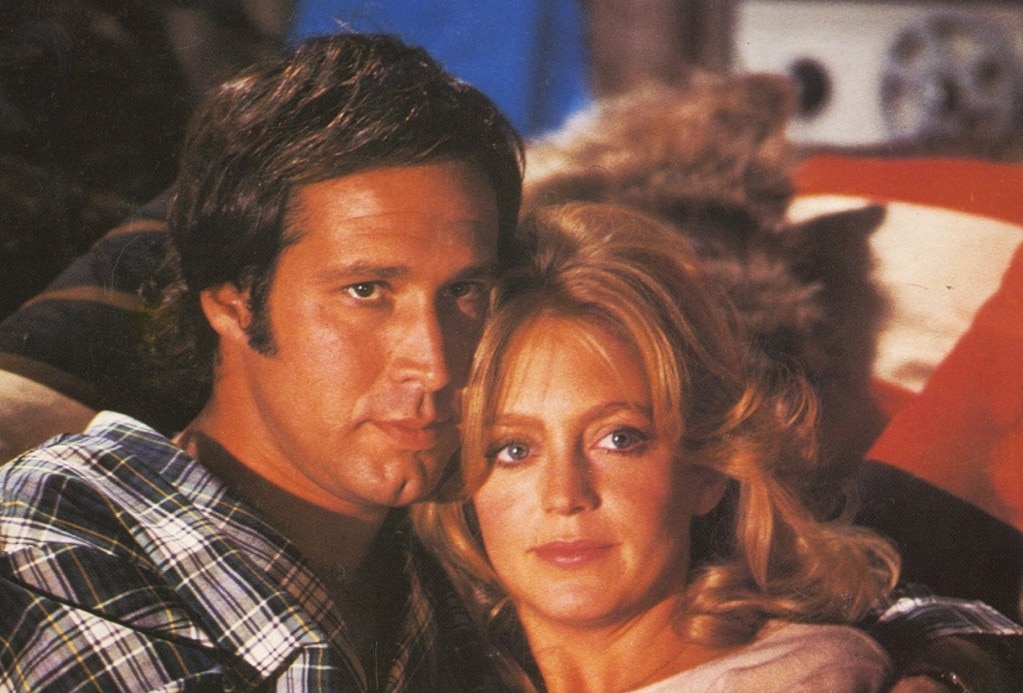
Also irresistible were the two stars. In a role she said required very little acting at all, a divorcee sucked into the investigation of a threat against the pope just as she's ready to take a chance again on love, Goldie Hawn was at her goofy best. After rising to stardom on NBC's Rowan and Martin's Laugh-In in the late '60s, she had won a Best Supporting Actress Oscar for her first major film role in Cactus Flower (1969). Despite her prodigious talents and a knockout performance in Steven Spielberg's The Sugarland Express (1972), however, Hawn had trouble finding a niche as a film star. Foul Play marked her first hit since Shampoo three years earlier and put her in a position to market Private Benjamin (1980), one of her biggest successes.
Chevy Chase had just scored a breakthrough hit as one of the original Not Ready for Primetime Players on Saturday Night Live when he got the chance to break into feature films in Foul Play. His combination of pratfalls, lechery and romantic bumbling had reviewers comparing him favorably to the young Cary Grant. He and Hawn clicked so well as a romantic team that they would co-star again in Seems Like Old Times (1980).
Also getting a big boost out of Foul Play was Dudley Moore, who made his U.S. film debut as the amorous conductor who keeps coming on to Hawn while she's on the run. The role had originally been written for comic Tim Conway. When he turned it down, it became a personal triumph for Moore, particularly when his performance caught the eye of writer-director Blake Edwards, who cast him in his 1979 comedy about mid-life crisis, 10.
Production values for Foul Play were impeccable, most notably the location photography of San Francisco. Cameras ranged from a Sausalito marina, where Hawn and Chase share their first date, to the San Francisco Opera House, where the action comes to a head during a performance of Gilbert and Sullivan's The Mikado (actually performed by members of the New York City Opera with Julius Rudel conducting). Also helping was the hit theme song, "Ready to Take a Chance Again." Sung by Barry Manilow, it was on the charts for 16 weeks and captured an Oscar nomination for Best Song (it lost to the disco number "Last Dance" from Thank God It's Friday). Songwriters Charles Fox and Norman Gimbel had previously worked for Foul Play's producers, Thomas L. Miller and Edward K. Milkis, when they wrote the theme song for their hit series Happy Days.
Foul Play's success was a boon for everyone involved, particularly writer-director Colin Higgins. With that hit under his belt, he scored an even bigger success with the office-politics comedy Nine to Five (1980), starring Jane Fonda, Lily Tomlin and Dolly Parton. Unfortunately, the subsequent failure of The Best Little Whorehouse in Texas (1982), with Parton and Burt Reynolds, put the brakes on his career. Before he could find a comeback, he died from complications of AIDS in 1988 at the age of 47.
Foul Play also inspired a television series starring Barry Bostwick and Deborah Raffin in the roles created by Chase and Hawn. Unfortunately, the series folded after only a few weeks. Television continued to be unfriendly to the film when a 1981 primetime airing was canceled at the last minute because of an assassination attempt on the pope, an event that came too close to the film's comic suspense plot.
Producer: Thomas L. Miller & Edward K. Milkis
Director: Colin Higgins
Screenplay: Colin Higgins
Cinematography: David M. Walsh
Art Direction: Alfred Sweeney & Robert R. Benton
Music: Charles Fox
Principal Cast: Goldie Hawn (Gloria Mundy), Chevy Chase (Tony Carlson), Burgess Meredith (Hennessey), Rachel Roberts (Gerda), Dudley Moore (Stanley Tibbets), Marilyn Sokol (Stella), Brian Dennehy (Fergie), Marc Lawrence (Stiltskin), Chuck McCann (Theater Manager), Billy Barty (J.J. MacKuen).
C-117m. Letterboxed.
by Frank Miller
Foul Play
by Frank Miller | February 26, 2004
SIGN UP FOR OUR NEWSLETTERS

CONNECT WITH TCM