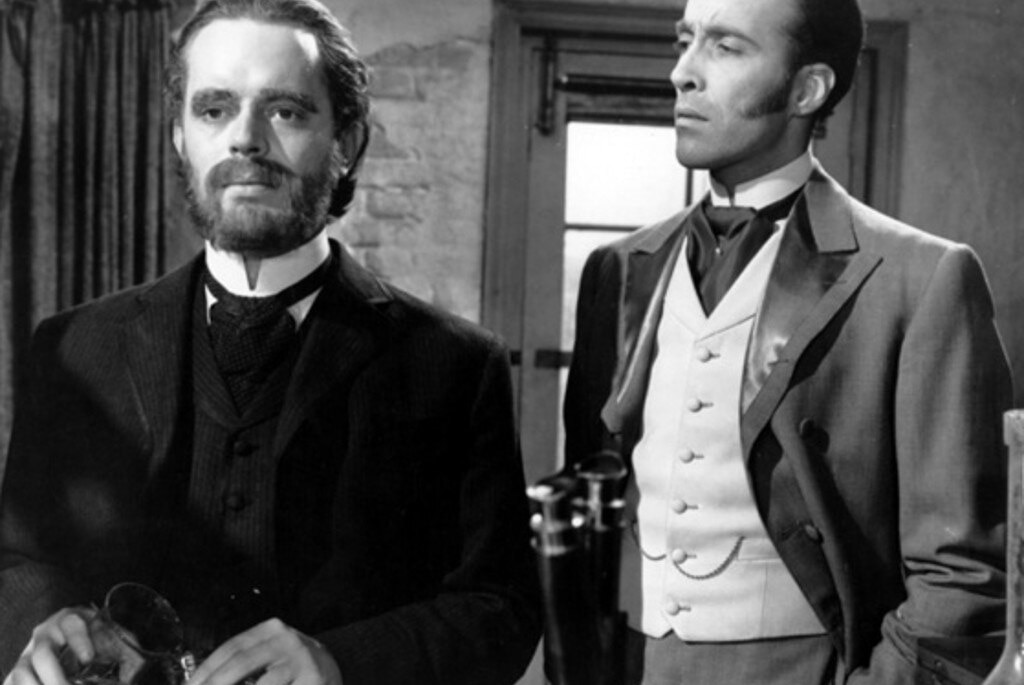
Having plumbed the Universal Studios classic monster back catalogue to reboot Dracula, Frankenstein, and The Mummy with greater lashings of sexuality and violence, Britain's Hammer Film Productions turned to other sources to satisfy a demand for Gothic shocks. Robert Louis Stevenson's novella The Strange Case of Dr. Jekyll and Mr. Hyde had inspired several silent and sound film adaptations, among them Paramount's Oscar-winning 1931 adaptation with Fredric March. The market was glutted further by a 1941 remake starring Spencer Tracy and such gonzo offshoots as Son of Dr. Jekyll (1951) and Daughter of Dr. Jekyll (1957). Hammer itself had played the premise for laughs in The Ugly Duckling (1959) before deciding to tell the tale straight - albeit with a contemporary kink. Exploiting a plot point from The Ugly Duckling, scenarist Wolf Mankowitz had Paul Massie's aging London practitioner transform into a dashing young lothario, equally irresistible and deadly. Horror of Dracula (1958) star Christopher Lee was ported over for a supporting role written specifically for him while Oliver Reed appeared in an early speaking part. The London Times branded The Two Faces of Dr. Jekyll (1960) "repellent" while The New York Herald Tribune lauded House of Fright (as the film was known stateside) as "a colorful, ingenious remake" - one that may well have inspired Jerry Lewis' The Nutty Professor (1963).
By Richard Harland Smith
The Two Faces of Dr. Jekyll
by Richard Harland Smith | September 16, 2013
SIGN UP FOR OUR NEWSLETTERS

CONNECT WITH TCM