Classic movie fans can rejoice over Fox Studio Classics' new DVD release of My Darling Clementine. Director John Ford's 1946 western masterpiece has been given an exceptional treatment on this double-sided DVD laden with fascinating extras. On one side is the release version we have all known and loved over the years, in an impressively sharp transfer from a restored print. On the flip side is an alternate pre-release version that contains six minutes of extra footage scattered throughout the movie. It also contains alternate scoring in places, including sequences in which the score has been removed altogether.
The extra footage is part, but not all, of the longer cut that Ford originally preferred but which Darryl Zanuck, the head of 20th Century Fox, deleted. It's hard to argue with Zanuck's cuts, of course, because the ultimate release version is unarguably one of the greatest films in history, but the extra footage is often undeniably rich in atmosphere and deeper characterization. Ironically, perhaps the most notable change was a shot that was added to the release version but absent from Ford's cut: the kiss that Fonda plants on Cathy Downs' cheek at the end, just before he shakes her hand awkwardly and rides away. Originally, Ford shot only the awkward handshake. Zanuck preferred the handshake by itself, too, but he felt the need to respond to preview audiences who felt that the scene had been building toward a kiss - and felt cheated when none came. Fonda and Downs were called back months after principal production to film the kiss in a soundstage.
Aside from the complete versions of the two cuts, the DVD includes a 41-minute featurette in which UCLA archivist Robert Gitt compares the differences. This is an excellent use of the DVD medium in which we see the same scenes repeated in their different versions so that we can examine every detail that was changed, side by side. Excellent commentary on the standard release version is provided by Ford biographer Scott Eyman, who provides a scene-specific analysis and shares a good deal of knowledge about the film's production and the story's historical background. (For example, Doc Holliday actually lived through the shootout, and he and Wyatt Earp were briefly jailed for it.) Wyatt Earp III also contributes to the commentary. Final extras on the disc are a trailer and production stills.
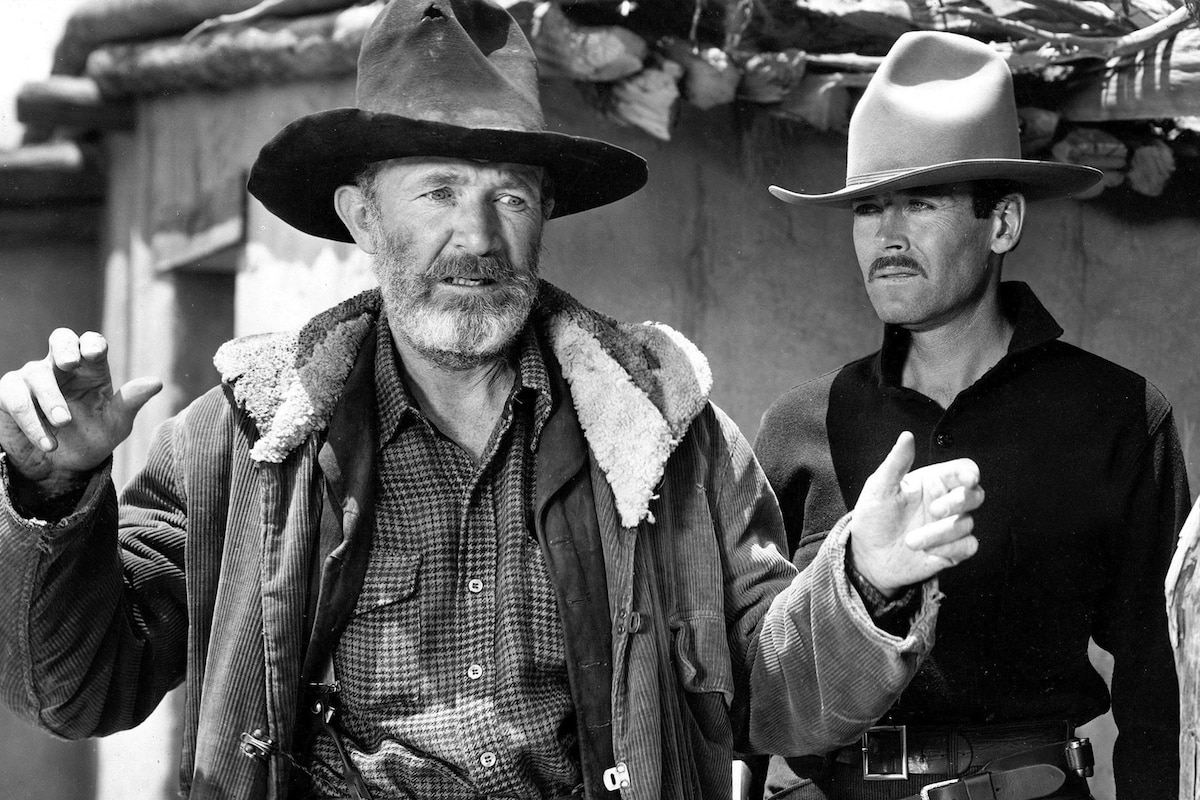
And what of the film itself? It was Ford's 2nd feature after a five-year break devoted to WWII combat documentaries, and his first western since Stagecoach (1939). It's the story of the feuding Earps and Clantons in Tombstone, Arizona, and their famous shootout at the OK Corral. Much of it as shown is myth, but the spirit of it is true and the picture's place in Hollywood history and American culture has been established by its magnificent pictorialism and memorable characterizations by Henry Fonda, Victor Mature, and Walter Brennan among others.
Perhaps it's best just to say that My Darling Clementine fully fits John Ford's own definition of a successful movie: "When a motion picture is at its best, it's long on action, short on dialogue. When it tells its story and reveals its characters in a series of simple, beautiful, active pictures, and does it with as little talk as possible, then the motion picture medium is being used to its fullest advantage. I don't know any subject on Earth better suited to such a presentation than a western."
To order My Darling Clementine, go to
TCM Shopping.
by Jeremy Arnold
My Darling Clementine - Review #2 - Another Look at the new DVD release
by Jeremy Arnold | January 22, 2004
SIGN UP FOR OUR NEWSLETTERS

CONNECT WITH TCM