Liberace was the highest-paid performer in America when he made his starring debut on the big screen. He was earning a record $50,000 per engagement in Las Vegas, took home $138,000 for a single show at Madison Square Garden (another record), was the star of the hit syndicated TV series "The Liberace Show," and brought in $1 million a year from public performances and appearances. He had conquered stage, radio, and TV. Only the movies eluded him. "Fabulously yours in his first starring motion picture," reads the poster for Sincerely Yours (1955), which was not Liberace's debut film--he had a supporting role in South Sea Sinner (1950) and appeared as himself in the variety film Footlight Varieties (1951)--but was his debut as a leading man at the age of 36.
It's based on the Jules Eckert Goodman play "The Silent Voice," which had already been adapted to the screen twice, both times under the name The Man Who Played God and both with George Arliss in the role of a pianist going deaf and retreating from the public eye. The story was reworked for Liberace by producer Henry Blanke and screenwriter Irving Wallace. Anthony Warrin is a concert pianist with a common touch, chatting with the audience and mixing popular tunes and American folk songs in with his classical repertoire. "He gives pleasure to everyone," remarks his manager Sam (venerable character actor William Demarest), but what he really wants to do is play Carnegie Hall. And then, just as that chance is within his reach, he loses his hearing and retreats to his lavish Park Avenue apartment, peering out into the world with a pair of high-powered binoculars and following the dramas that play out in the park below by reading lips. It's like a benevolent twist on Rear Window (1954).
Sincerely Yours plays to Liberace's strengths: his showmanship, his audience rapport, his mix of stylistic flamboyance and down-to-earth manner. He follows a classic recital with a request for "Chopsticks" from a little girl and transforms it into a dynamic showpiece. He takes the stage at a nightclub and gives a boogie-woogie demonstration complete with audience participation. He plays everything from Tchaikovsky and Chopin to George Gershwin to "When Irish Eyes Are Smiling" and "The Beer Barrel Polka" with his familiar grin, and even punctuates a performance by tap dancing his way off stage. Anthony Warrin, like Liberace himself, is the artist as public entertainer, a showman with a populist touch, and this was the rare Hollywood film where a real keyboard virtuoso played the piano genius on screen. Liberace even composed and sang the title song (the lyrics were by Paul Francis Webster).
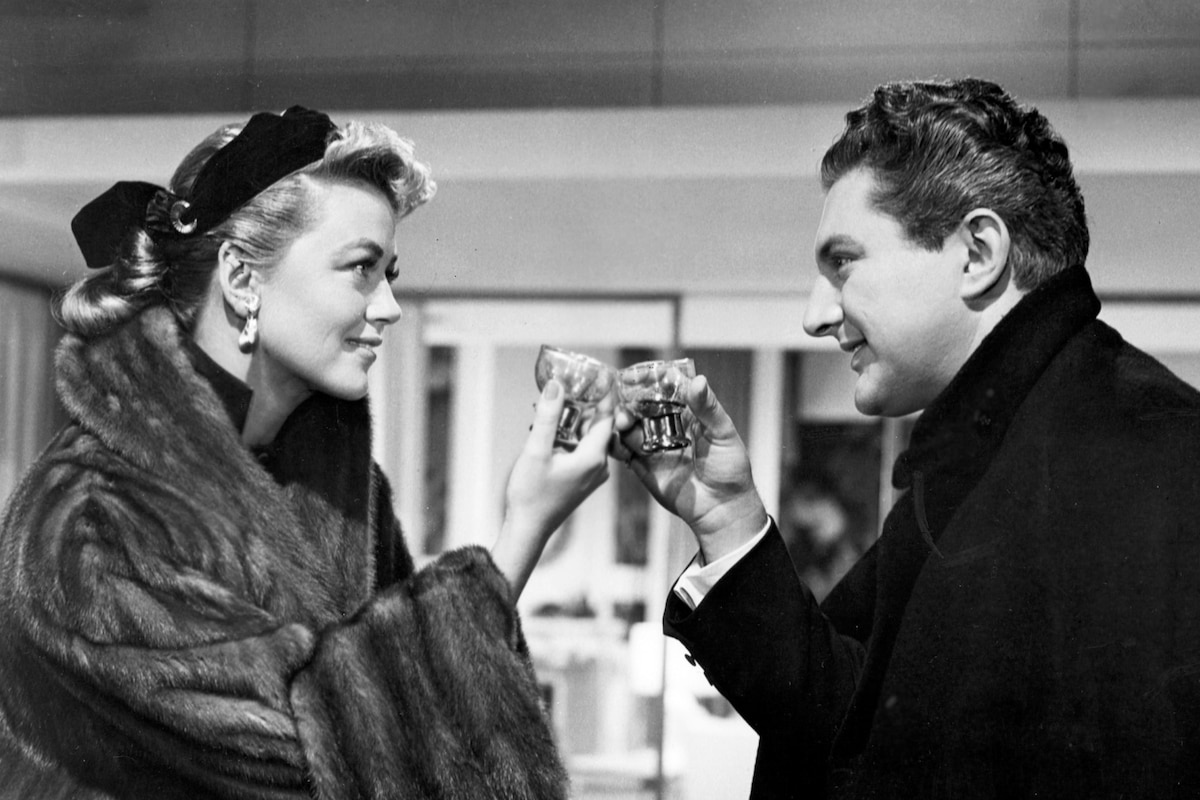
The film also adds not one but two romantic interests: Joanne Dru as his loyal secretary, who is secretly in love with him, and Dorothy Malone as a society beauty he courts in a whirlwind romance before retreating from the public. Along with Demarest, a longtime character actor on both the big screen (Preston Sturges considered him his good luck charm) and on TV (known to a generation as Uncle Charlie on My Three Sons), viewers may recognize Edward Platt (Warrin's doctor) from Get Smart! and Ian Wolfe (his lip-reading teacher) as the lecturer from the observatory scene of Rebel Without a Cause (1955).
Sincerely Yours was well received in Hollywood previews and Warner Bros. was poised for a hit. The national press, however, was less enthusiastic. Bosley Crowther described Liberace as "oozing dimpled sincerity from the screen, frequently skimming the glistening keyboard and bestowing his smile like a kiss." Audiences stayed away and the film flopped, much to Liberace's frustration. "I feel there is a public which will awaken to the film's theme, which is based on my philosophy of life: to bring happiness to people," he told Hollywood Reporter in 1956. They didn't and Warner Bros. chose to pay off Liberace rather than roll the dice on the second film in his two-picture contract. Apart from an appropriately, knowingly flamboyant turn in the 1965 comedy The Loved One, it was Liberace's last big screen performance. Not that his career needed it. He continued on for decades making TV appearances with his trademark style and performing as a star attraction in Las Vegas with increasingly bigger and more extravagant shows.
Sources:
Liberace: An American Boy, Darden Asbury Pyron. University of Chicago Press, 2000.
Liberace: An Autobiography, Liberace. G.P Putnam's Sons, 1973.
"Smiling, Sincere; Liberace Is Emoting at the Paramount," Bosley Crowther. The New York Times, November 3, 1955.
"Dueling Liberaces: 'Sincerely Yours' (1955) vs 'Behind the Candelabra' (2013)," Lou Lumenick. New York Post, May 33, 2013.
AFI Catalog of Feature Films
IMDb
By Sean Axmaker
Sincerely Yours (1955)
by Sean Axmaker | June 25, 2013
SIGN UP FOR OUR NEWSLETTERS

CONNECT WITH TCM