There was a time, shortly after World War II, when Hollywood writers and directors finally realized they could open up about things previously deemed off limits. Whether it was post-traumatic stress ("shell-shock" in the less delicate days) or racial tolerance, Hollywood could now produce several hard hitting dramas that dealt with both whereas before it would've been unthinkable. Almost all of the time those issues were dealt with in a serious and solemn way but not every time. Apartment for Peggy (1948) takes on the issues of returning vets, parents who lost their children to war, suicide and tolerance while at the same time keeping the action brisk and the tone light-hearted. Somehow, that makes both sides of the coin shine brighter.
Apartment for Peggy opens with Professor Henry Barnes (the great Edmund Gwenn) in rehearsal with other professors who are a small but dedicated group of amateur musicians. They're playing a nice piece, with Barnes on violin, but when they stop and attempt another go at it, Henry says he has to leave. He has things to take care of because he's leaving the college, much to the dismay of his friends. Later, he reveals to one of them that he actually intends to commit suicide.
After his friend tells everyone of Henry's plans, it is demanded that Henry see a doctor, which he does. When the doctor asks why a man in perfect health would want to commit suicide, Henry replies that's exactly the reason he wants to, because he's in perfect health. Why, he asks, should he wait until he's old and sick and praying for death. Why not do it now when he's still in control?
Outside the doctor's office, Henry sits on a bench and Peggy Taylor (Jeanne Crain) grabs the space next to him. First she complains about how tired she is (she's pregnant and has been on her feet all day), then starts quizzing him on who he knows around the college because her husband, Jason, is studying chemistry to be a teacher and they desperately need on-campus housing. Henry doesn't want to talk but the vivacious Peggy won't stop. The talk turns to life and Henry asks her a hypothetical: What if you were old, weren't depressed or despairing, had done everything you set out to do, had nothing more to contribute and wanted to go before you became sickly or demented? Why not kill yourself? Peggy responds anyone who feels that apathetic about it doesn't sound like he's been living at all and you've got to be living first if you're going to die. She recommends Mr. Hypothetical start living first, with a capitol "L" and leaves.
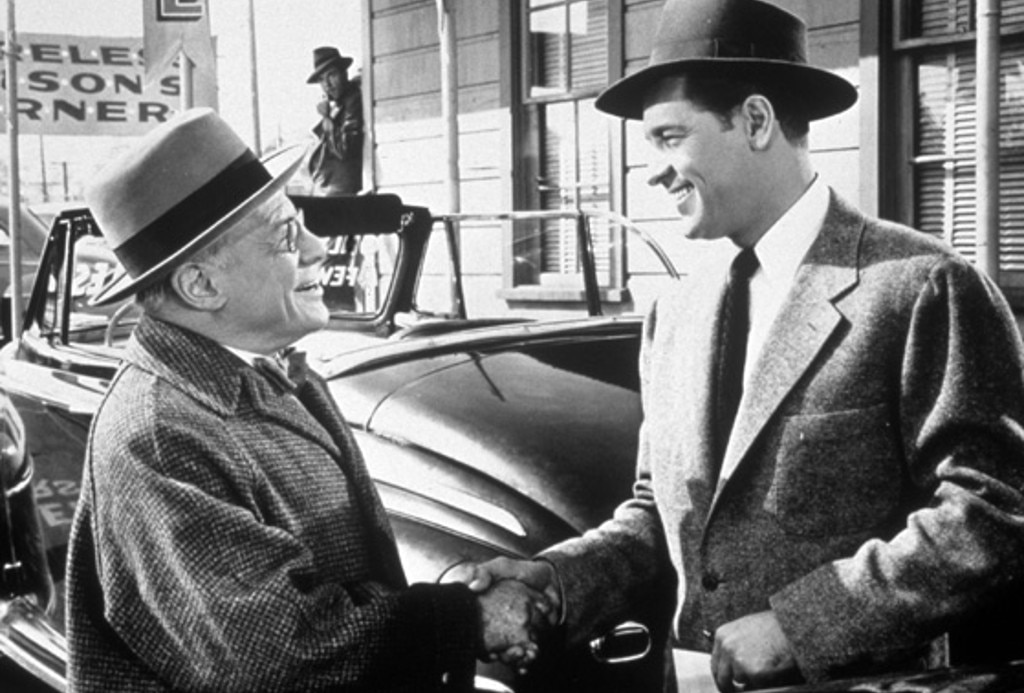
Later, Peggy learns that Henry lives in a house on campus with an empty attic available for occupation. She twists his arm into letting her and Jason stay there and before long they've fixed up the attic, had tea with Henry and become good friends. Due to their age differences, Peggy calls Henry "Pop," the name she gave her grandfather. Henry comes to view Peggy and Jason in a similar way. He lost his own son in World War I and takes on Jason as a son to be proud of, as long as he finishes his schooling and gets his degree. The problem is that Jason needs to earn money and is increasingly tempted to drop out of school and take an open job offer to become a used car salesman instead. When Jason does just that, Henry's heartbroken and so is Peggy.
There are many more surprises to the plot than that, with a few twists and turns along the way. But what stands out about Apartment for Peggy is the issues it grapples with without ever letting any of it stand in the way of the story. Although it deals with many issues, it never highlights them to become an "issue movie." Peggy speaks about having nine children to insure that at least some of them are good and socially conscious so they can have children who are the same in the hopes that eventually racial intolerance will no longer exist. She says all of that in a quick aside at tea without any underlining whatsoever. Later, Henry tells Jason it's tough being a professor and even tougher if you try to inject progressive methods into the mix. Finally, both Henry's apathy towards life and Jason's impatience stem from their traumas of war.
That all of this is presented without ever being emphasized is a real credit to writer-director George Seaton. He manages to keep all of it suspended on a bubble of cozy New England positive thinking without popping it once. Edmund Gwenn proves once again that he was an actor of immense gifts and Seaton knew it. He had directed Gwenn to an Oscar® for Best Supporting Actor in the holiday classic, Miracle on 34th Street (1947), a movie Seaton also wrote.
William Holden had spent nine long years since his breakout role in Golden Boy (1939) seeing stardom elude him. He is excellent as always (Holden could never not be excellent) but his role is more or less there for both Gwenn and Crain to play off of, not engage with. In just two years, Sunset Boulevard (1950) would finally put Holden into the limelight he so richly deserved.
Jeanne Crain is the real core of the movie. Her performance as Peggy is at once breathtaking and immediately relatable as well. Her plucky nature never grates or irritates and she plays the difficult emotional scenes with grace and style. It's a terrific performance and signaled that Crain was an actress to watch. And Apartment for Peggy remains a movie to watch, and watch again.
By Greg Ferrara
Apartment for Peggy
by Greg Ferrara | June 06, 2013
SIGN UP FOR OUR NEWSLETTERS

CONNECT WITH TCM