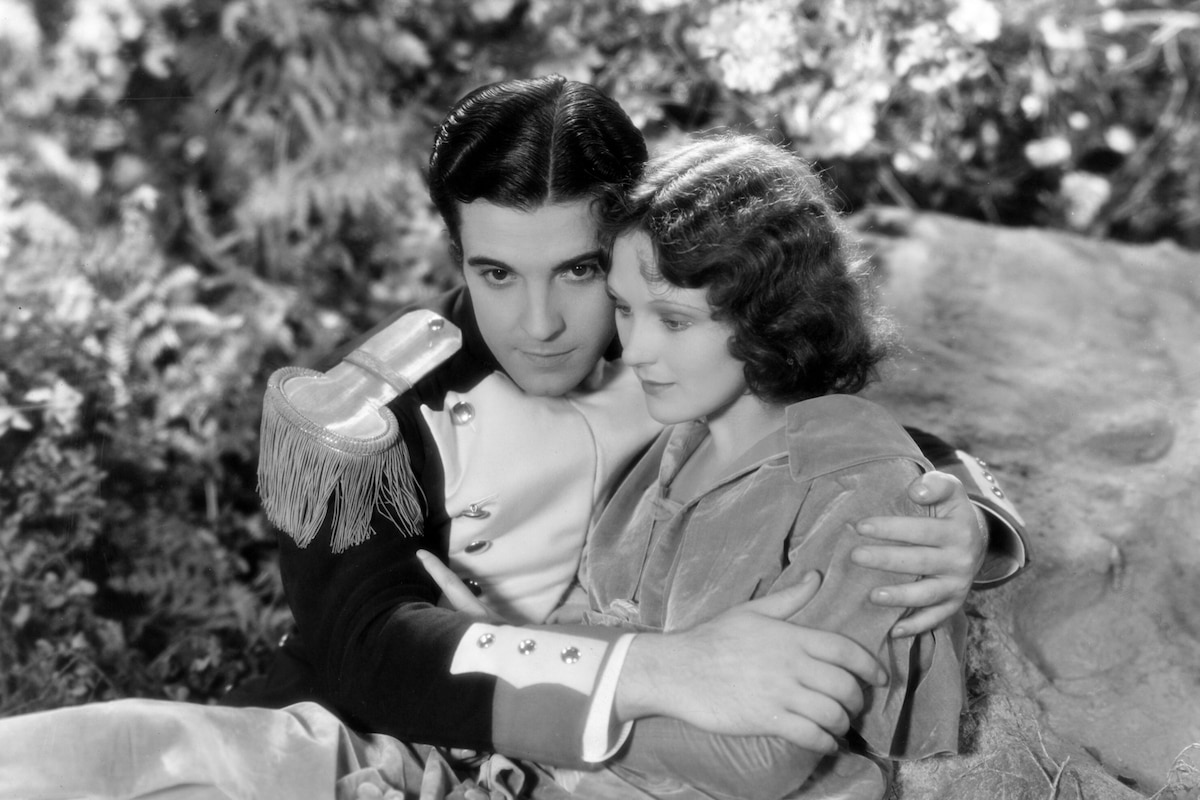
MGM silent film heartthrob Ramon Novarro shines in his first musical talkie Devil-May-Care (1929) directed by Sidney Franklin. The Mexican born Novarro plays Armand, a daring French soldier and follower of Napoleon Bonaparte who narrowly escapes death at the hands of Royalists as Bonaparte is exiled to Elba. On the run, Armand encounters romantic entanglements with two women (Marion Harris and Dorothy Jordan), one of whom wants to turn him in to the Royalists who are in hot pursuit. Billed as "the first dramatic operetta of talking pictures," Novarro sings songs by Clifford Grey and Herbert Stothart including "The Shepherd's Serenade" and "Charming" in his lilting tenor voice.
As his first official talkie after years of success as a leading man on the silent screen, Devil-May-Care was an important film for Ramon Novarro. Its success or failure would determine his future in Hollywood as the studios slowly but surely made the turbulent transition to sound. Novarro was at the height of his fame at the time and had even sung before in the earlier film The Pagan (1929) to much acclaim (The Pagan was a predominantly silent film with two brief musical sound scenes). However, Novarro's speaking voice had yet to be tested with the public, and making a successful transition to talkies was a tricky business that had silenced some of his equally popular contemporaries. There was simply no guarantee that his fans--no matter how adoring--would accept him talking in films, a fact made even more unpredictable by his accent.
Novarro remained affable and confident throughout the production of Devil-May-Care (originally titled The Battle of the Ladies), although there were predictably some difficulties adjusting to the new sound technology on the set. The process was still quite new and caused problems that kept the shoot moving at a slower pace than normal. There was also the additional challenge of having the singing recorded live throughout the film which regularly kept technicians as well as the director and actors busy.
To add to the appeal of the film, which already contained music, comedy, talking and Ramon Novarro--one of the studio's biggest stars, MGM also added a brief two-strip Technicolor ballet put together by Albertina Rasch that featured music by her composer husband Dimitri Tiomkin. Color, like sound, was still in its experimental stages, and its presence in the film added to its novelty, which MGM hoped would entice audiences into theaters.
When Devil-May-Care was completed and ready for release, MGM took care to emphasize Novarro's singing ability in the promotional campaign, calling him "the Golden Voice of the Silver Screen." It premiered in December 1929 to mostly positive reviews and went on to be a solid box office hit. Its success assured Ramon Novarro a future in talking pictures--at least for the time being--and caused MGM studio executives to breathe a huge sigh of relief. Novarro's confident charm and ease onscreen made him a natural for the transition into the sound era, winning many new fans in the process.
by Andrea Passafiume
Devil-May-Care
by Andrea Passafiume | June 04, 2013
SIGN UP FOR OUR NEWSLETTERS

CONNECT WITH TCM