Lifeboat was the first original fiction film written directly for the screen by John Steinbeck. His only previous screenwriting credit was for the 1941 documentary The Forgotten Village.
The stormy seas through which the lifeboat sails are stock footage taken off the Florida coast.
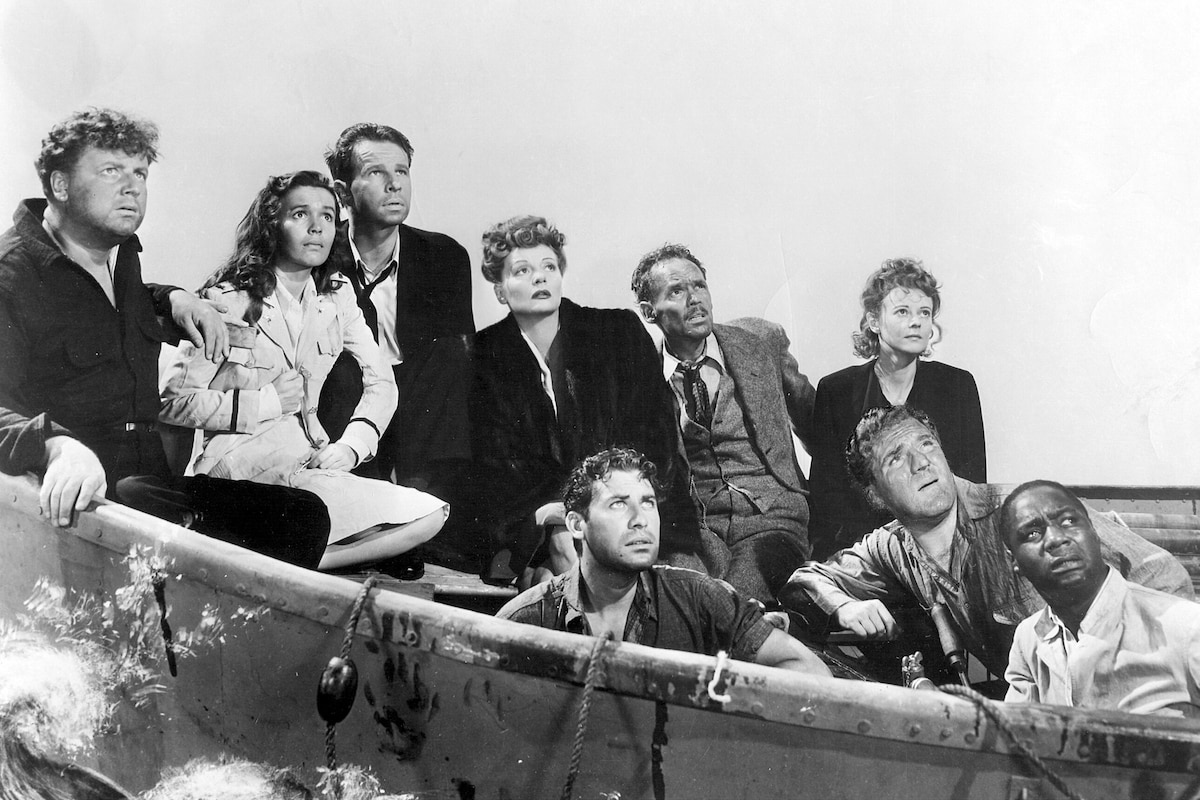
With the constant rocking of the boat during filming, most of the cast needed pills to combat seasickness.
The wardrobe department prepared six versions of each costume so that at least one would always be dry when a scene had to be re-shot. Unfortunately, that didn't always work, so at times the actors had to stand in front of the most powerful stage lights trying to dry their costumes before the next shot.
With the action confined to a lifeboat and only the relatively small cast of nine on camera, inserting Hitchcock's customary cameo appearance was a challenge. Since he had recently lost weight, he used full-figured and slimmer shots of himself to create a before and after weight-loss ad in a newspaper William Bendix reads. After the film came out, Hitchcock was deluged with letters from people trying to find Reduco, the product advertised.
When Tallulah Bankhead patiently shot a scene in which she was doused with 5,400 gallons of water, the crew burst into spontaneous applause.
Bankhead was so vehemently anti-German she would only learn her German lines, spoken to the submarine captain played by Walter Slezak, phonetically. She had hired Paula Strasberg, wife of director-actor Lee Strasberg, to travel as her companion/secretary, and Mrs. Strasberg drilled her on the lines until she got the inflections perfectly.
Hitchcock socialized with Bankhead off-screen during filming. She took him to several art galleries and got him started collecting modern art.
On the last day of shooting, Hitchcock presented Bankhead with a Sealyham puppy in appreciation for her professionalism. The puppy was named Hitchcock.
Trivia - Lifeboat - Trivia & Fun Facts About LIFEBOAT
April 24, 2013
SIGN UP FOR OUR NEWSLETTERS

CONNECT WITH TCM