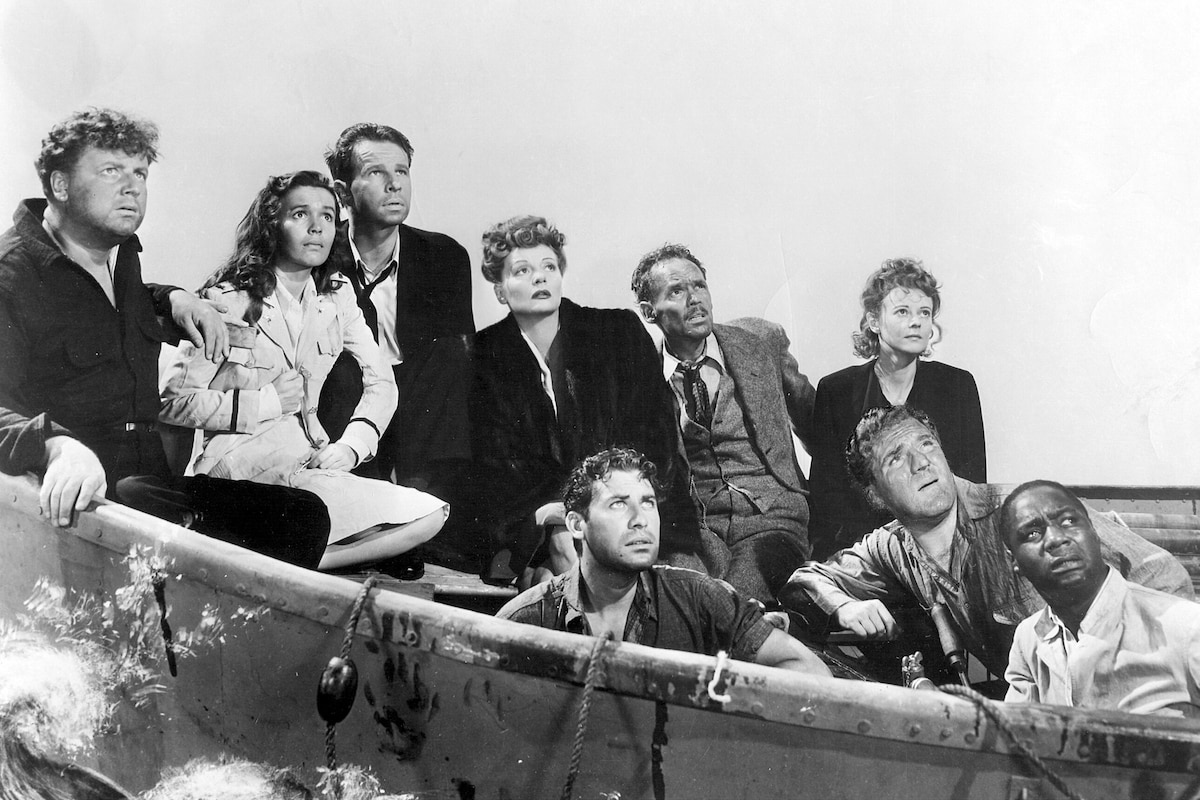
With her success in Lifeboat, Tallulah Bankhead's film career briefly recovered after an 11-year drought. 20th Century-Fox offered her the role of Catherine the Great in A Royal Scandal (1945), originally planned for Ernst Lubitsch. When he became too sick to do more than produce, it was taken over by Bankhead's friend, Otto Preminger. Unfortunately, the film was not as successful as Lifeboat, finally laying to rest Bankhead's dreams of film stardom.
Playwright Sidney Easton sued 20th Century-Fox in 1945 claiming the film had plagiarized his play Life Boat No. 13. He claimed the script had been given to John Steinbeck, who then used the plot and characters in his own novella. During court proceedings, Steinbeck denied ever having seen Easton's script. In addition, screenwriter Jo Swerling stated that he had only read Steinbeck's novella once before writing the screenplay on his own, and studio records documented director Alfred Hitchcock's extensive use of interviews with wartime shipwreck survivors to develop material for the script. Easton finally dropped his suit in return for a one-time payment of $9,000.
Hitchcock directed Bankhead in a one-hour radio version of the film for Screen Director's Playhouse in 1950.
The final shots of the S.S. Claridon sinking inThe Last Voyage (1960) are so similar to the ship sinking at the opening of Lifeboat some critics have suggested the studio simply colorized Hitchcock's original footage.
In 1993, Lifepod translated the film's action into science fiction, with eight passengers surviving the destruction of a space ship. Robert Loggia, Ron Silver (who also directed) and CCH Pounder head the cast.
Pop Culture 101 - Lifeboat
April 24, 2013
SIGN UP FOR OUR NEWSLETTERS

CONNECT WITH TCM