SYNOPSIS
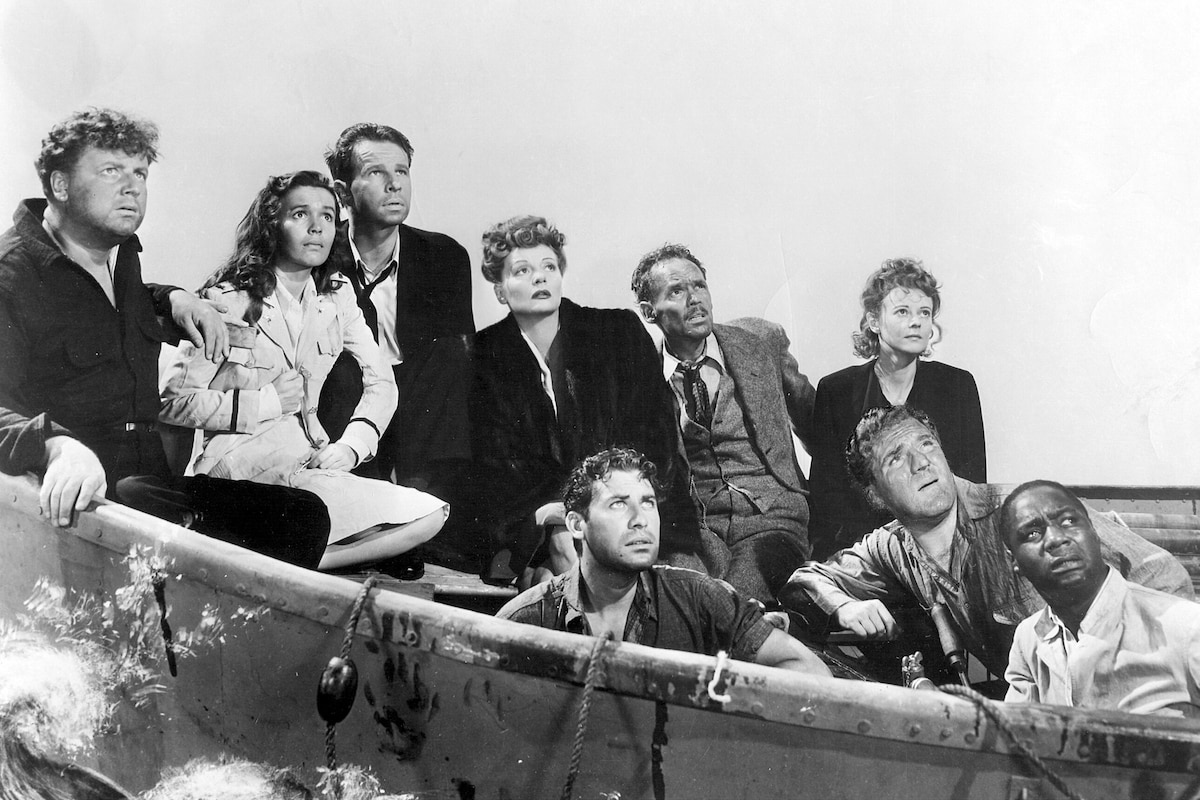
A group of mismatched passengers -- a glamorous newswoman, a millionaire industrialist, a ship's stoker, a nurse and a fiery, liberal seaman among them -- huddle in a lifeboat after their ship is sunk by the Nazis during World War II. Their desperate plight gets tenser when the German captain who torpedoed them swims up to the fragile craft. As his leadership abilities and navigational skills come to the fore, the little boat becomes a microcosm for the war taking place in the outside world, particularly when the German starts trying to commandeer the lifeboat and its passengers for the Third Reich.
CAST AND CREW
Director: Alfred Hitchcock
Producer: Alfred Hitchcock, Kenneth Macgowan
Screenplay: Jo Swerling
From a story by John Steinbeck
Cinematography: Glen MacWilliams
Editing: Dorothy Spencer
Art Direction: James Basevi, Maurice Ransford
Music: Hugo Friedhofer
Cast: Tallulah Bankhead (Constance 'Connie' Porter), William Bendix (Gus Smith), Walter Slezak (Willy), Mary Anderson (Alice MacKenzie), John Hodiak (John Kovac), Henry Hull (Charles S. Rittenhouse), Heather Angel (Mrs. Higgins), Hume Cronyn (Stanley 'Sparks' Garrett), Canada Lee (George 'Joe' Spencer)
BW -97 m.
OVERVIEW
Lifeboat was the first film in which Alfred Hitchcock explored his fascination with filming in a confined setting. As in his later Rope (1948) and Rear Window (1954), he would limit his action to a single set, though neither of those later pictures had as confining a setting as Lifeboat. His solution of the shooting problems this posed was a technical marvel that would influence his use of similar confined spaces for scenes in such later classics as Psycho (1960) and The Birds (1963).
The film presents a microcosmic look at global attitudes toward the war, providing a clearer reflection of divergent thinking at the time than most Hollywood films. As such, it provides very cogent criticism of how everyone from the wealthy to the working classes stood by and allowed the Nazis to take over Germany and almost conquer the world. It also suggests the only way the free nations could defeat the Axis is to forget their differences and work together.
At Hitchcock's insistence, Lifeboat was one of the few Hollywood films of the '40s released with no musical soundtrack apart from music over the titles. He wanted to intensify the sense of isolation on the boat by having nothing interfere with the sounds of waves and wind. The result is an almost hallucinatory picture that, despite its strong political basis, often seems timeless.
After years of failed films in Hollywood, Tallulah Bankhead returned to screen stardom after 11 years for her one true hit and the only film to truly capture the magic she created on stage. The role of fashion reporter Connie Porter gave her a chance to start out glamorous, with a mink coat and diamond bracelet, and flash her wit in a series of putdowns of her fellow passengers. Then as the lifeboat was struck by storms and internal disputes, she broke down the glamorous façade in a truly riveting performance.
The Essentials - Lifeboat
April 24, 2013
SIGN UP FOR OUR NEWSLETTERS

CONNECT WITH TCM