SYNOPSIS
A writer recalls his youth in the summer of 1959, when he and three of his 12-year-old buddies took off on an adventure to find the body of a boy who died in the woods near their Oregon town. The two-day trek turns into a journey of personal discovery as they confront their fears, their family problems, and the everlasting bond of friendship between them.
Director: Rob Reiner
Producers: Bruce A. Evans, Raynold Gideon, Andrew Scheinman
Screenplay: Raynold Gideon, Bruce A. Evans; based on the novella "The Body" by Stephen King
Cinematography: Thomas Del Ruth
Editing: Robert Leighton
Production Design: Dennis Washington
Original Music: Jack Nitzsche
Cast: Wil Wheaton (Gordie Lachance), River Phoenix (Chris Chambers), Corey Feldman (Teddy Duchamp), Jerry O'Connell (Vern Tessio), Kiefer Sutherland (Ace Merrill), Richard Dreyfuss (Narrator/The Writer)
Why STAND BY ME Is Essential
Although it was a film about 12-year-old boys on an adventure, it's unlikely that Stand by Me attracted many fans from that age bracket, the demographic that made hits out of other kid-oriented pictures of the time, like The Goonies and Explorers (both 1985). For one thing, the salty language used by the boys in the picture, although very characteristic of their age group, got the movie slapped with an R rating. For another, the story, set in 1959, was not about youth of the 1980s. Bathed in a nostalgic glow of period pop music, burnished summer days, and conversations about Superman, the cartoon character Goofy, and the size of Annette Funicello's breasts, the movie appealed instead primarily to men in their mid-30s and up, who had experienced-or imagined they had-the lives that director Rob Reiner and his cast portrayed.
Despite the production's every effort to capture certain slang expressions and pop culture references (and they are abundant and generally exact), the boys in this story really don't always talk like 12 year olds. With their perceptive sensitivity about their own problems and those of their friends and their tendency to have heart-to-heart confessional conversations couched in psychological insights, they reflect more of the idea of what an adult might reveal about his early days with the benefit of hindsight. Much of the dialogue has far more of the writer's hand than the kid's tongue, and that may be precisely right for a movie adapted from a semi-autobiographical story framed as the memory of a famous writer looking back on the most special summer of his youth. Reiner was attracted to Stephen King's "The Body" because he was also about that age in 1959, dealing with many of the same issues of acceptance and finding his way in an adult world he was sure didn't appreciate him. Because of this connection, Reiner turned out a film that struck the same chords in men of his own age, creating an immediate box office hit and an instant classic that many still look back on with great tenderness and bittersweet fondness.
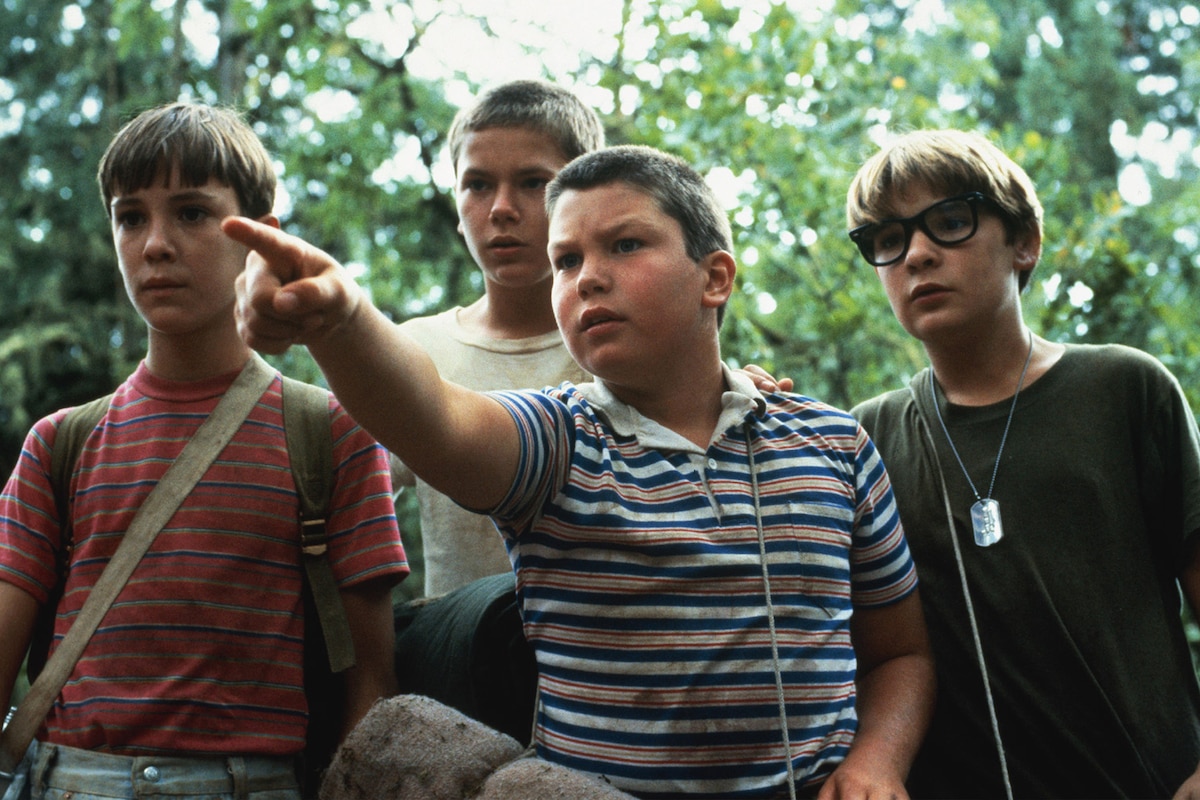
Without Reiner's sensitive handling of the material, Stand by Me could be just a fantasy for those who actually believe, as the protagonist of King's original story states, that they had their best friends and best times just on the cusp of adolescence. The movie doesn't shrink from that sensibility, which may partly explain why it played so well in a decade given to looking back in a haze to a "simpler" time that probably never really existed. What makes it work is the immense appeal of four young actors perfect for their roles and delivering remarkable performances. Reiner chose to cast boys who closely mirrored the personalities of the characters they were portraying, then worked with them carefully to create a true ensemble that could feed off each other's energy and quirks and make us believe these boys really knew each other for most of their young lives. In many films with kids as the central character, scenes are cobbled together from quick close-ups achieved by the director painstakingly feeding the young actor his or her lines until the right take is captured. The performances in Stand by Me, on the other hand, are clearly not mostly created in the editing room. Reiner creates many sustained scenes with all four actors in the shot, picking up their cues, getting the timing spot on, stressing just the right emotional notes-in the director's own words, "like a piece of music."
All the main actors are standouts, but the one that continues to get the most notice is River Phoenix. In only his second theatrical feature and his first major role, Phoenix displays a talent, sensitivity, and depth that belie his age and relative inexperience. The final shot of him in the movie disappearing before his friend's eyes, playing a character we know has died young, gives the movie a special poignancy in light of Phoenix's own early death at the age of 23.
This may not be widely hailed as a milestone film in American cinema history, but Stand by Me is certainly one of the best of its type-a nostalgic coming-of-age story that uses period detail, a soundtrack of catchy pop songs of the era (including Ben E. King's rendition of the title tune, which became a big hit all over again), a comfortable narrative pace, and engaging performances to craft an endearing movie that continues to resonate with a segment of the movie-viewing public.
by Rob Nixon
The Essentials - Stand by Me
by Rob Nixon | April 22, 2013
SIGN UP FOR OUR NEWSLETTERS

CONNECT WITH TCM