Richard Llewellyn's debut novel How Green Was My Valley became an international best seller in 1939 and brought him the National Book Award in the U.S.
Although he tried to pass the story off as based on his own experiences, later research has revealed that Llewellyn never lived in Wales. He gathered background material by interviewing miners from the Gilfach Gulf area.
After reading Llewellyn's novel in 1939, 20th Century-Fox head Darryl F. Zanuck picked up the film rights for $300,000, determined it would be the next Gone with the Wind (1939). He originally planned to shoot a four-hour epic in Technicolor with location footage in Wales.
Zanuck first assigned Liam O'Flaherty, then Ernest Pascal to write the screenplay for How Green Was My Valley, but ended up scrapping it on the grounds that it was too much about the labor issues and not enough about the family. He received similar responses when he asked other producers on the lot to read it, with some even suggesting he should not make a film so critical of England during World War II.
The first director hired for the production was William Wyler. With screenwriter Philip Dunne, who had already done considerable work on the adaptation, he spent three months on the screenplay, but couldn't come up with anything satisfactory. Fox's New York management still felt there was too much emphasis on labor issues. Eventually Zanuck took on the final polish himself, handing in a draft on December 3 that is remarkably similar to the finished film.
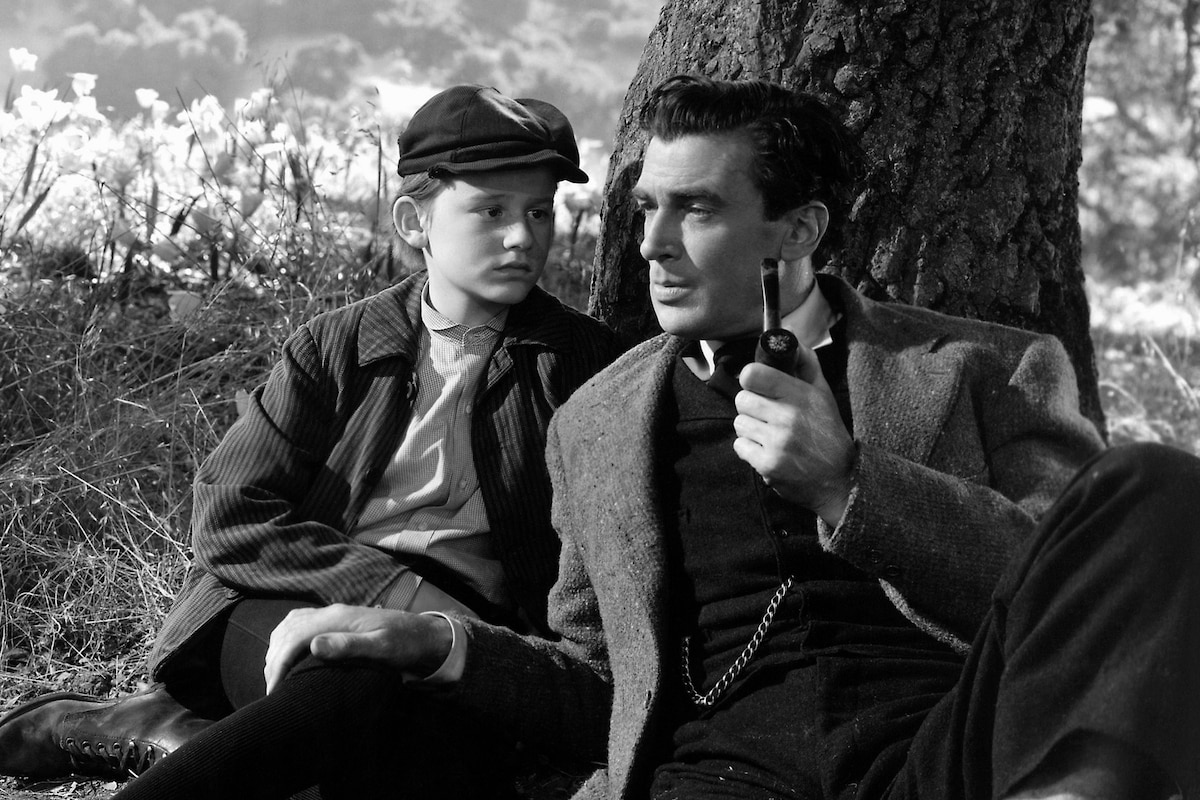
Zanuck and Wyler screened tests of four young men auditioning for the role of Huw. Before the last one, the casting director stood up and said "You don't want to see this kid. He's bandy-legged, he's not attractive and he has a turned eye." Wyler asked to see it anyway and was so impressed he asked that Roddy McDowall fly to Hollywood for another test, this time with Alexander Knox playing Mr. Gruffydd. They were so impressed that Zanuck put the child under contract.
At the time McDowall was cast in How Green Was My Valley, the script was excessively long, following Huw Morgan in both childhood and adulthood, with Tyrone Power slated to take over the role after McDowall. Zanuck and Wyler both knew the script had to be condensed, but had no idea what to remove. When he saw the child actor's test, Dunne said, "That solves our length problem, because they'll never forgive us if we let that boy grow up." They ended the movie at the moment Huw's father dies and the son grows up.
Zanuck suggested Walter Pidgeon for the role of village preacher Mr. Gruffydd because he needed star power on the marquee. He also pursued Sara Allgood and Donald Crisp to play McDowall's parents.
Unhappy with Dunne's early drafts and concerned with Wyler's reputation for working slowly, upper-level executives put the project on hold and ended Wyler's involvement. Zanuck was so determined to make the film he threatened to take it to another studio. His bosses gave in, particularly when he suggested John Ford was the one director who could turn the picture in on a reduced budget and still make it look good. Zanuck signed Ford for $100,000 to make the film and sent Dunne to work on the script with him. With scenes depicting the adult Huw cancelled, the character only remained in the film's voiceover narration.
When Wyler was directing How Green Was My Valley, Zanuck had been negotiating to cast Katharine Hepburn as Angharad. Although she and Ford were good friends after having worked together on Mary of Scotland (1936), he didn't think she was right for the role. Zanuck then suggested Gene Tierney, but Ford, who had worked with her in Tobacco Road (1941), didn't think she was right either. Zanuck also suggested Martha Scott and Geraldine Fitzgerald. Instead he met with the young Maureen O'Hara, fresh from her U.S. film debut in The Hunchback of Notre Dame (1939). After a brief conversation about their memories of Ireland, he cast her without a screen test.
Fox executives only agreed to cast O'Hara in the important role of Angharad if they could negotiate a portion of her contract. After much dealing, her home studio, RKO, agreed to share the actress, giving Fox the right to cast her in one film a year.
British actress Anna Lee had met with William Wyler to discuss playing Bronwyn, only to have him tell her he had promised the role to Greer Garson. When Ford took over, she was concerned he would not consider her for the role because of her British heritage, so she invented an Irish grandfather. She impressed him enough to cast her as Bronwyn without a screen test. He simply asked her to improvise a short scene with McDowall. It was the first of many films she would make with the director.
O'Hara's lifetime friendship with Ford began before production even started. Shortly after her return from Reno, Nevada, where she obtained an annulment of her first marriage, she was invited to his house for dinner. With their mutual love of Ireland, the bond formed quickly, and soon she was a weekly dinner guest at his house. She also started calling him his preferred nickname, "Pappy," though never on the set. Through him she met many of his Hollywood friends, including future co-star John Wayne.
by Frank Miller
The Big Idea - How Green Was My Valley
by Frank Miller | April 22, 2013
SIGN UP FOR OUR NEWSLETTERS

CONNECT WITH TCM