Stanley Kubrick was truly the rising star of the 1950s. Across just five films and seven years he progressed from amateur outsider to directing of one of Hollywood's biggest epics. Kubrick was a professional photographer with a few shorts to his name when he made the self-funded war movie Fear and Desire (1952) as an almost one-man production. He persevered with Killer's Kiss (1955), a sketchy noir tale short on dialogue and story but loaded with expressive views of New York streets in gritty B&W. Kubrick next teamed with producer James B. Harris on The Killing, a more ambitious caper film with direct ties to the hardboiled pulp fiction of the day. They hired novelist Jim Thompson to adapt a book by Lionel White. Instead of intercutting the actions taken by each of the criminals in the big crime, White's narrative conceit was to show each crook's part in the caper one at a time, consecutively. Writer Thompson tried out similar narrative experiments in his drugstore crime novels. His The Kill-Off changes its first-person narrator with each chapter. Hell of a Woman expresses the main character's psychosis by offering two contrasting final chapters in one, written in alternating lines of type, one standard and one italicized.
Kubrick and Harris were committed to making a bold artistic statement with White's eccentric narrative structure. When United Artists would only front them $200,000, Harris found additional funds from other sources. This ambition distinguishes The Killing from other low-end United Artists films of the time, some of which look as if their producers spent only a fraction of the distributor's advance and pocketed the difference. Kubrick hired a cast of crime-film pros, led by Sterling Hayden of The Asphalt Jungle (1950), Marie Windsor of Force of Evil (1948) and The Narrow Margin (1952) and Elisha Cook Jr., who appeared in more noir classics than anybody. James B. Harris brought in the relative newcomer Vince Edwards. Filming took place on the west coast, because no east-coast horse track would cooperate with the production.
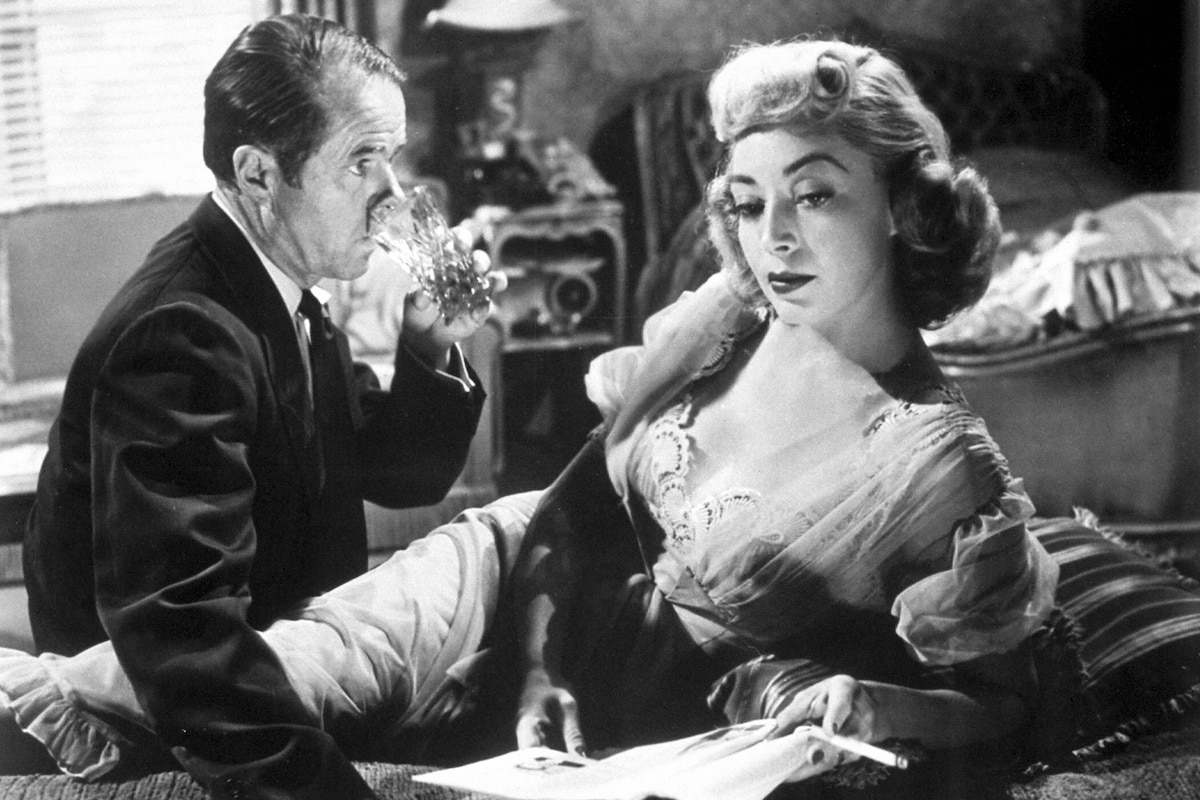
The first fully realized Stanley Kubrick film, The Killing introduces his frequent theme of man's best intentions going to ruin. Habitual thief Johnny Clay (Sterling Hayden) gathers several pro criminals to pull off a major racetrack heist. Each has a pressing need for the money. Corrupt Cop Randy Kennan (Ted De Corsia) has gambling debts, while track bartender Mike O'Reilly (Joe Sawyer) wants to make life more comfortable for his ailing wife. Track cashier George Peatty (Elisha Cook Jr.) needs the cash to hold onto his greedy wife Sherry (Marie Windsor). Marvin Unger (Jay C. Flippen) contributes the seed money; he wants only to have Johnny as a friend. Johnny is determined to beat the odds and escape with his loyal girlfriend Fay (Coleen Gray).
The robbery is a carefully timed and coordinated series of actions, with each member of the team acting independently. Johnny has hired Maurice Oboukhoff (Kola Kwariani), a massive Russian ex-wrestler and Nikki Arcane (Timothy Carey), a psychotic sharpshooter to create diversions during the holdup. This is where the intricate repeat-time narrative trick comes into play. We see the robbery from the point of view of each individual thief, one at a time. The start of the 7th race recurs every time the clock is turned back. This fragmenting of time into parallel slices attracted instant critical attention to The Killing; it's the first really daring American cinematic time experiment since Preston Sturges' overlapping flashbacks in 1933's The Power and the Glory.
Human ambitions in Kubrick films tend to be thwarted by exotic means, as with the Doomsday Device in Doctor Strangelove (1964) and the neurotic computer in 2001: A Space Odyssey (1968). The fly in the ointment of this perfect crime is appropriately enough a classic femme fatale. Sherry Peatty badgers and humiliates her hangdog husband George to learn more about the robbery. She then sets a double-cross in motion by alterting her lover, small-time crook Val Cannon (Vince Edwards).
Sterling Hayden proves himself the master of Jim Thompson's elaborate hardboiled speeches, as when he assures Timothy Carey's weird-o gun nut Nikki Arcane that shooting a racing horse isn't a capital offense: "You'd be killing a horse. That's not first degree murder, in fact it's not murder at all, in fact I don't know what it is". Marie Windsor seems born to deliver Thompson's elaborate put-downs. Sherry bats her eyes and unloads sardonic insults faster than her husband can comprehend them: "You've never been a liar, George. You don't have enough imagination to lie."
The Killing is frequently interrupted by narration that tells us what day and time it is, and adds ironic details about the characters that hint that the robbery will end in disaster. These announcements become absurd when the film's time sequence folds back on itself, and the narrator begins a new blurb by informing us that it's suddenly three hours earlier. Unforeseeable missteps crop up to highlight the fragility of the plan. To keep his appointment at the track, patrolman Randy Kennan ignores a citizen calling frantically for his help, and drives away. Marvin Unger gets drunk and shows up at the racetrack bar at the wrong time. Nikki Arcane can't prepare his sniper position in a racetrack parking lot because of a sympathetic attendant's (James Edwards) attempts to be friendly. Johnny Clay improvises beautifully when things go awry, but the accumulation of little details and mistakes becomes almost unbearably suspenseful. Kubrick's vision of the workings of a merciless fate prove wholly compatible with film noir.
With The Killing Stanley Kubrick picked up a creative producing partner, and with their next film Paths of Glory (1957) they gained the backing of a bankable star, Kirk Douglas. When producer Douglas fired Anthony Mann from his costume epic Spartacus (1960), Stanley Kubrick was offered the directorial helm of the enormous super-production. His is surely the most phenomenal directing career of the 1950s: each film represents an exponential leap upward in quality, achievement and professional visibility.
A sit-down with the affable and candid James B. Harris revealed plenty of production stories, including his and Kubrick's touch-and-go business relationship with United Artists. UA fumbled the film's opening but it received a glowing critical reception.
During a sensational interview as a part of a 1980s French television show comes, Sterling Hayden talked not only about The Killing but also his entry into show biz for the easy money ("I was a male starlet") and his sorry experience as a self-proclaimed patsy for the HUAC witch hunters. The French interviewer asks Hayden to tell all about Joan Crawford and Johnny Guitar but the actor catches himself at the last moment.
In a Robert Polito interview, he discusses Jim Thompson's ups and downs with Kubrick: Thompson's pulp classics were not financially successful and his four years working with Kubrick were a very good break for him. On the other hand, Kubrick hogged the screenwriting credit for himself, even though Thompson did all the real writing on the project. The extras finish with an original trailer in so-so shape. Criterion's insert booklet contains an essay by Haden Quest and an interview with star Marie Windsor.
