Saturday, August 29 | 12 Films
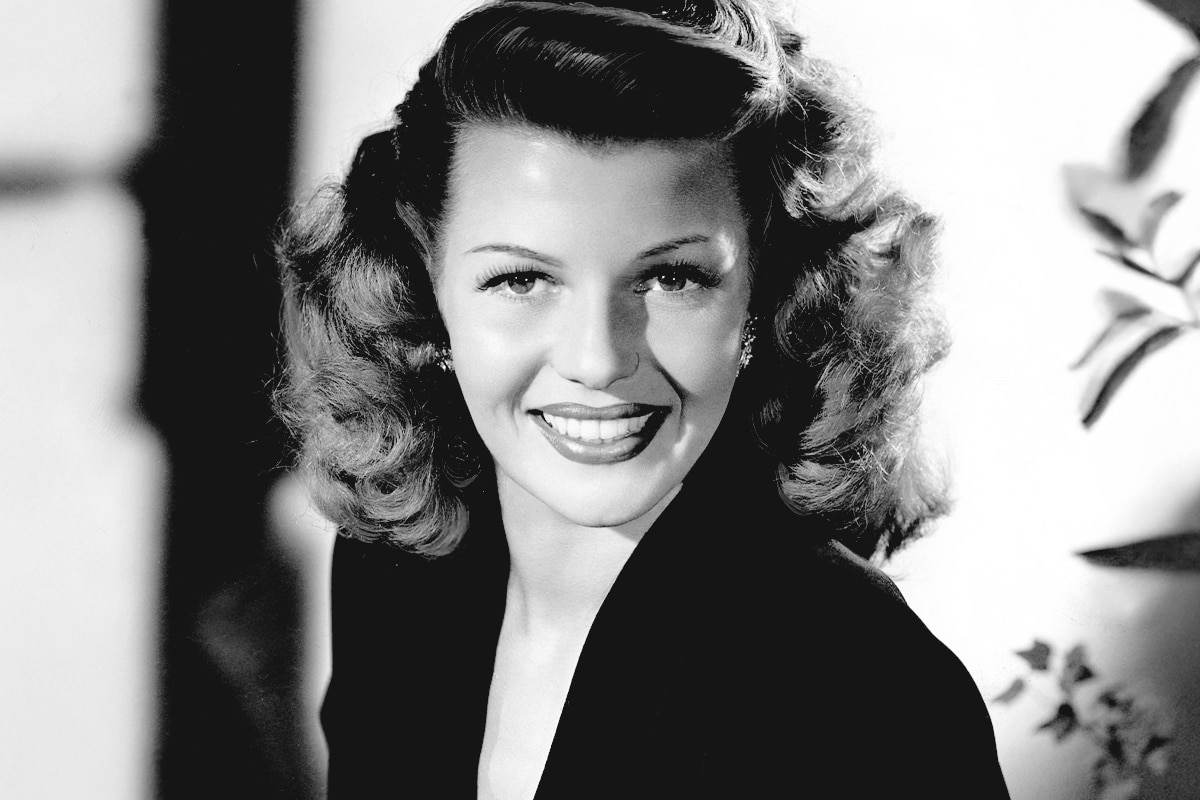
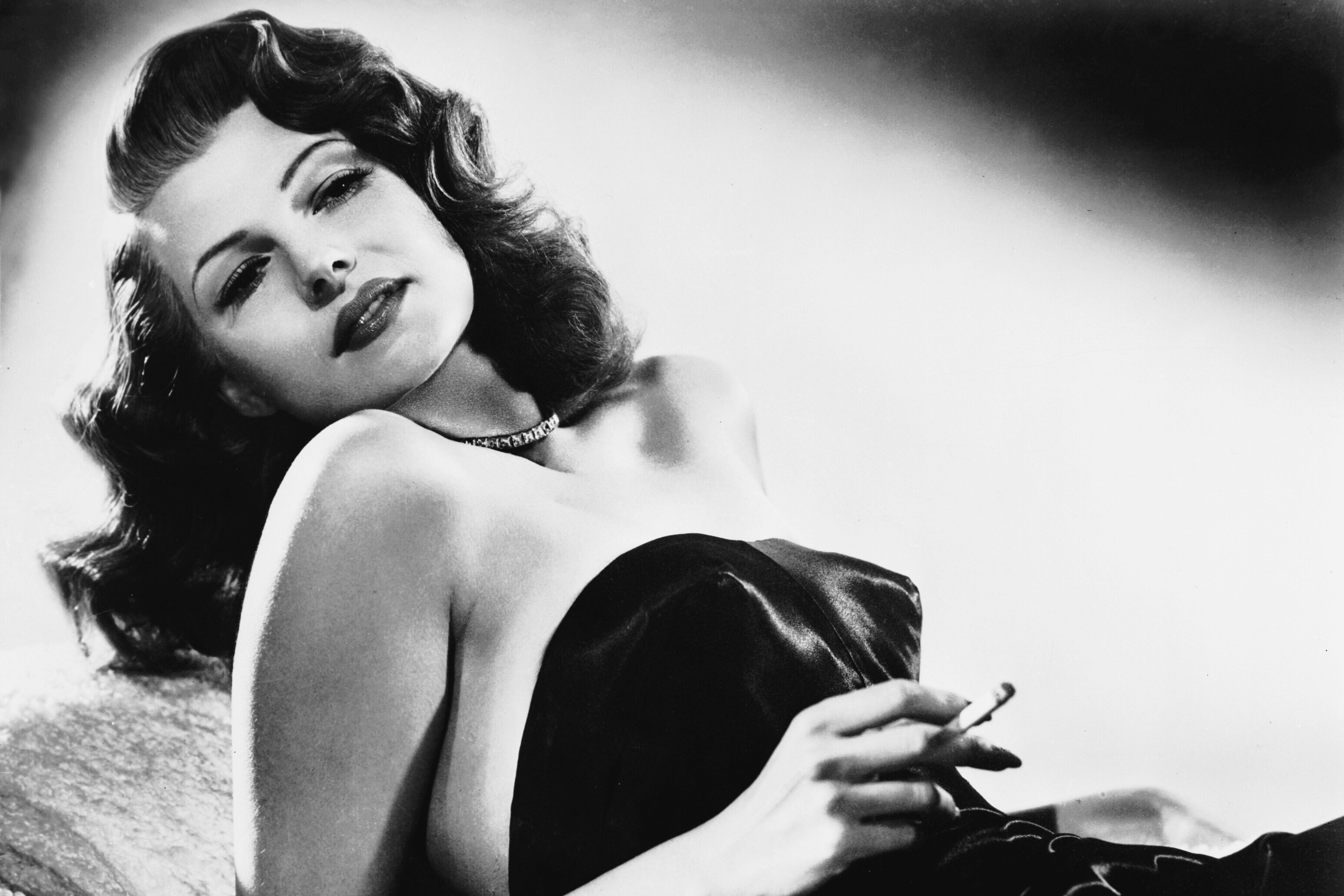
“Men go to bed with Gilda and wake up with me.” This often-quoted line perfectly encapsulates the contrast between Rita Hayworth’s movie star persona and the real woman behind the silver screen. Hayworth was best known for her role as the femme fatale in Gilda (1946)—a character whose intoxicating mix of feminine charm and elusiveness has made Hayworth the object of escapist fantasy for generations of viewers. At the height of her career, Hayworth made a name for herself playing the beautiful temptress, the “love goddess” and the vamp. As a professional dancer, Hayworth could be seen confidently gliding across the dance floor solo or paired with some of the best dancers of her day. This on-screen persona belied the real Rita Hayworth—a sensitive woman battling her own personal demons. While she overcame her initial timidity, that vulnerability remained just underneath the surface throughout her career.
Born on October 17th, 1918, in Brooklyn, New York, Margarita Carmen Cansino was raised in a show-business family. Her mother was a former Ziegfeld girl and her Spanish-born father was a classically trained flamenco dancer. The family moved to Los Angeles to start a dance studio, and it was there that the they began to work in Hollywood as the Dancing Cansinos. During the Great Depression, the newly minted Rita Cansino danced professionally as an extra in studio films as well as in nightclubs. It was at one of these clubs where she was spotted by Fox executive Winfield Sheehan. After a successful screen test, she signed a six-month contract with the studio.
At Fox, she was cast as Rita Casino in small roles in films like Under the Pampas Moon (1935), Charlie Chan in Egypt (1935) and Professional Soldier (1935). Her first on screen credit was in Dante’s Inferno (1935), where she can be seen dancing on Spencer Tracy’s ill-fated cruise ship. In her first significant role, she played the tenderhearted Russian emigre opposite Jane Withers in Paddy O’Day (1936). Fox Film Corporation was on the verge of bankruptcy, and in a last ditch effort to save the studio it merged with 20th Century Pictures. At the time of the merger, she had been promised the lead role in Ramona (1936). However, Darryl F. Zanuck replaced her with Loretta Young and her contract was not renewed. As a freelancer, Hayworth worked on several Poverty Row Westerns.
In 1937, she married promoter Edward C. Judson, which proved to be a strategic career move. Judson became her manager and guided her through her transformation from Rita Cansino to Rita Hayworth. She dropped her father’s surname for her mother’s maiden name and underwent a dramatic physical transformation. Hayworth’s makeover included raising her hairline through electrolysis, lightening her dark hair to auburn and undergoing a diet regimen. Hayworth caught the attention of studio executive Harry Cohn, who put her under contract at Columbia Pictures, and the two would be inextricably linked—for better or for worse—throughout the majority of Hayworth’s career. The public was introduced to Hayworth with Criminals of the Air (1937), one of six films she made with Columbia contract player Charles Quigley. Hayworth became Columbia’s go-to actress for their B-movie productions and more effort was put into her wardrobe and styling.
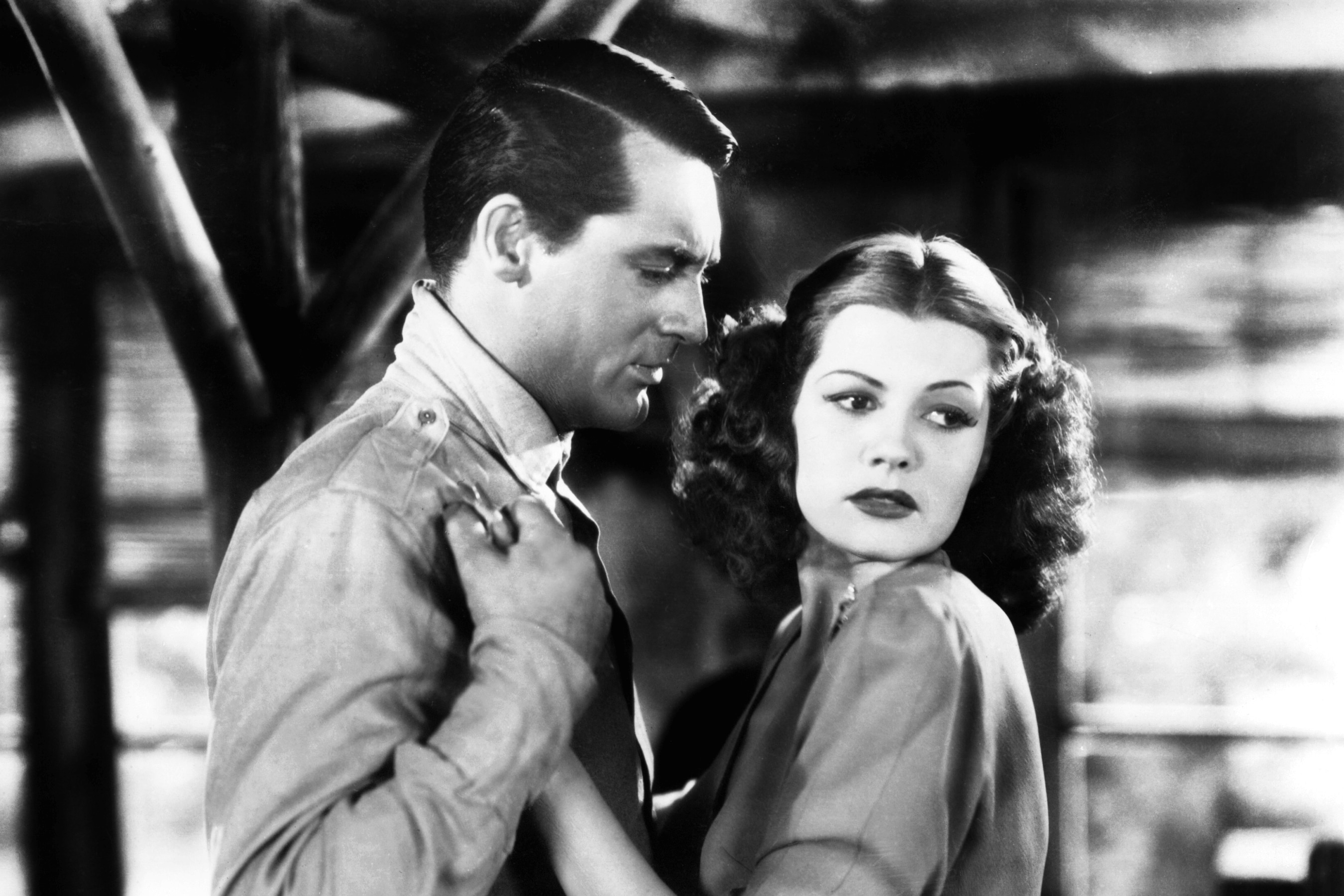
Hayworth’s breakout performance was in Howard Hawk’s Only Angels Have Wings (1939). Starring Cary Grant, Jean Arthur and Richard Barthelmess, Only Angels Have Wings was one of Columbia’s top pictures of the year and helped Hayworth climb the ranks at the studio. The following year, she was teamed with singer Tony Martin in Music in My Heart (1940), loaned out to MGM for George Cukor’s Susan and God (1940) and appeared in Charles Vidor’s courtroom drama The Lady in Question (1940) with her future Gilda co-star Glenn Ford.
If Only Angels Have Wings put Hayworth on the map, it was Rouben Mamoulian’s Technicolor bullfighting drama Blood and Sand (1941) that sent her into the stratosphere. The role of Doña Sol—the temptress who lures Tyrone Power away from Linda Darnell—was originally intended for Carole Landis. According to author Gene Ringgold, Landis refused to dye her hair red after spending “so much time and effort building herself up as a blonde bombshell.” As punishment, Zanuck downgraded Landis to a supporting role in the musical My Gal Sal (1942) and gave Hayworth the lead role. And while on loan out to Fox, she was added to the all-star cast of Tales of Manhattan (1942).
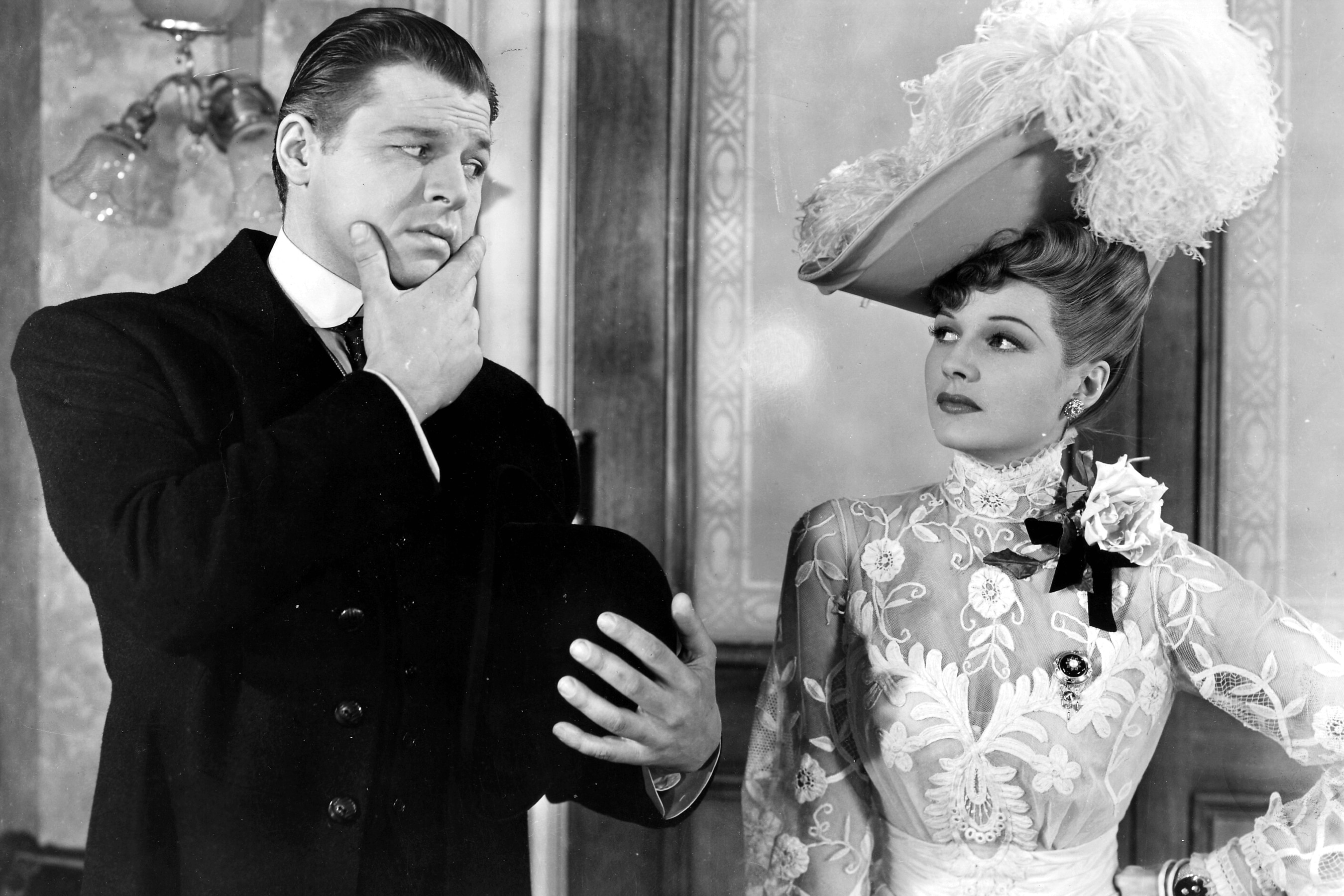
Hayworth’s red locks helped her clinch the part of the title character in The Strawberry Blonde (1941). During production, Hayworth was caught in a feud between Warner Bros. stars James Cagney and Olivia de Havilland. Cagney felt de Havilland was upstaging him in their shared scenes. To mitigate the situation, de Havilland’s screen time was shortened and Hayworth was given additional scenes. In her next Warner Bros. film Affectionately Yours (1941), the studio’s publicity team dubbed her “The Strawberry Blonde Bombshell,” capitalizing on the previous film’s success.
Back at Columbia, Hayworth was cast in two back-to-back dance musicals with Fred Astaire: You’ll Never Get Rich (1941) and You Were Never Lovelier (1942). Astaire was branching out from his successful partnership with Ginger Rogers. Hayworth had big shoes to fill but proved to be a worthy partner for Astaire. You’ll Never Get Rich was one of the first studio films with a WWII service theme. Hayworth was then teamed with up-and-comer Gene Kelly in the Technicolor musical Cover Girl (1944). At this point, Hayworth was a bonafide superstar. Cover Girl was just the sort of escapist fare that the public needed during the War. While Cohn was more than willing to capitalize on Hayworth’s skills as a dancer, he refused to invest in singing lessons. Throughout her career, Hayworth’s singing would be dubbed by the likes of Martha Mears, Nan Wynn and Anita Ellis.
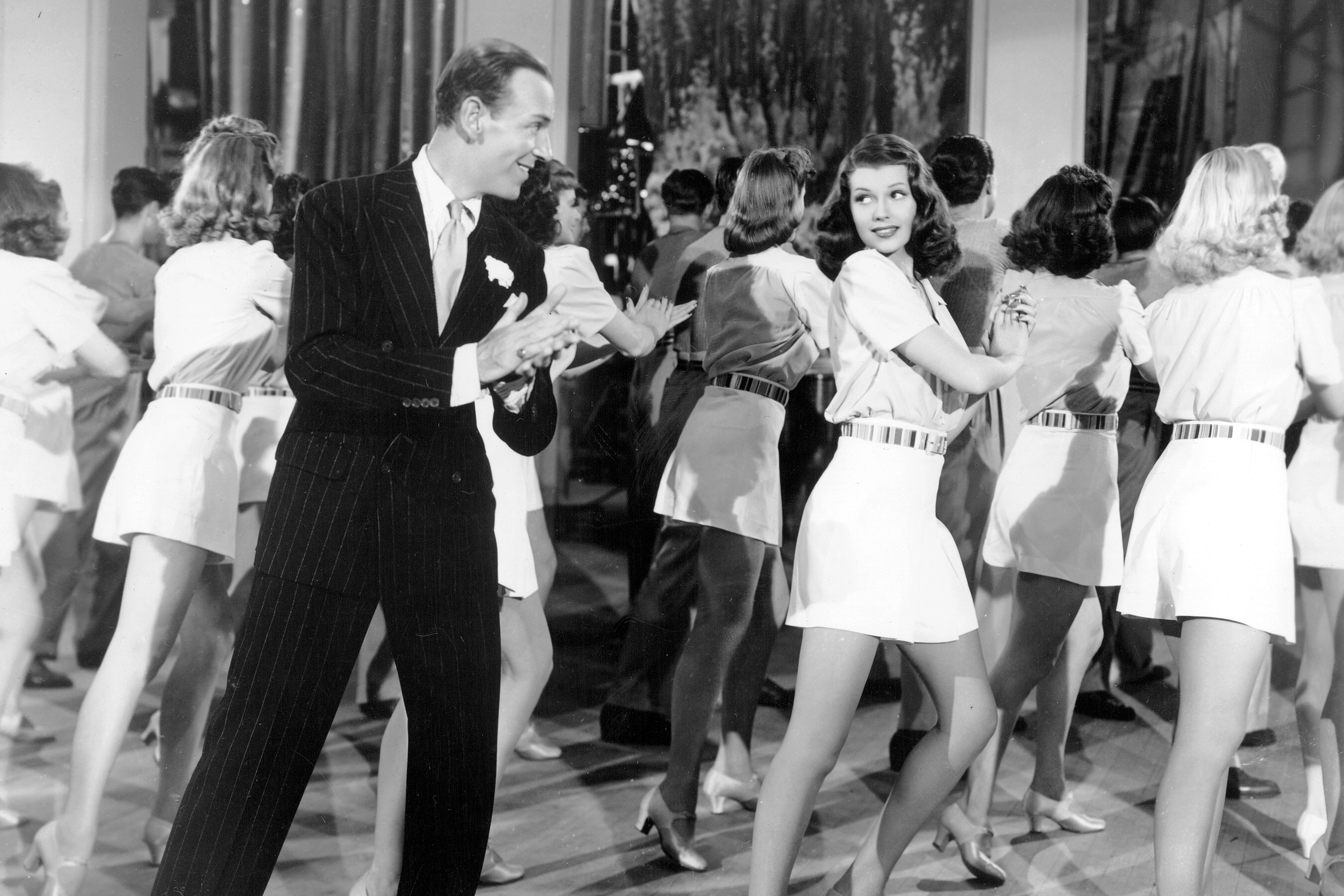
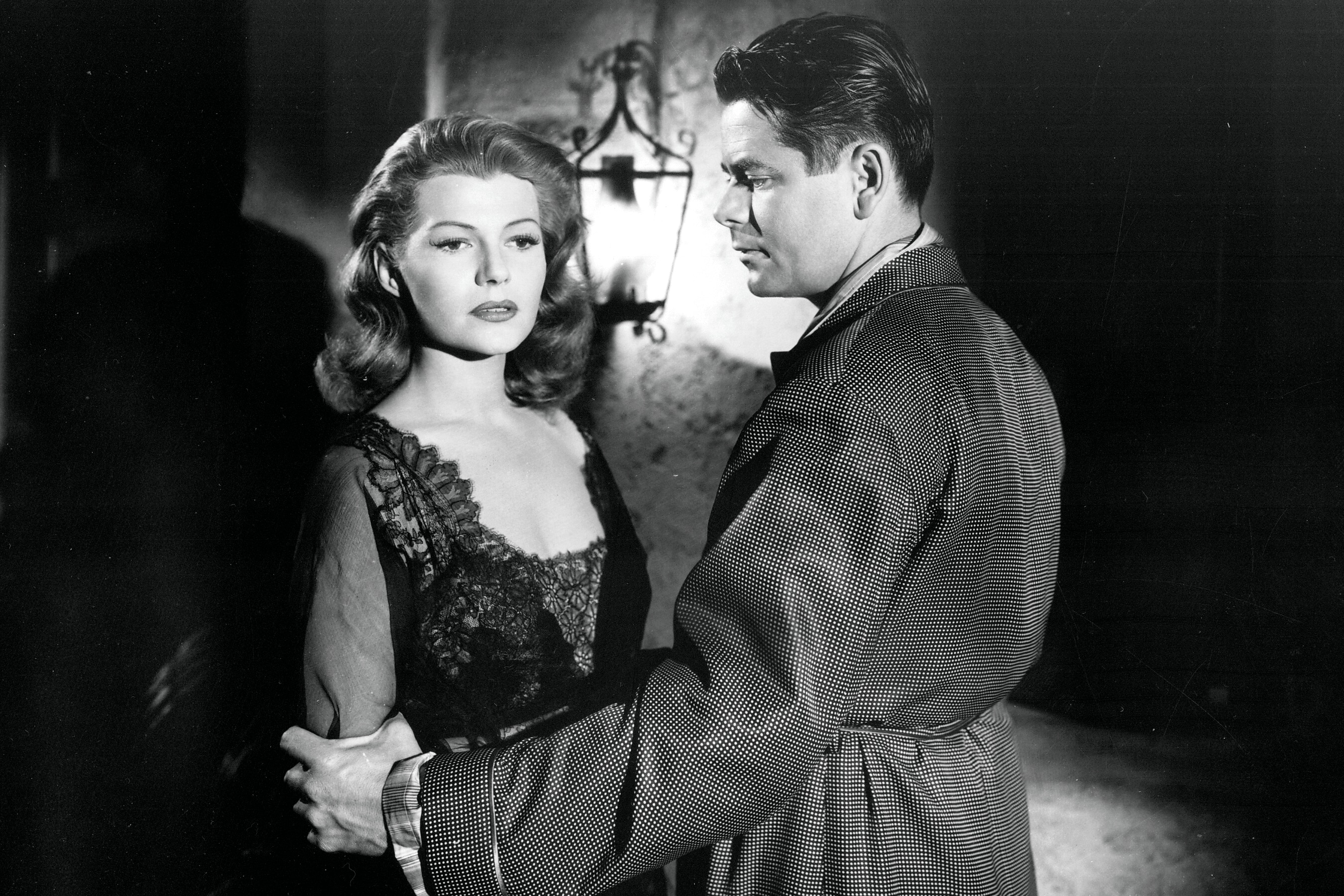
It was around this time that Hayworth married her second husband Orson Welles and became pregnant with her first daughter Rebecca. She starred in the Columbia musical Tonight and Every Night (1945), most notable for her samba number “You Excite Me.” Hayworth had established close working relationships with key figures in the industry including costume designer Jean Louis, actor Glenn Ford, director Charles Vidor and screenwriter/producer Virginia Van Upp. They were instrumental in making Hayworth’s next film Gilda the biggest success of her career. Hayworth plays the title femme fatale, the wife of a casino boss who is reunited with her old flame, played by Ford. Hayworth was in her element and delivered two of the most iconic scenes in film history. When asked “Gilda? Are you decent?,” Hayworth made her grand entrance with a hair flip and a coquettish smile. Later in the film, she dons a strapless form-fitting gown and long black gloves and performs a striptease to the song “Put the Blame on Mame.”
Gilda had been such a huge success for the studio that it inspired Hayworth to take greater control over her career. She and her agent Johnny Hyde formed Beckworth Productions and negotiated a new agreement with Columbia. In lieu of a salary, Hayworth would split profits 50-50 with the studio. While still under her old contract, Hayworth was cast in the role of Greek muse Terpsichore in the musical Down to Earth (1947). That same year Hayworth was cast as the female lead in husband Welles’s film noir thriller The Lady from Shanghai (1947). For the role of Elsa Bannister, Hayworth swapped her long red locks for a bleached-blonde bob. This angered Cohn who felt that Hayworth’s career might not recover from future backlash. Working on the film put a strain on Hayworth and her marriage to Welles was officially over once the film was released.
The Beckworth-Columbia collaboration sought to recapture the winning formula that made Gilda such a success. In The Loves of Carmen (1948), she was reunited with her co-star Glenn Ford and director Charles Vidor for this romance set in 19th century Spain. After a four year break in which Hayworth married Prince Aly Khan and had her second child Yasmin, Hayworth returned to Columbia to star in Affair in Trinidad (1952) with Ford. Cohn had been nervous about Hayworth’s latest comeback and withheld script changes from her. Any fears about Hayworth losing her star power were easily quashed as she proved to be just as popular as ever.
When director Cecil B. DeMille reached out to Cohn about borrowing Hayworth for a retelling of the Biblical story of Salome, Cohn stole the idea and started his own production. Salome (1953) was a custom vehicle for Hayworth. It was a loose interpretation of Salome, which gave Hayworth the opportunity to play a temptress without being a villain. Her next project Miss Sadie Thompson (1953) is a remake of the classic W. Somerset Maugham story. The film was shot in 3-D but ultimately distributed in 2-D because Hayworth’s star power was enough to carry the film. By the end of production, Hayworth’s fourth marriage to singer Dick Haymes was over and the Beckworth-Columbia partnership was dissolved.
Hayworth was forced into another hiatus when she took Columbia to court to end her contract. Having lost her case, she was obliged to return to the studio to make Fire Down Below (1957) with Robert Mitchum and Jack Lemmon. Her final film for Columbia was Pal Joey (1957), which starred Frank Sinatra as a ladies man who seduces a chorus girl (Kim Novak) and a wealthy widow (Rita Hayworth). Novak was positioned to replace Hayworth as Columbia’s next big star and placing the aging Hayworth against the youthful Novak was Cohn’s way of humiliating Hayworth.
Now free from Cohn, Hayworth worked as a freelancer for the remainder of her acting career. She married her fifth husband, producer James Hill, with whom she formed Hillworth Productions. Hill encouraged Hayworth to transition into more serious acting roles. Hill co-produced Hayworth’s next film Separate Tables (1958), an adaptation of Terence Rattigan’s play starring Deborah Kerr, David Niven and Burt Lancaster. The following year she was paired with Gary Cooper in the war drama They Came to Cordura (1959) and with Anthony Franciosa in Clifford Odet’s final film The Story on Page One (1959).
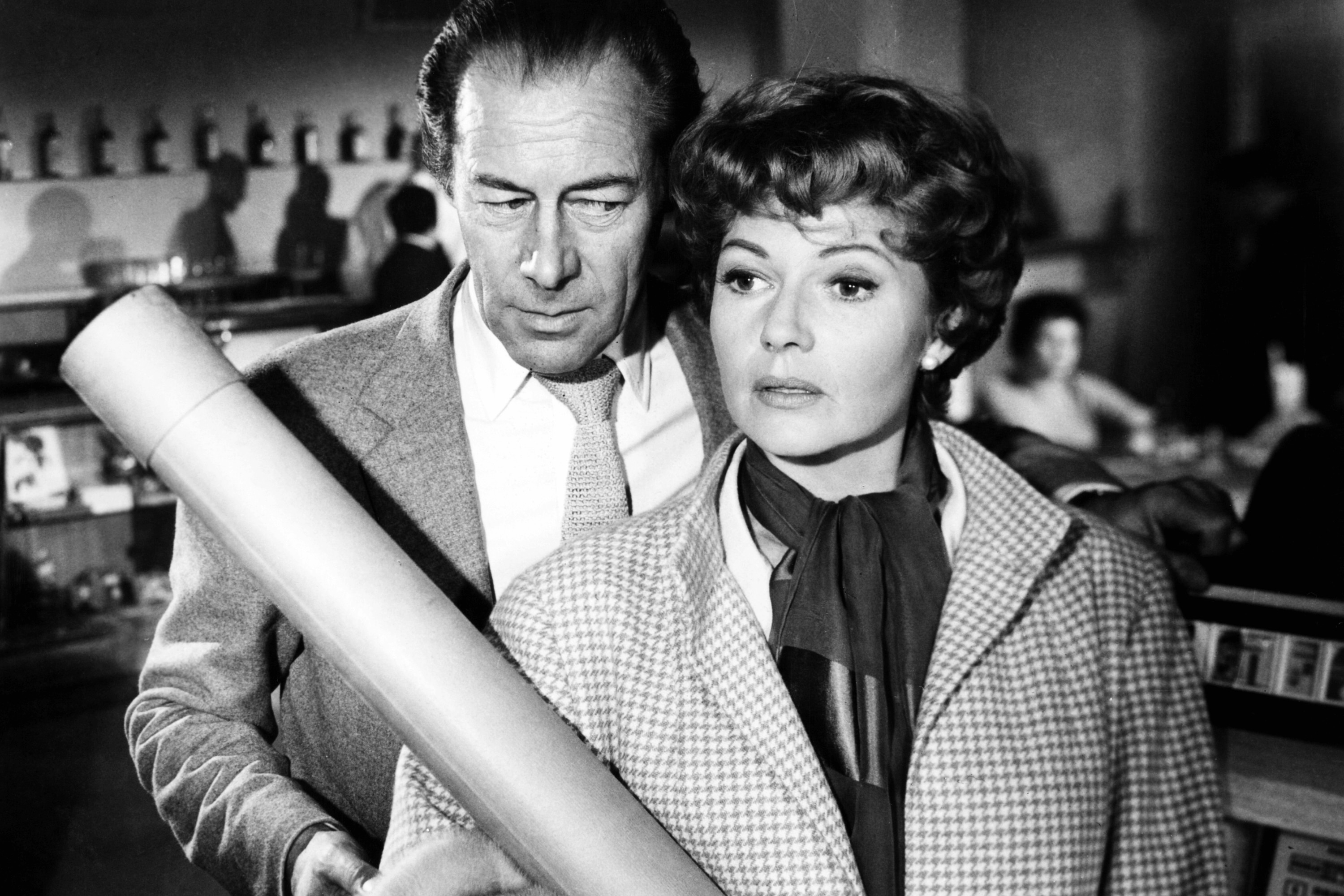
By the time she made, The Happy Thieves (1961), an art heist comedy co-starring Rex Harrison, Hayworth was facing the end of her fifth marriage. After another hiatus, she returned to Hollywood to star in Circus World (1964), starring John Wayne, and reunited with Glenn Ford for one final film in The Money Trap (1965). Following in the footsteps of other actors fed up with the Hollywood studio system, Hayworth left for Italy where she made The Rover (1967), Sons of Satan (1968), The Road to Salina (1970).
By the late 1960s, Hayworth was already starting to show signs of cognitive decline. Her early onset Alzheimer’s disease went undiagnosed for years. Her final onscreen role was playing Frank Langella’s mother in The Wrath of God (1972). She was personally invited to appear in the film by her former Fire Down Below co-star Robert Mitchum. Director Ralph Nelson made special accommodations for Hayworth, shooting her scenes one line at a time. Rita Hayworth passed away on May 14th, 1987 at the age of 68.
