This article was originally written about programming for the TCM Now Playing newsletter in July 2026.
July 16 and 23 | 6 Movies
John Carpenter grew up in a log cabin. Born in Carthage, New York in 1948, he was five when he moved with his family to Bowling Green, Kentucky, after his father, Howard Carpenter, took a job teaching music at Western Kentucky University. The Pioneer Log Cabin, which is still on campus, is situated behind a girls’ dorm. “I was a loner, but I grew up in paradise,” Carpenter said in 1999. “I kind of became who I am now.”
It was in Bowling Green, then at a population of over 18,000, where the budding Master of Horror fell in love with movies. And there were plenty of movie theaters to watch the latest Western, horror, sci-fi and monster flicks, such as the former vaudeville house, the Capitol Theatre; the Princess Theater, which closed in 1957; the Ritz Theatre, which also shuttered in the mid-1950s; and two drive-in theaters, including the Lost River Drive-In ,which could service 600 cars.
After seeing Forbidden Planet (1956), the impressionable eight-year-old Carpenter decided to be a film director. “I had never seen anything like that,” Carpenter remembered. “The biggest part of the experience was the score—the first electronic film score. It was unbelievable.” And speaking of music, Carpenter, the composer of most of his films, loved to listen to classical music at home with his dad. Johann Sebastian Bach is his go-to guy,
For two evenings in July, host Alicia Malone and Carpenter are returning to the 1950s for a six-film series of horror and sci-fi films from the era, aptly titled The Carpenter Zone. These were among the otherworldly features that inspired Carpenter to make such masterpieces as Halloween (1978), Escape from New York (1981) and The Thing (1982). So, grab your popcorn, sit back and enjoy a voyage into The Carpenter Zone.
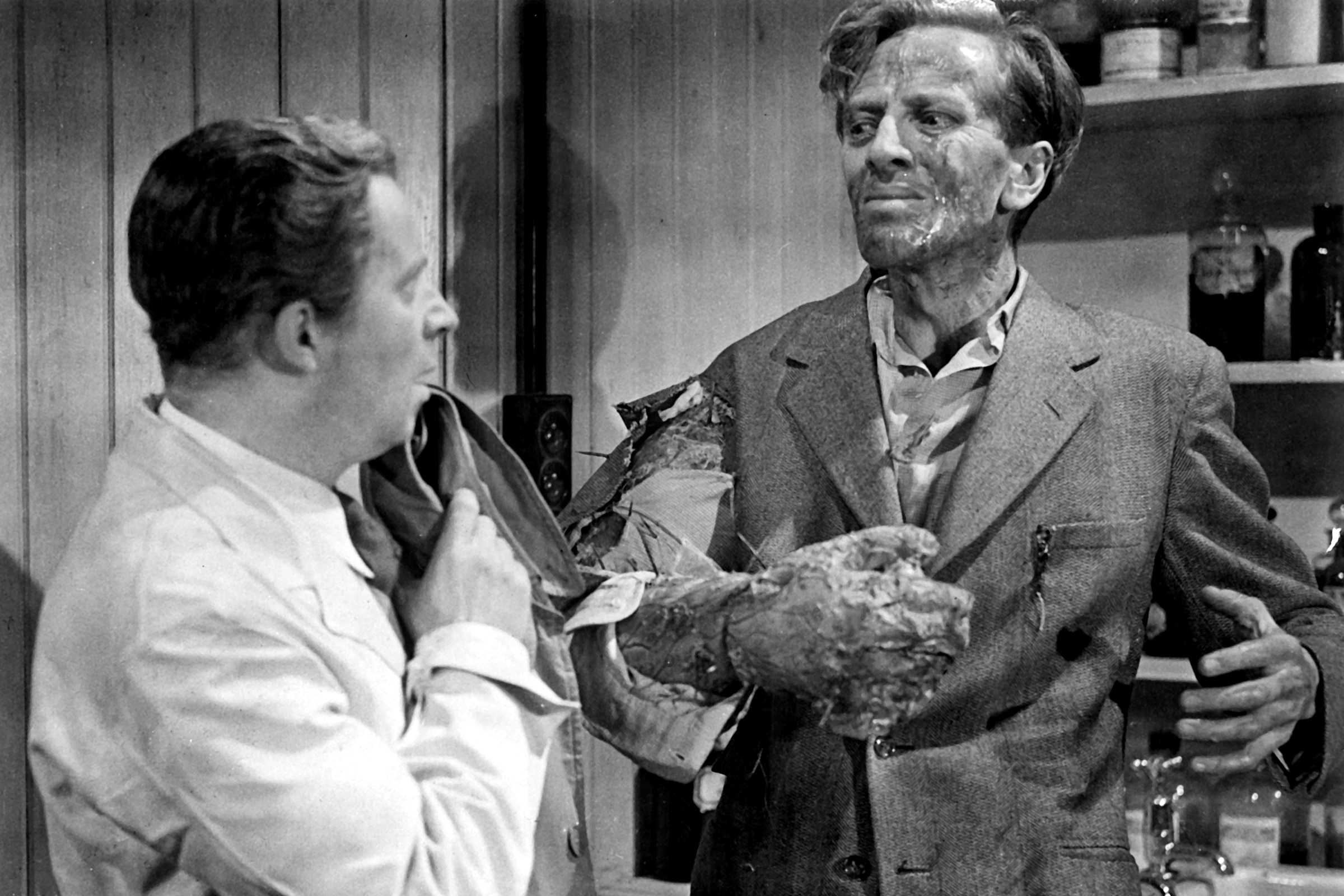
The first evening on July 16 focuses on sci-fi thrillers and giant creatures running amok. Kicking off the programming is Hammer Films’ effective The Quatermass Xperiment (1955), released in the U.S. the following year as The Creeping Unknown). Based on a six-part 1953 BBC limited series, the producers of the film hired veteran American character actor Brian Donlevy to appeal to U.S. audiences. But he wasn’t necessarily a box-office draw. The grizzled Donlevy plays Quatermass, a scientist trying to figure out why a manned spaceship crashed, leaving one survivor, a gaunt man with wild eyes who is turning into an alien monster. There were more features and TV sequels for Quatermass over the years. Donlevy even returned for Quatermass 2 (1957), known in the U.S. as Enemy from Space.
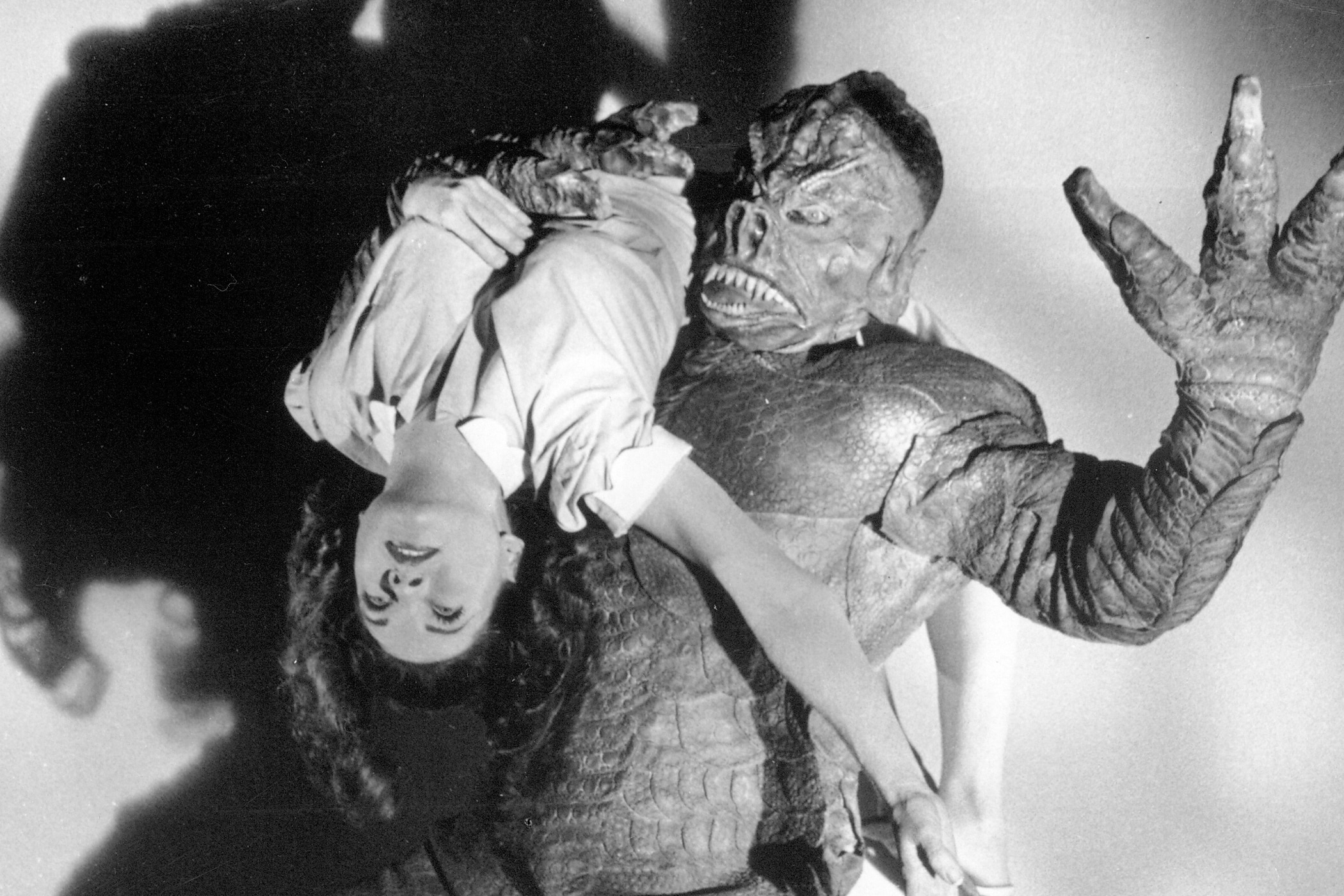
Next up is the low-budget B indie It! The Terror from Beyond Space from 1958 with Marshall Thompson, Dabbs Greer and Ann Doran. In this outing, a rescue mission returning from Mars on its way back to Earth keeps losing crew members due to a particularly bloodthirsty, hairy alien who is a stowaway. If the plot sounds familiar, Dan O’Bannon, who co-wrote and starred in Dark Star (1974), directed by Carpenter, borrowed from the film while co-writing Ridley Scott’s horror classic Alien (1979).
Writer Jeff Stafford noted in his TCM.com article that “It! The Terror from Beyond Space can be viewed as a conservative backlash against the accelerating space program of the late fifties since the title character is clearly not the sort of alien we want to bring back to Earth.” Ray “Crash” Corrigan plays the alien. However, the costume’s head didn’t fit him right: “His bulbous chin stuck out through the monster's mouth, so the make-up man painted his chin to look like a tongue.” Despite its limitations and a tongue-in-chin monster, the film earned some decent reviews and has entered the cult film canon.
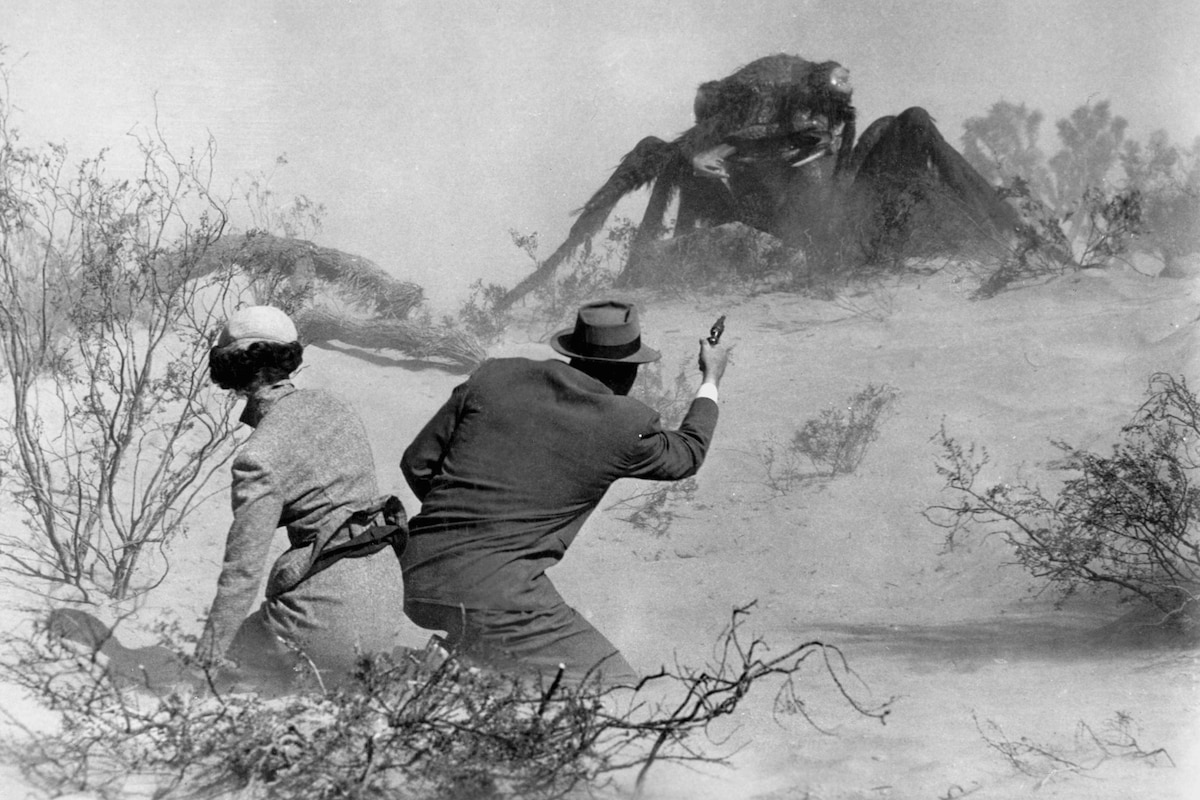
The evening ends with the granddaddy of giant bug movies, 1954’s Them!, which finds giant irradiated ants causing death and destruction in New Mexico and in the drain system of Los Angeles. And don’t forget the little girl shrieking, “Them! Them!” Besides aliens, monsters and Communists, the U.S. was terrified of the Cold War and nuclear weapons.
Them! was “one of the first science fiction thrillers to issue a warning about the dangers of nuclear testing and radioactivity in the aftermath of the atomic bomb's creation,” according to Stafford. The British Fantasy Society added that the movie is “a clever film in that its founding concept is science fictional—radiation has produced giant mutant ants as a new threat to humankind—but many of its signifiers and plot moves fit it closer to the horror genre. It’s the uncertainties of the newly ushered-in Atomic Age that hangs (sic) most prominently over the movie like a mushroom cloud.”
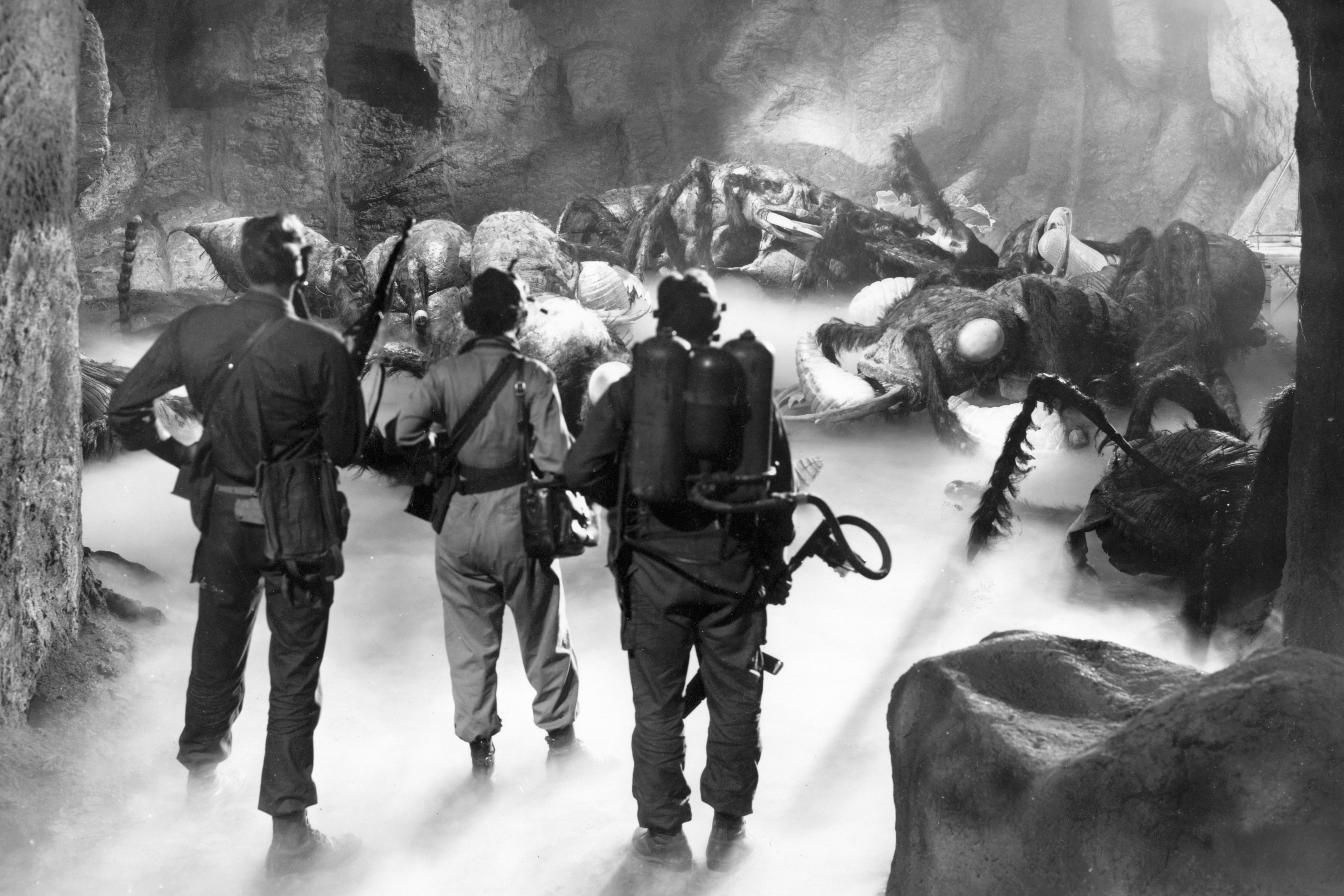
The film also has a helping of humor. Gordon Douglas, who began his career directing Our Gang shorts in the 1930s, thought it was a comedy and wanted Dean Martin and Jerry Lewis for the leads. Originally conceived as a 3-D color production, it ultimately was shot in 2-D and black and white to save money. Edmund Gwenn, the Oscar-winning Kris Kringle from Miracle on 34th Street (1947), stars.
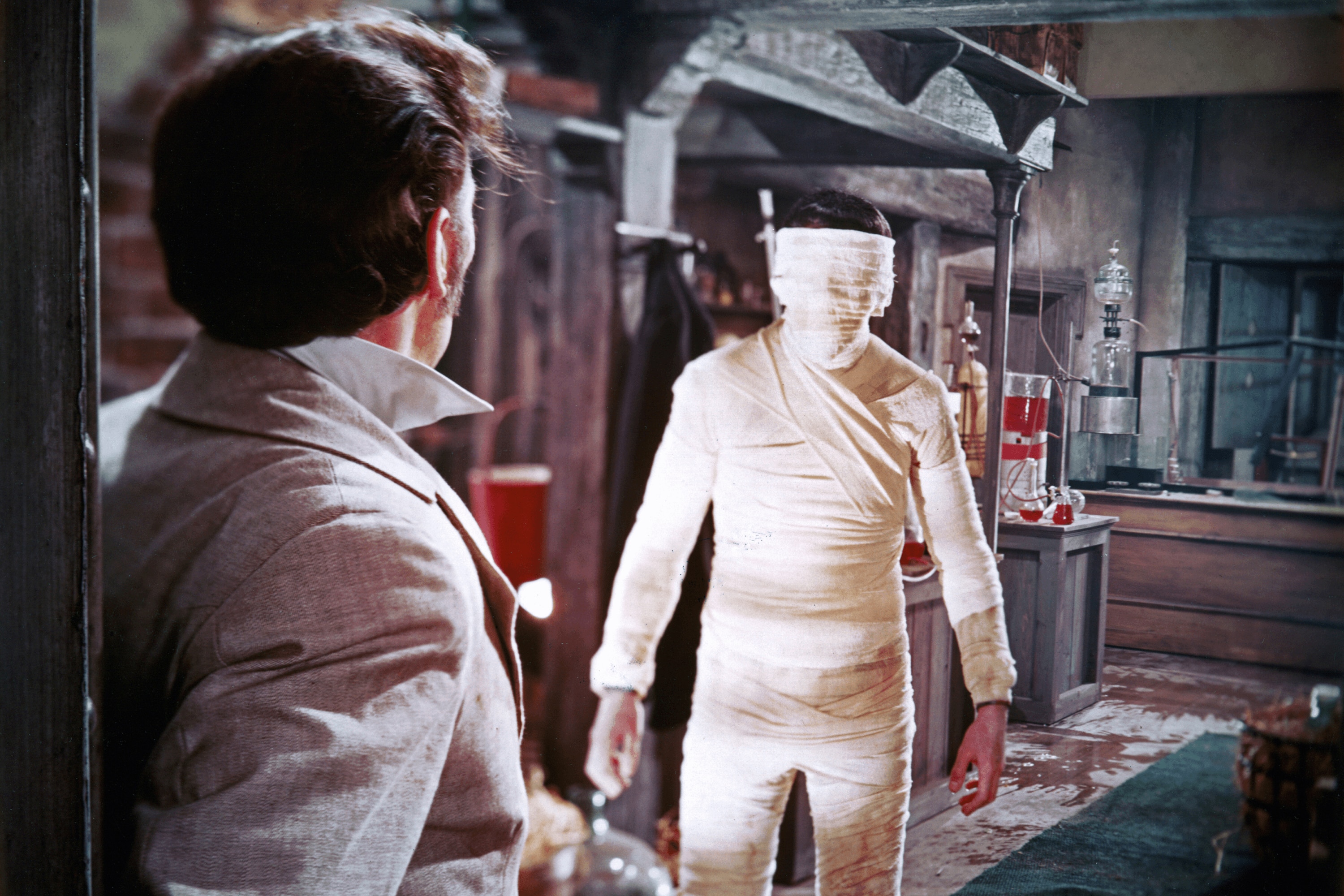
Malone and Carpenter return to the Hammer universe on July 23, with the landmark 1957 film The Curse of Frankenstein, starring Peter Cushing as a less-than-sympathetic doctor and Christopher Lee as the grotesque monster. The garish 1959 camp fest The Mummy, with Cushing and Lee, who is really wrapped up in his role, follows. These lurid color films served up sex and violence. Hammer ushered in a revision of classic horror literature that would have sent censor Joseph Breen into a tailspin in the 1930s and ‘40s when Universal was producing iconic chillers.
The official Hammer Films website explains how the company decided if moviegoers wanted horror, they would give them “proper gothic horror…The Curse of Frankenstein was a sensation, turning Hammer into a global player and initiating a run of horror films over the next two decades.” To this day, these films are still beloved by fans. “The early Hammer films were really terrifying,” noted Carpenter in a 2015 A.V. Club chat. “For instance, The Curse of Frankenstein was unbelievable to me. I mean, I was only 9 years old. It was on a double bill with X the Unknown. Man, it was great—scary stuff in those days of atomic radiation. I still love watching those movies.” Years later, Carpenter offered Cushing the opportunity to play Dr. Loomis in Halloween, but he turned it down, as did Lee, who later said he regretted his decision. Nevertheless, it’s hard to envision anybody but Donald Pleasence in the role.
The Carpenter Zone concludes with the psychological British chiller from 1957, Curse of the Demon (known as Night of the Demon in England), which recalls Val Lewton’s influential horror films from the 1940s. In fact, the film’s director, Jacques Tourneur, helmed such Lewton classics as 1942’s Cat People. The Lewton chillers created an atmosphere of dread without showing the evil outright. The producer didn’t get the message. Audiences and critics weren’t happy to experience the monster at the beginning of the film. But Carpenter was. The creature, he told the A.V. Club, “Is a great damn demon. It’s one of my favorites. I know Jacques Tourneur was upset that they put that demon in the movie, but it’s good, dude. It’s good-looking, it works great.”
