This article was originally written about programming in March 2026.
March 10 | 3 Movies
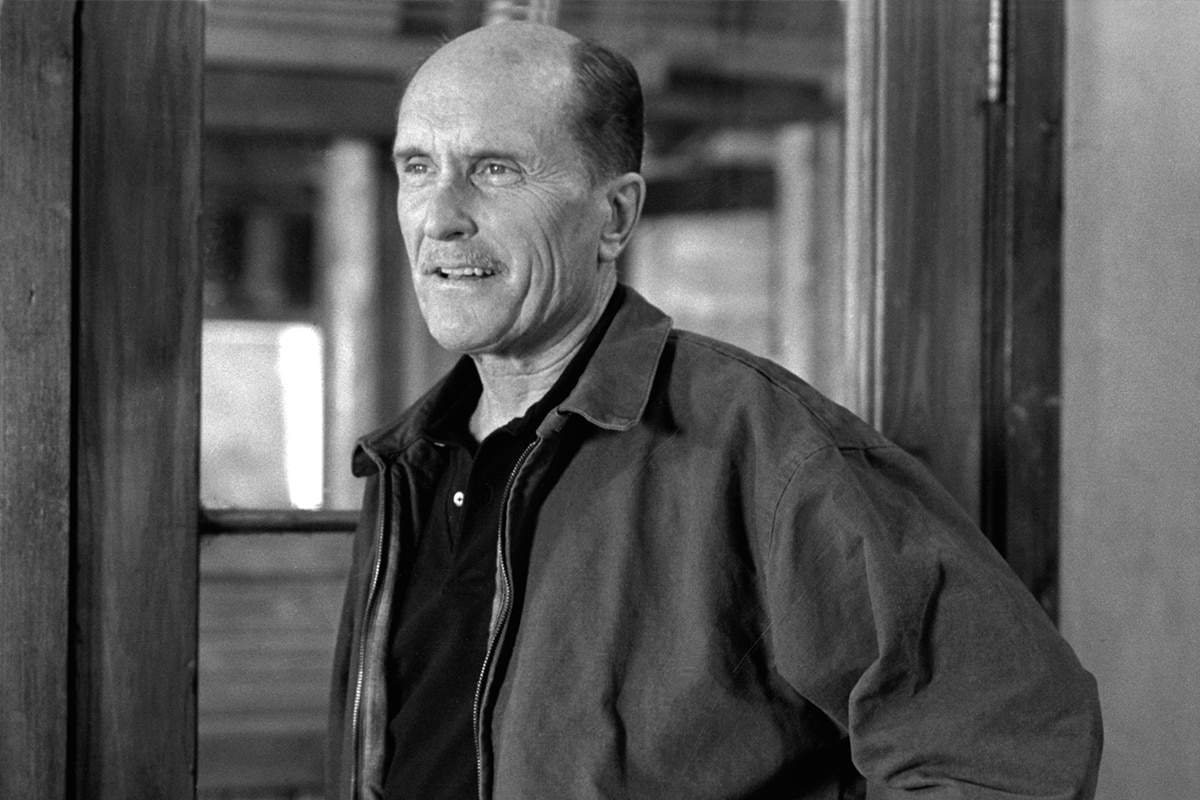
For six decades, Robert Duvall mesmerized audiences with his performances in some of the most celebrated American films in cinema’s history. His work not only defined the characters he portrayed and the films he appeared in, but also his own distinct style. “I've always been in awe of your towering portrayals of men who were both quiet and dominating in their humanness,” said actress Viola Davis, who costarred in Widows (2018) with Duvall. “You were a giant... an icon.” With seven Academy Award nominations and a Best Actor win, Duvall proved himself worthy of being called one of the greats. Duvall died at the age of 95 on February 15, 2026. TCM memorializes the actor with a triple feature of his Award-nominated and winning films.
Born the son of a rear admiral Navy officer in 1931, Duvall’s family frequently moved around. He found little interest in school but had a knack for mimicry and often entertained others with impersonations of friends, family and acquaintances. By the time he reached college as a history major, he nearly flunked out. He recalled being “terrible” at everything except acting, so he decided to move to New York in 1955, where he studied under Sanford Meisner at the Neighborhood Playhouse. Gene Hackman and Dustin Hoffin also attended, befriending the actor for the rest of their lives. “A friend is someone who many years ago offered you his last $300 when you broke your pelvis. A friend is Gene Hackman,” Duvall said to BBC. Duvall supported himself as a post office clerk before landing television roles on “Playhouse 90,” “Alfred Hitchcock Presents,” “Naked City,” and “The Twilight Zone.”
While performing in the 1957 play “The Midnight Caller,” Duvall met screenwriter Horton Foote, who recommended the actor for the role of Boo Radley in To Kill a Mockingbird (1962), his film debut. It was a breakthrough performance and earned a Best Picture nomination. Duvall then appeared in several critically acclaimed films in the 1960s, such as The Chase (1966), Bullitt (1968) and True Grit (1969), but in the 1970s, he secured his status as an A-list performer. He received his first Academy Award nomination for his role as Tom Hagen in director Francis Ford Coppola’s seminal work, The Godfather (1972). An adaptation of Mario Puzo's novel, it’s the story of how the youngest son of the Corleone family, Michael (Al Pacino), rises to head the family's mafia enterprise. Duvall returned to the franchise as the family's advisor two years later for its critically acclaimed sequel, The Godfather Part II (1974).
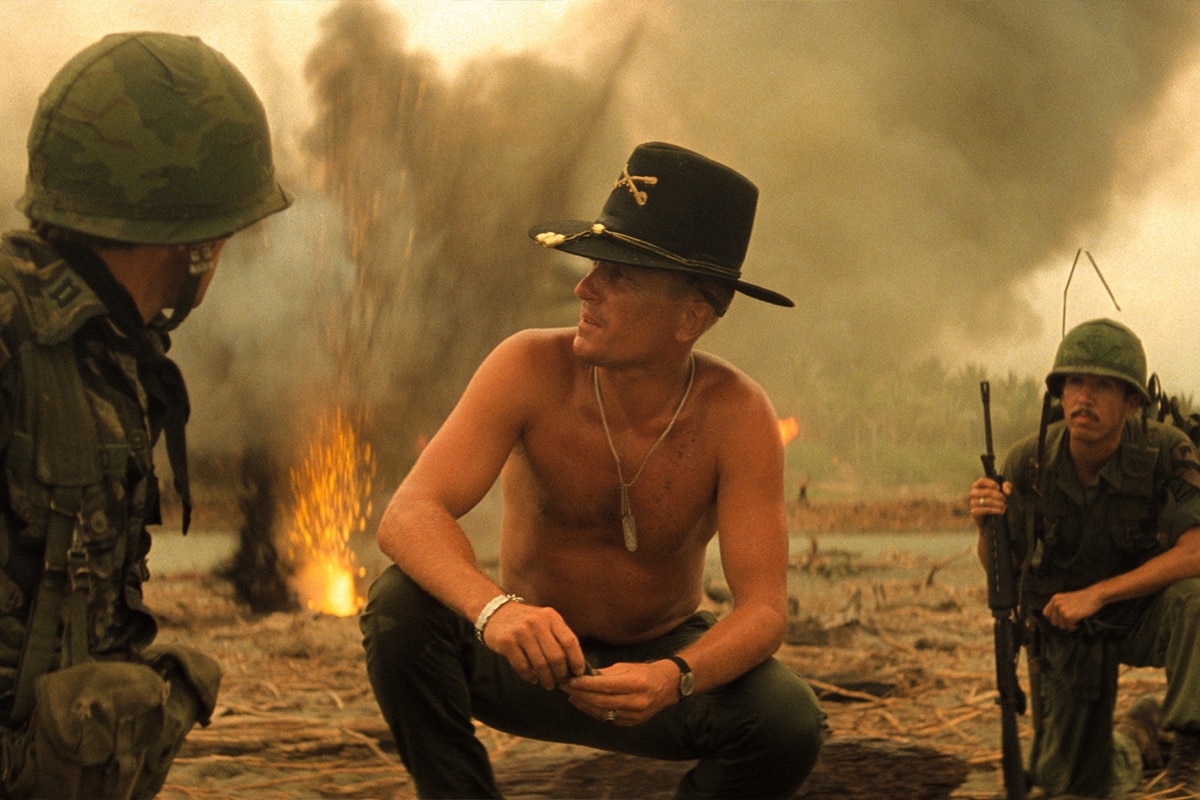
Duvall collaborated with Coppola once again on Apocalypse Now (1979). Written, directed and produced by Coppola, the epic Vietnam War drama follows army captain Benjamin Willard (Martin Sheen), assigned to find and execute the rogue AWOL Lt. Colonel Kurtz (Marlon Brando), who has descended into murderous madness in the Cambodian jungle. As Willard traverses into the depths of the jungle, he witnesses the horrors of combat and its effects on the people around him, including the surf-loving, enigmatic Col. Kilgore, played by Duvall. Duvall earned another Best Supporting Actor nomination for the role and delivers one of the most memorable cinematic lines: “I love the smell of Napalm in the morning.” All three of Duvall’s films with Coppola have stood the test of time to be considered among the greatest movies of all time.
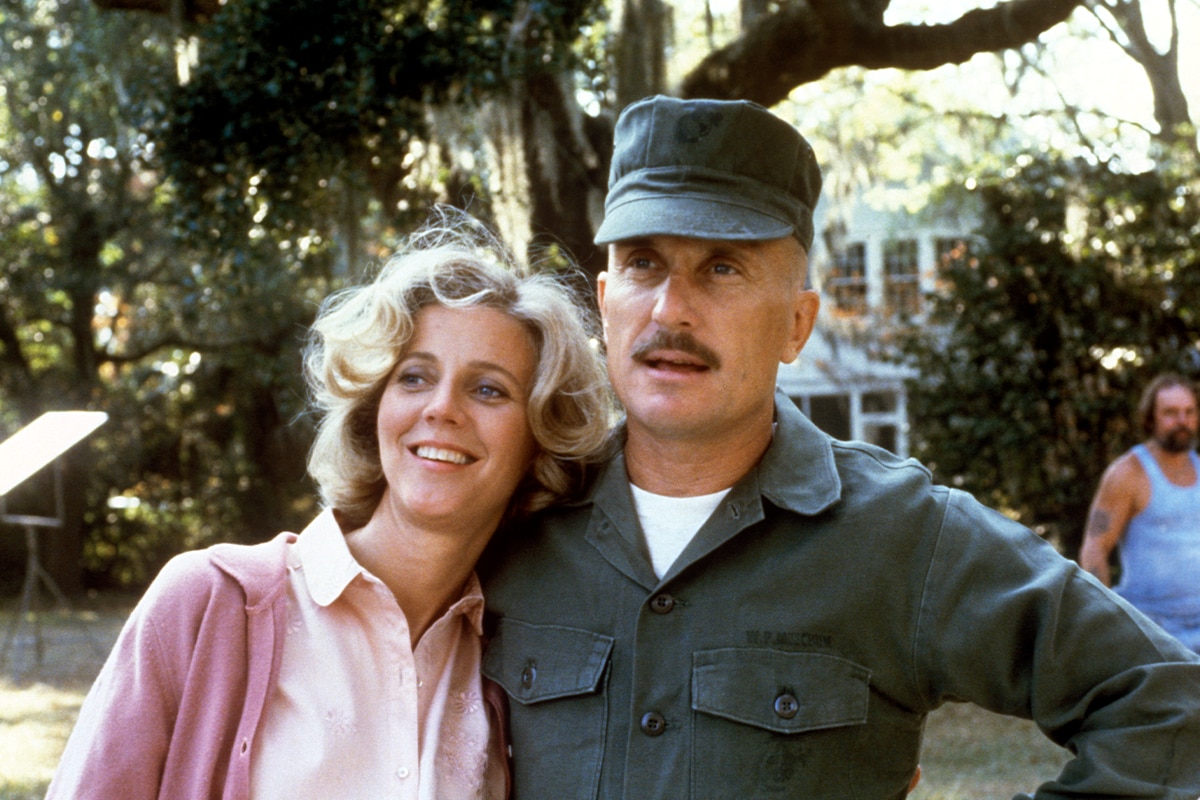
He earned his third Oscar nomination and first nod for a leading role for his performance in The Great Santini (1979). Based on the autobiographical novel by Southern writer Pat Conroy, Duvall plays a Marine Corps pilot and patriarch of a new-in-town South Carolina-based family in 1962. His abusive, militaristic rearing causes him to clash with his eldest son, Ben (Michael O’Keefe), and his loyal wife (Blythe Danner). Although Duvall was a decorated and well-known star at the time, Warner Bros. had little faith in the success of the picture. Rather than having a major city premiere screening, the studio premiered the film where it was shot in Beaufort, S.C., and changed its name several times for screenings in middle America. The film, however, became a sleeper hit when its rights were sold to cable network HBO.
The 1980s continued to prove fruitful for Duvall. He kicked off the decade in True Confessions (1981), starring alongside Robert De Niro, before winning the Best Actor in a Leading Role Oscar for his portrayal of a country Western singer in Tender Mercies (1983). Directed by Australian filmmaker Bruce Beresford, Duvall plays Mac Sledge, a washed-up alcoholic singer who must reconcile his life’s choices when he marries a widow with a young son. “This is the only film where I’ve heard people say I’m sexy,” he said in an interview. “It’s real romantic — rural romantic. I love that part almost more than anything.”
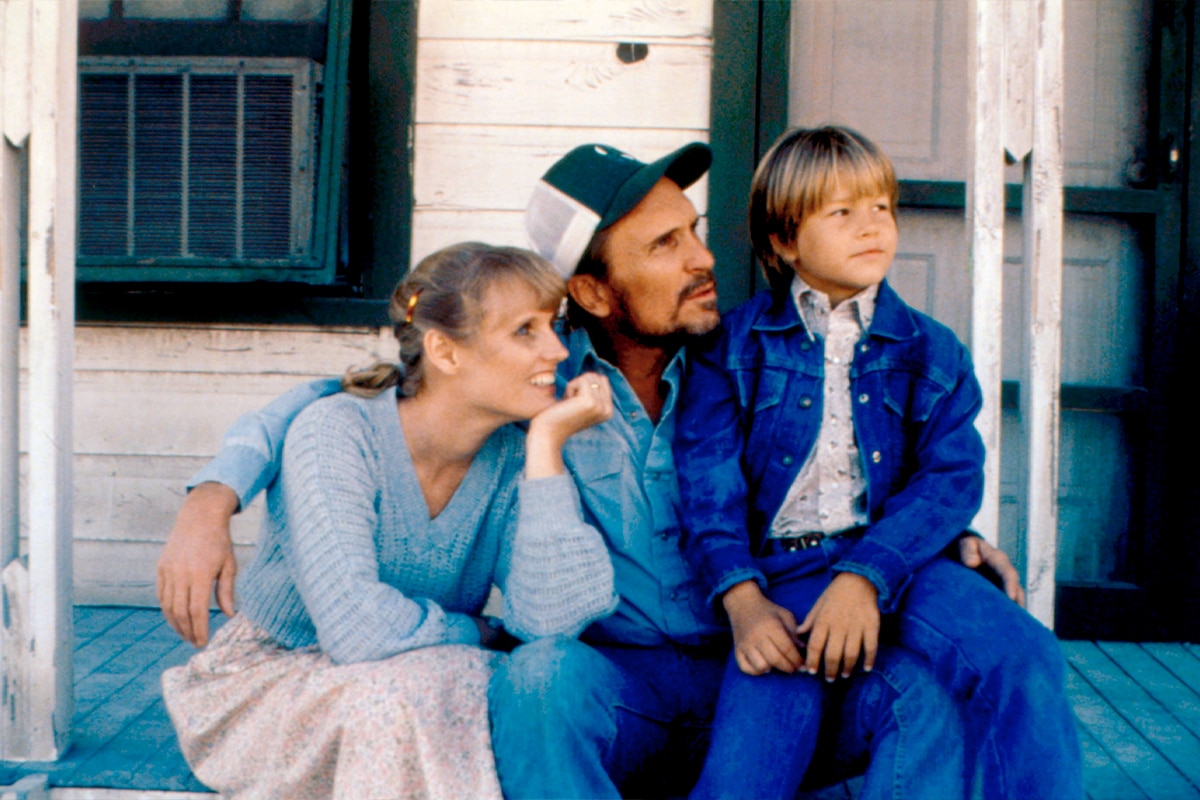
Duvall received co-producing credit on the film, which was nominated for Best Picture that year, and the actor did his own singing. He even wrote two songs for the movie, "Fool's Waltz" and "I've Decided to Leave Here Forever." He prepared for the role by singing with a country band and driving throughout East Texas to pick up on the regional dialects. Duvall regularly immersed himself in his roles. Beresford called his ability to disappear into a character “uncanny, even creepy” the first time he witnessed it.
Duvall’s career continued to flourish in film and television. He played what he considered his favorite role, Texas Ranger Augustus McCrae, in the CBS mini-series “Lonesome Dove,” earning him his first of five Emmy nominations in 1989. In a 2014 Los Angeles Times profile, Duvall remembered telling the cast and crew, “Boys, we’re making a 'Godfather' of westerns.” He eventually won two Emmys in 2007 for Outstanding Lead Actor in a Miniseries or Movie and Outstanding Miniseries for “Broken Trail,” which he starred in and produced.
He starred in dozens of films throughout the 1990s and 2000s and directed several times, financing projects that aligned with his interests and beliefs. He directed We’re Not the Jet Set (1974), Angelo My Love (1983) and The Apostle (1997), which he wrote, financed and starred in as a wayward preacher searching for redemption while living life anew in Louisiana. The role earned him his fifth Oscar nomination. He received his final nominations, giving him a career total of seven, in 1999 and 2015 for A Civil Action (1998) and The Judge (2014), respectively. Duvall’s final onscreen role was in The Pale Blue Eye (2022), starring alongside Christian Bale. When asked to reflect on his acting technique, Duvall told The Los Angeles Times in 2006, “It’s just talking and listening. Nothing’s precious. Just let it sit there and find its own way.”
