This article was originally written for the Special Theme programming in the TCM Now Playing newsletter in January 2026.
Tuesdays in January | 24 Movies
Every Tuesday in January, join TCM as we screen a block of films depicting the lives of working-class individuals. These films often showcase the blood, sweat and tears they put into their jobs, as well as their commitment to bettering their community, family lives and their employment conditions. Be they laborers, clerks or factory workers, the daily grind is not without some drama. Over the past several decades, topics and issues surrounding working-class people have continued to inspire productions such as these.
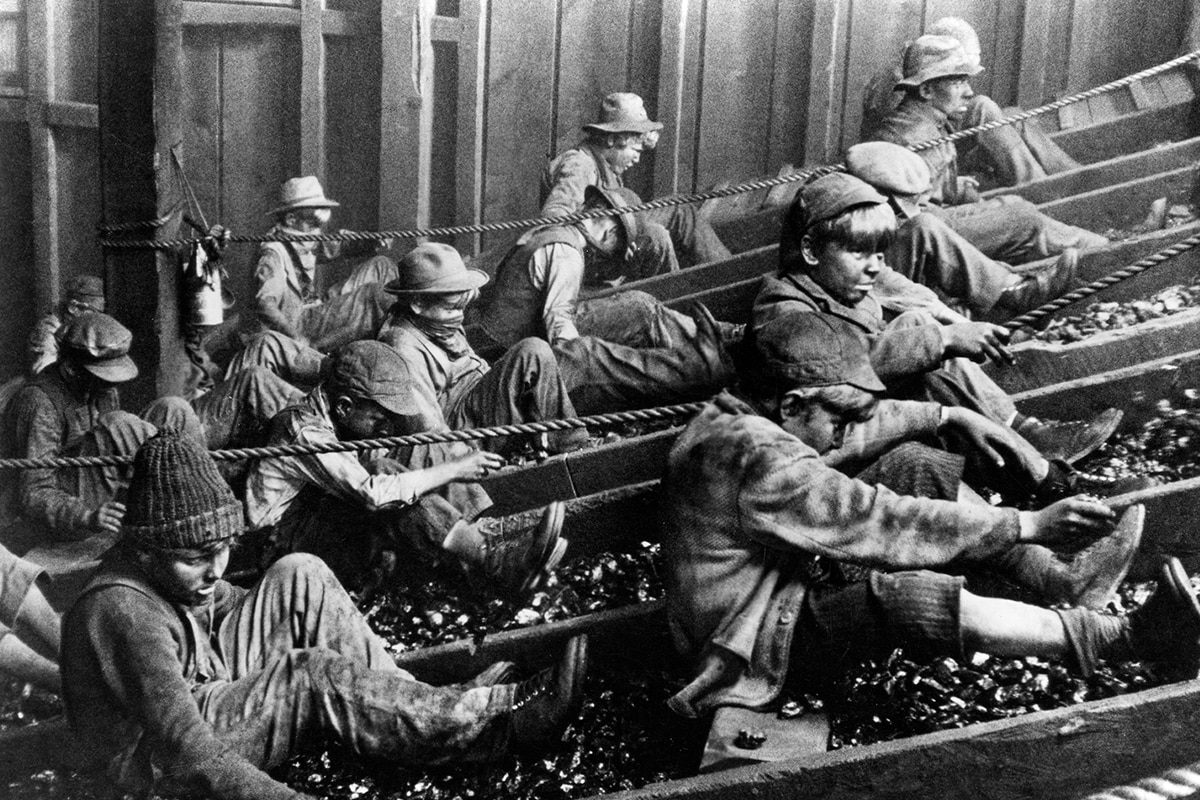
For the first installment on January 6, enjoy several True Stories of the working class, including the depiction of a 1951 strike by the employees of a New Mexico zinc mine. In Salt of the Earth (1954), we witness the events leading up to the strike itself and how the miners and their families deal with the fallout, as well as the racist inequality of working conditions. Though the film was mired in controversy due to the blacklisting of its writer, producer and director during the Red Scare in the 1950s, the importance of the film’s message and content would eventually be recognized. It developed a cult following in the 1960s that continued to grow throughout the following decades, and the Library of Congress selected it for preservation in the National Film Registry in 1992 for being "culturally, historically, or aesthetically significant.”
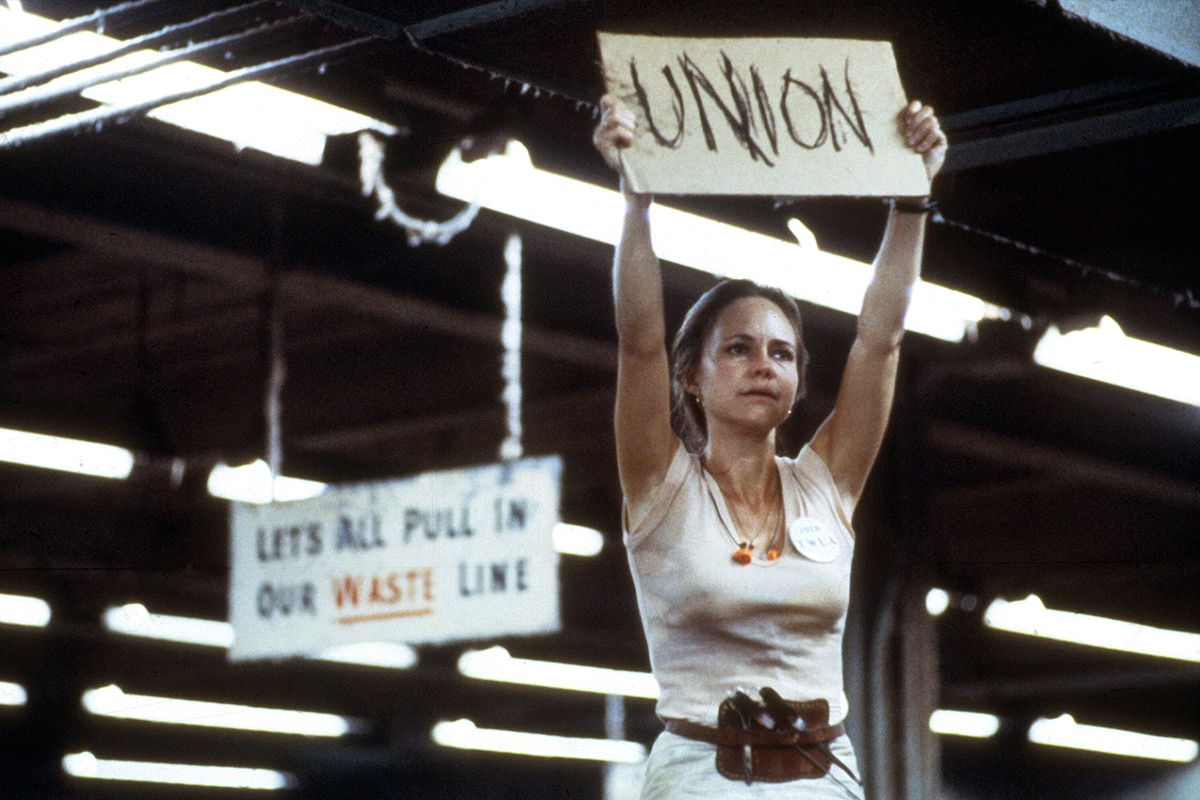
Two other films highlighting the struggles of mine workers are John Sayles’s 1987 independent drama Matewan, which depicts the 1920 “Battle of Matewan” coal miners' strike in a small West Virginia town; and Harlan County U.S.A. (1976), Barbara Kopple’s groundbreaking Academy Award-winning documentary that follows the “Brookside Strike” of 1973, in which a group of Kentucky coal miners and their wives rose up against a major power corporation. The other films airing on night one reflect stories of courage in the face of retaliation and pushback, such as Sally Field’s Academy Award-winning role in the 1979 union drama Norma Rae, and Meryl Streep’s Academy Award-nominated role as activist Karen Silkwood in Silkwood (1983).
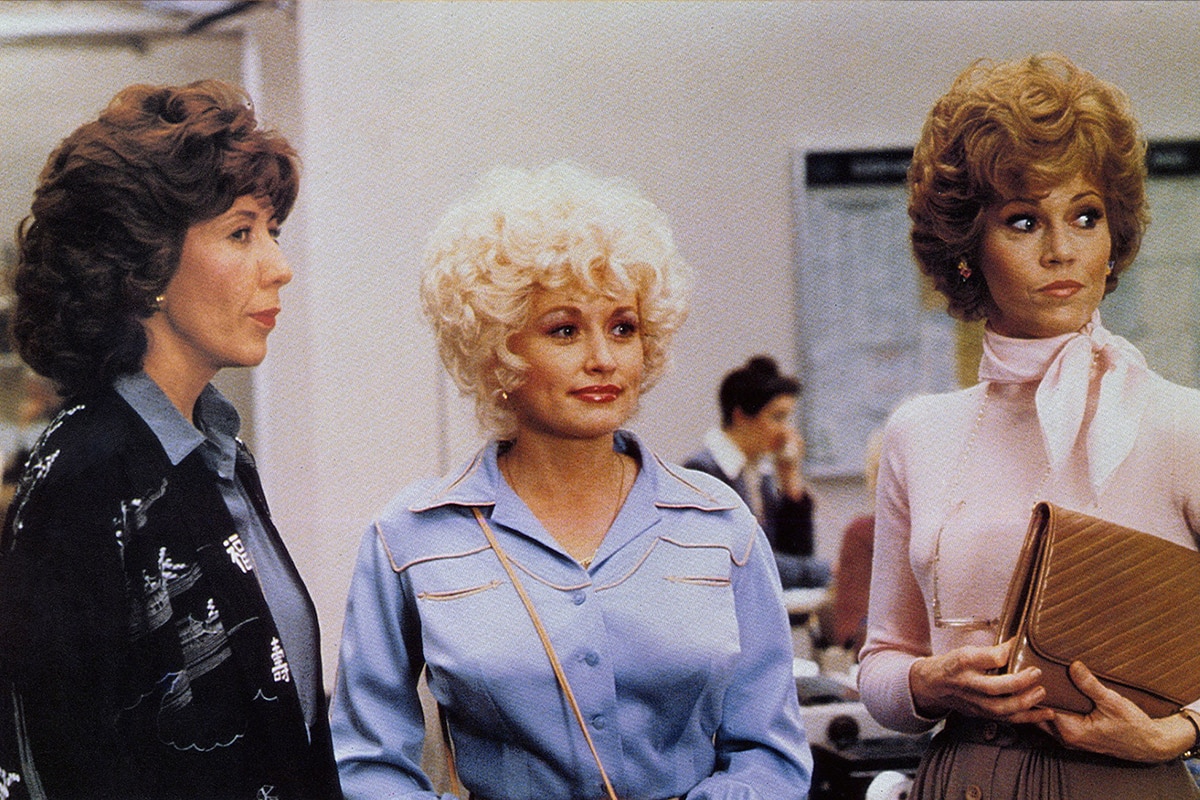
Comedies are on the menu for the second night on January 13, where the fight for recognition, equality and a living wage is portrayed with a humorous touch. The “pink collar ghetto” depicted in 9 to 5 (1980) showcased the perils many working women have suffered. As more women flocked to the workforce following the rise of the Women’s Liberation Movement a few years prior, the subject of sexism, outdated corporate mandates and breaking through the “glass ceiling” received particular attention. Working under Franklin Hart Jr. (Dabney Coleman) at the nondescript offices of Consolidated Companies, his main support staff is made up of three women who must routinely handle their “sexist, egotistical, lying, hypocritical, bigot” of a boss.
That staff includes Violet Newstead (Lily Tomlin), a single mother constantly passed over for promotions in favor of men; recent divorcee Judy Bernly (Jane Fonda), who has to quickly learn how to navigate around a copy machine; and Doralee Rhodes (Dolly Parton), Hart’s administrative assistant who must not only contend with Hart’s constant sexual harassment but his spreading of rumors that they are having an affair. Hart’s misogynistic, rigid “boys’ club” mentality dominates the office, and he utterly refuses to change his ways. The ladies’ constant frustration at not only their (and their colleagues’) appalling treatment, but also how the corporate world regards their efforts and qualifications due to their gender, was thrust into the forefront. Following one instance too many (including the firing of another colleague for a trumped-up reason), the trio is fed up.
In one memorable scene during what Violet called an “old-fashioned ladies’ pot party,” they fantasize on ways to rid themselves of Hart. However, when Violet’s Disney-inspired sequence about slipping rat poison into Hart’s coffee takes a dark turn into potential reality, they band together to try to curtail the situation. Knowing that Hart will certainly retaliate and turn them in (despite the misunderstanding), they resort to holding him hostage. With the knowledge that they are the power behind the office, as well as the discovery of Hart’s theft and embezzlement, the blackmail tactics they present are to the company’s benefit. Playing Hart at his own game by allowing him to take credit for their positive changes, morale is up, productivity is elevated, and the employees are grateful.
Though Tomlin, Fonda and Coleman had many acting accolades, Parton’s acting debut was very well received and expanded her reach outside of country music. Parton wrote and recorded the title song (coming up with the catchy percussion while tapping her acrylic fingernails), which would earn her an Oscar nomination for Best Original Song. A television spinoff aired from 1982-1988, which starred Rita Moreno, Rachel Parton George (Parton’s sister, then billed as Rachel Dennison), Valerie Curtin and Sally Struthers.
Seventeen years later and thousands of miles away, a group of British men took matters into their own hands (as well as took their clothing off) to give themselves a fighting chance to make a decent living. In 1997’s The Full Monty, airing in its TCM premiere, the previously booming steel industry of Sheffield, England, has crawled to a standstill. Attending a local job club to search for available work in the area, the men formerly employed at the mills vocalize their difficulty in acquiring new skilled labor and management positions. When the leader of the group (Robert Carlyle) notices how popular (based on the number of women in attendance) and lucrative male exotic dancing can be, he comes up with the brilliant idea that they can make a quick buck by stripping down to nothing.
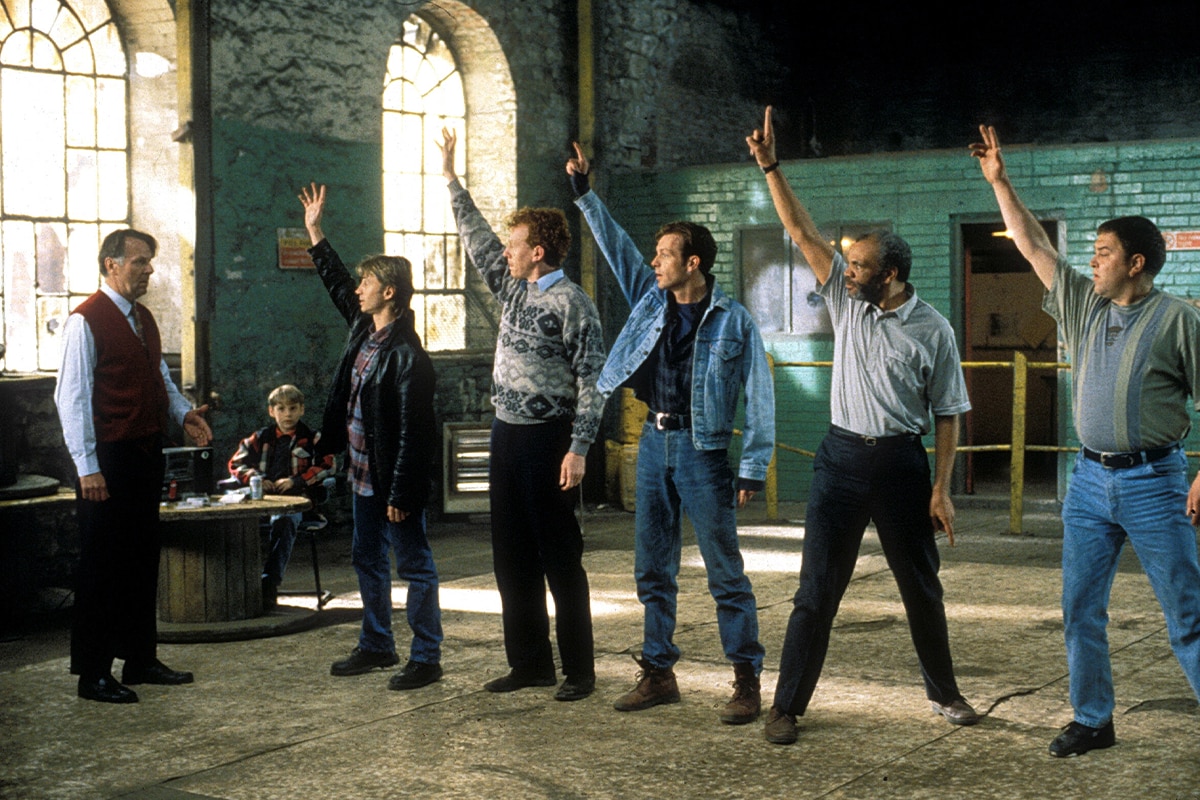
Each man has initial reservations about the willingness to bare all; they realize that they do not exactly possess the looks, physique or charisma one expects from someone in that profession. Facing issues with aging, body image, loss of material possessions and mortality, the fraternal bond that forms between them as they seek to better themselves in a rather bleak situation transcends the mere need to put food on the table. A runaway hit at the box office, the film would be adapted for Broadway in the early 2000s. Much of the cast reunited for the eight-part continuation television series on FX on Hulu in 2023.
Also appearing in its TCM premiere is Gus Trikonis’s Take This Job and Shove It (1981), a comedy starring Robert Hays as a manager hired to transition a failing brewery acquired by a major corporation. When he learns that the company is in danger of closing, the workers band together to save their jobs. Mostly filmed in Dubuque, Iowa, at the Dubuque Star Brewery, the real-life brewery was listed on the National Register of Historic Places in 2007. Other films airing are the Alan Parker musical comedy The Commitments (1991), Charlie Chaplin’s Modern Times (1936) and the Bette Davis pre-Code, The Working Man (1933)
On January 20, the working class is in for an evening of Drama. Often considered among the greatest American films of all time, On the Waterfront (1954) stars Marlon Brando in his Oscar-winning turn as a prize fighter-turned-union worker under the thumb of a corrupt mob boss (Lee J. Cobb). Montgomery Clift earned a Best Actor nomination for A Place in the Sun (1951), in which he plays the poor nephew of a rich factory owner and becomes embroiled in a dangerous love triangle with a factory worker (Shelley Winters) and a rich socialite (Elizabeth Taylor). Also airing is Martin Scorsese’s Alice Doesn’t Live Here Anymore (1974), starring Ellen Burstyn in her Oscar-winning performance as a widowed working-class mother; Katharine Hepburn as Alice Adams (1935); Black Fury (1935), with Paul Muni as a coal miner who inspires a historic walkout in a Pennsylvania mine; and The Valley of Decision (1945), starring Greer Garson in an Oscar-nominated performance for Best Actress, which made her the record holder for most consecutive nominations alongside Bette Davis.

Finally, on January 27, check out a night of films depicting young people Growing Up Working Class, including the crossing of culture and political leaning in Thatcher-era Britain in My Beautiful Laundrette (1985), and the life of a young Victorian-era boy within a Welsh mining family in 1941’s How Green Was My Valley. Also airing is the Ken Loach drama Kes (1969), which chronicles a poor teen growing up in a 1960s English mining town; Bicycle Thieves (1948), centering on a post-war Italian child who witnesses his father’s only chance at providing for his family threatened when his bike is stolen. Closing out the night are two British dramas following rebellious working-class youths: This Sporting Life (1963) stars Richard Harris in his film debut, which earned him the Cannes Film Festival Best Actor Award and a Best Actor Oscar nomination; and The Loneliness of the Long Distance Runner (1962), starring Tom Courtenay in an award-winning performance.
Throughout one’s daily life, a significant portion of our existence involves good, old-fashioned work. The stories told in each film this month not only remind us how we pay our dues and earn a decent living. It shows us the importance of being proactive with our goals, encountering trials and tribulations, persevering in the face of adversity and showing courage to do what is right and just.
