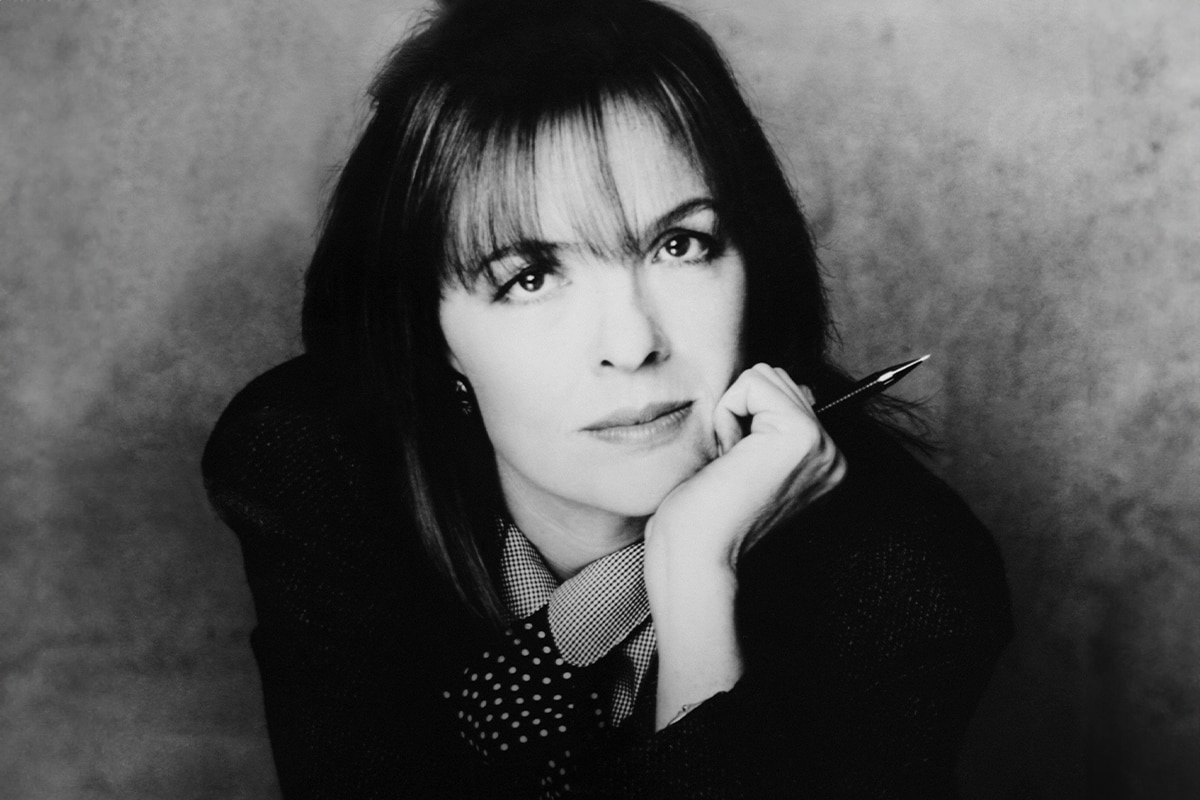
This article was originally written about programming for the TCM Now Playing newsletter in January 2026.
January 25 at 12:30pm ET | 5 Movies
When Diane Keaton left Orange County at 19 for New York, she followed in the footsteps of such legendary performers as Gregory Peck, Joanne Woodward, Steve McQueen and Robert Duvall, enrolling in the Neighborhood Playhouse under the auspices of the noted acting teacher Sanford Meisner, who instructed his students to embrace a natural style of acting. “The main thing that Sanford Meisner gave me, not really just for acting, is just be in the moment,” Keaton told me in a 2014 Los Angeles Times interview for the Rob Reiner comedy And So It Goes (2014).
Reiner appreciated her approach. “She told me, ‘I don’t act, I am just who I am,”’ he recalled. “She basically takes the dialogue and makes it her own. Her instincts are just so good, it creates no false moments.” In a career that spanned nearly 60 years, the beloved actress, who died of bacterial pneumonia on October 11 at the age of 79, was always in the moment.
Even months after her death, it’s still difficult to wrap one’s head around the fact that there will be no new Keaton films. It’s as if a light has been extinguished. Goldie Hawn, who appeared with Keaton and Bette Midler in the 1996 box-office smash The First Wives Club, was overcome with emotion at the Hollywood Reporter’s Women in Entertainment Gala in December. “She can’t be gone,” Hawn reflected. “No one like that should ever die. She just brought so much joy, so much life, so much exuberance. She was lightning in a bottle.”
But the legacy she left us includes memorable turns in the eight films she made with Woody Allen, including her delightfully quirky Oscar-winning performance in Annie Hall (1977), her dramatic Oscar-nominated turn in Warren Beatty’s epic Reds (1981), and turning a wife and mother role into something special in Father of the Bride (1991) and its 1995 sequel Father of the Bride Part II opposite longtime friend Steve Martin.
One could say she was a real Renaissance woman. Besides acting, Keaton directed music videos, episodic TV, as well as three features: Heaven (1987), Unstrung Heroes (1995) and Hanging Up (2000), which marked Walter Matthau’s final onscreen performance. Keaton was also a singer, producer, writer (among her books was a 2002 curation of amateur clown photos), fashionista and designer. She told her Instagram followers to remember to sing to their dogs while posting footage of her singing to her golden retriever Reggie. And she embraced motherhood as she entered her fifth decade, adopting a daughter and son. “Motherhood was not an urge I couldn’t resist,” Keaton told Ladies’ Home Journal. “It was more a thought I had been thinking for a very long time. So, I plunged in.” Keaton always marched to the beat of her own drum and was beloved for that.
TCM is celebrating Keaton with a five-picture tribute on January 25th. Alicia Malone will host the daytime offerings, Father of the Bride, Reds and Manhattan Murder Mystery (1993), while host Ben Mankiewicz presents Annie Hall and the 1987 comedy hit Baby Boom.
Keaton joined longtime pal Steve Martin in director Charles Shyer and writer Nancy Meyers’ sprightly remake of the 1950 Vincente Minnelli classic comedy about the harried father of an engaged daughter (Kimberly Williams) as he and his wife prepare for her nuptials. Let’s face it, the movie belongs to Martin (it’s not Father and Mother of the Bride), but Keaton turns a typical wife and mother role into a fully realized character. Earning more than $89 million, a lot of the film’s success is due to the undeniable chemistry between Keaton and Martin. Their long friendship was front and center.
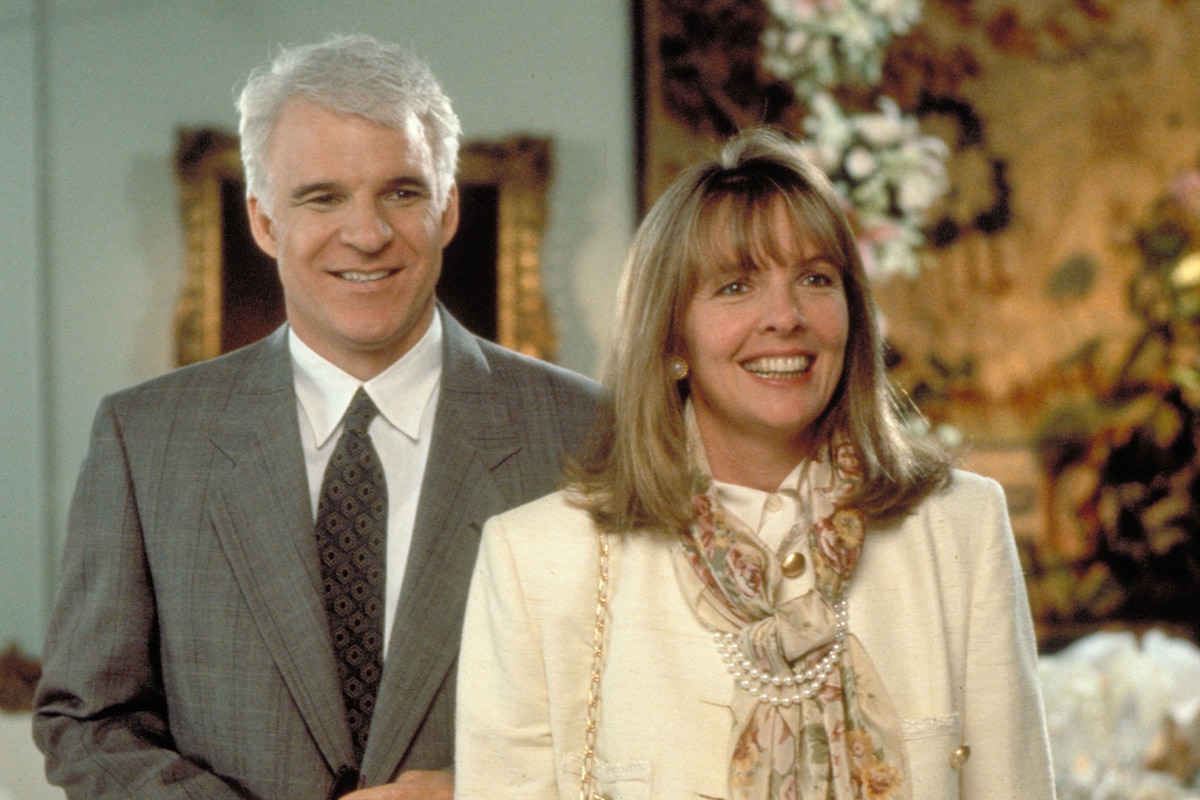
Martin later shared a program on his social media of a 1964 production of the Rodgers and Hammerstein musical “Carousel at Santa Ana College.” He pointed out that he was listed as a stagehand, while Keaton played the second female lead Carrie, the sweet, funny friend of heroine Julie. And he made the audience at Keaton’s funeral simultaneously laugh and cry: “I tried to wear one of Diane’s hats today... but no one could ever pull off a hat quite like she did. Diane was magic. She didn’t just play characters, she became them. And in between the takes, she made us all feel like we were part of something real, something kind.”
Baby Boom marked the first time Keaton worked with the Shyer-Meyers team. Though the movie was a modest box-office performer, Keaton earned strong reviews, even from The New Yorker’s hard-to-please critic Pauline Kael. Keaton, she gushed, gave a “glorious comedy performance…Keaton is smashing.”
Father of the Bride and Baby Boom writer Nancy Meyers noted she felt like Keaton was more a sister than a friend. “As a movie lover, I’m with you all–we have lost a giant. A brilliant actress who time and again laid herself bare to tell our stories. We shared so many truly memorable experiences. As a filmmaker, I’ve lost a connection with an actress that one can only dream of…I always felt she really got me, so writing for her made me better because I felt so secure in her hands.”
Keaton was a contemporary version of a 1930s screwball comedy actress. Think about it. Just as Carole Lombard, Jean Arthur, Irene Dunne, Claudette Colbert and Rosalind Russell, Keaton was a dazzling comedic performer, but equally at home in drama. Keaton earned her second Oscar nomination for Warren Beatty’s acclaimed historical drama Reds, in which she played journalist and suffragette Louise Bryant, married to Beatty, who plays radical journalist John Reed, who wrote the 1919 book “Ten Days That Shook the World.” How good was she? You’ll see during a moment that’s the emotional core of the film at a train station in Russia. It’s absolutely haunting; for over two minutes, Keaton commands the screen as the camera follows her through a crowd at the station. There’s no need for dialogue. You know exactly what she’s feeling and thinking.
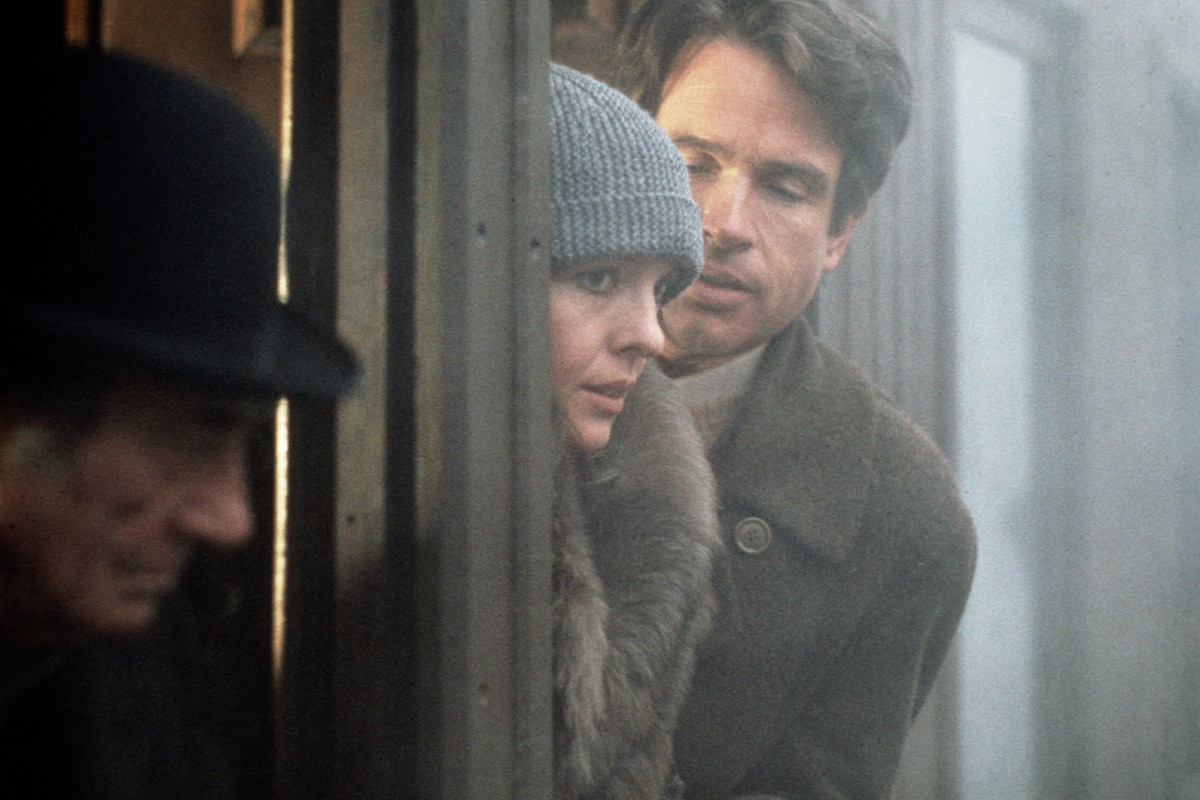
The New York Times review thought Beatty was “fine” as Reed, but “Keaton is nothing less than splendid as Louise Bryant – beautiful, selfish, funny and driven. It's the best work she has done to date.” Beatty, who remained close to Keaton after their five-year romantic relationship ended in 1983, sung her praises when she received the 2017 AFI Life Achievement Award, calling her “brilliant, beautiful, passionate, authentic, political, dramatic, hilarious, honest, generous, spontaneous, ethical, independent, feminist, actor, director, writer, producer, singer, photographer, designer, real estate developer, and mother of two kids,” he said. And he didn’t stop there. “She is an unpredictable, mysterious, suspenseful, constantly surprising, sometimes comedic, sometimes tragic, always engaging…”
Keaton would probably have had a very different career if it weren’t for her eyes. Back in 1971, Keaton was in the running to play the young, rather ditzy wife of Rock Hudson in the lighthearted NBC mystery series “McMillan & Wife.” But the producers didn’t think her eyes had “it.” “The eyes go down,” Keaton pointed out. “They tried to get them up.” Susan Saint James landed the role instead. Not long after her rejection, Keaton was cast in the pivotal role of Michael’s wife Kay in Francis Ford Coppola’s Oscar-winning 1972 epic The Godfather; two years later, she reprised her role in The Godfather Part II, which dominated the Academy Awards. Then came Annie Hall, a rare comedy to receive the Oscar for Best Film. Losing “McMillan & Wife” “turned out to be okay,” she told me in 2014. And she never fixed her eyes.
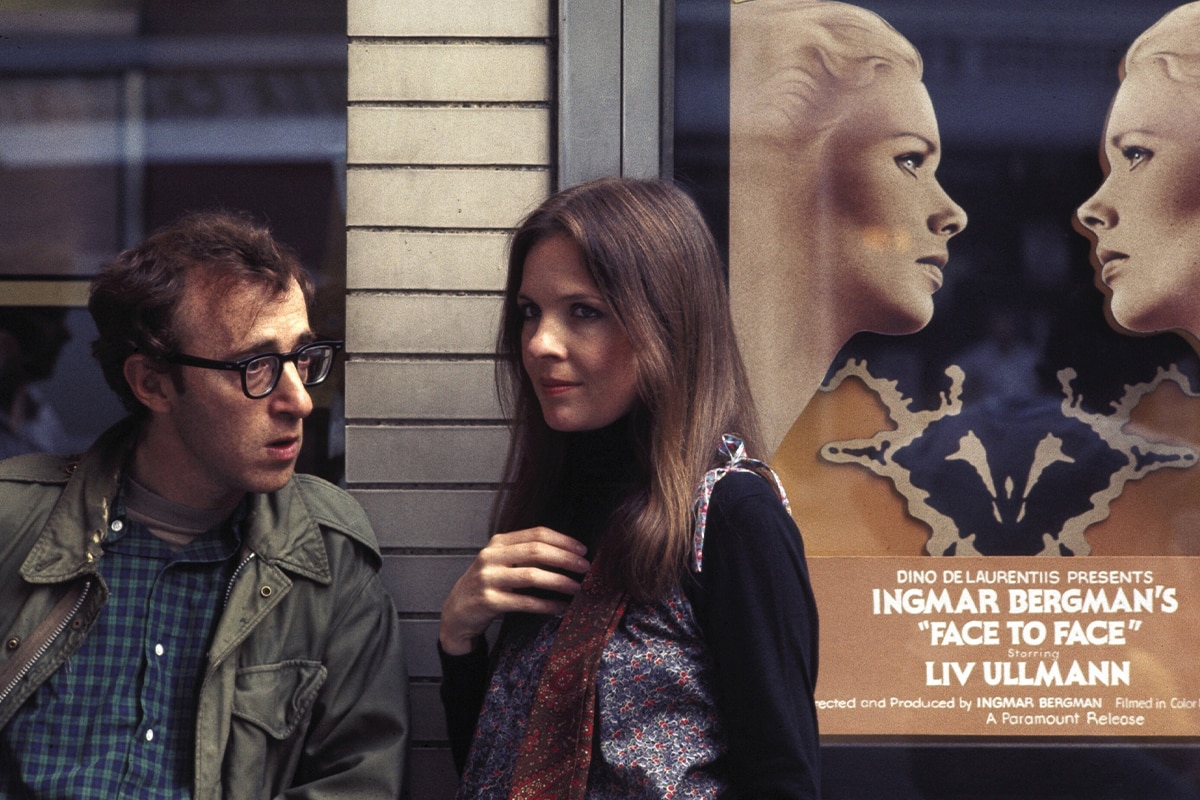
Keaton was appearing on Broadway in 1968 in the tribal rock musical “Hair”–she turned down the extra $50 to appear naked in the show–when she auditioned for Allen’s upcoming Broadway show “Play It Again, Sam.” “I had a crush on him right from the beginning,” Keaton noted in 2014. “He was perfect for me.” And she for him. He wrote an essay in the Free Press shortly after her death: “She was so charming, so beautiful, so magical, that I questioned my sanity,” he stated. “I thought: ‘Could I be in love so quickly?’” Keaton earned a Tony nomination for Play It Again, Sam. They reprised their roles in the 1972 film adaptation directed by Herbert Ross.
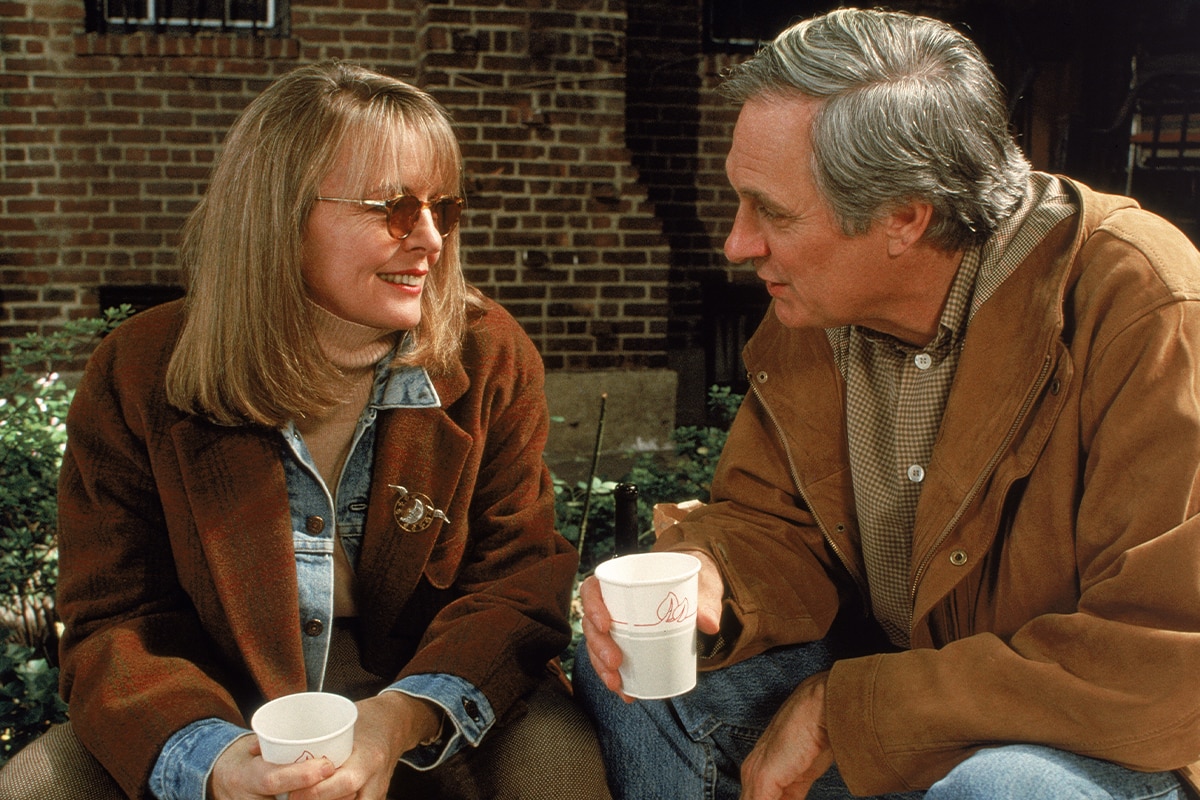
Manhattan Murder Mystery, the last of their eight collaborations, is a slight but enjoyable comedy about a couple who think their elderly neighbor was murdered by her husband. Mia Farrow, who had been Allen’s muse since the early 1980s, was originally slated to star with the filmmaker in the movie. But hell broke loose in 1992, when it was revealed that Allen was having an affair with Farrow’s adopted daughter, Soon Yi-Previn; then Farrow accused Allen of sexually molesting their seven-year-old adopted daughter, now known as Dylan. He has never been convicted, though he has been ostracized in Hollywood. Keaton remained friends with Allen and never discussed the charges.
When Keaton received her AFI honor in 2017, the notoriously shy Allen presented her with the honor. “We go back a long way, Diane and me. You are probably familiar with the fictional movie character, Eve Harrington. This is not to suggest that Diane, when I met her, was ruthlessly ambitious. But she did make an interesting Freudian slip. When we started going out, she meant to refer to me as a talented young director. Instead, she called me the ‘stepping stone.’”
