The vogue for musicals that hit the screen on the advent of sound had passed by the early 1930s. For the most part stagey and derivative, these productions became less and less interesting to the public, who were turning more to realistic dramas, such as the hard-hitting urban social commentaries Warner Brothers was known for. As the decade went on, however, most of the major studios, Warners among them, reasoned that a nation wearied by the Depression was ready for more glamorous, frivolous, flashy entertainment, and with technological advances in sound and camera allowing for greater fluidity and creativity for musical numbers, they started taking chances again on musical comedies. As it had done in many other areas (not least the development of the talking picture), Warner Brothers took the lead, creating a new trend-and having a huge smash-with 42nd Street (1933). The success of that picture convinced the studio to put its money, energy, and best talents into more of the same.
Gold Diggers of 1933 followed just a few months later and proved to have even more of what the public enjoyed in the earlier picture. Based on a Broadway comedy that had been filmed by the studio twice before, this version strayed much farther from the original to include not only the lavish musical numbers that were quickly becoming a Warners trademark (thanks to one talent in particular) but also both the snappy, fast-talking appeal of its big-city stories and the element of social commentary the studio was known for. While most musical and comedy entertainment turned out by Hollywood at the time sought to take audiences' minds off the Depression, here was a musical that was specifically about the country's economic hard times. The comedic center of the film was still the efforts of a group of showgirls to thwart the scheme of a stuffy society man to break up a romance, and one of the best-known numbers had nothing to do with the financial crisis. "Pettin' in the Park" pushed the limits of censorship with an eroticism unprecedented for the genre, featuring virtual nudity, one very naughty and voyeuristic "baby," and the efforts of the leading man to use a can opener to extricate his sweetheart from her metal chastity suit. But the frivolous story was steeped in a conflict between haves and have-nots, centered on a plot about the struggle to keep Broadway alive during hard times, and bracketed by two production numbers that took the Depression as their central motif.
The film opens with a chorus of scantily coin-clad chorines warbling "We're in the money," as if all were at last well in the land, brutally interrupted by law enforcement officers come to collect the producer's outstanding debts by confiscating the scenery and ripping the costumes right off the cast. The movie concludes with the most downbeat ending of any musical before, say, West Side Story (1961). Inspired by the recent disastrous Bonus March, in which downtrodden veterans of World War I were brutally rebuffed in their attempt to claim their government pensions (arguably the first and certainly largest Occupy movement in American history), the final number showcases prostitutes and widows, soldiers and drunkards, exhorting the world to "Remember My Forgotten Man." Darkly expressionistic and pessimistic, it brings the curtain down on the movie without so much as a single funny quip or romantic clinch to relieve the gloom. Audiences had never seen anything like it, and it helped make the picture a box office smash.
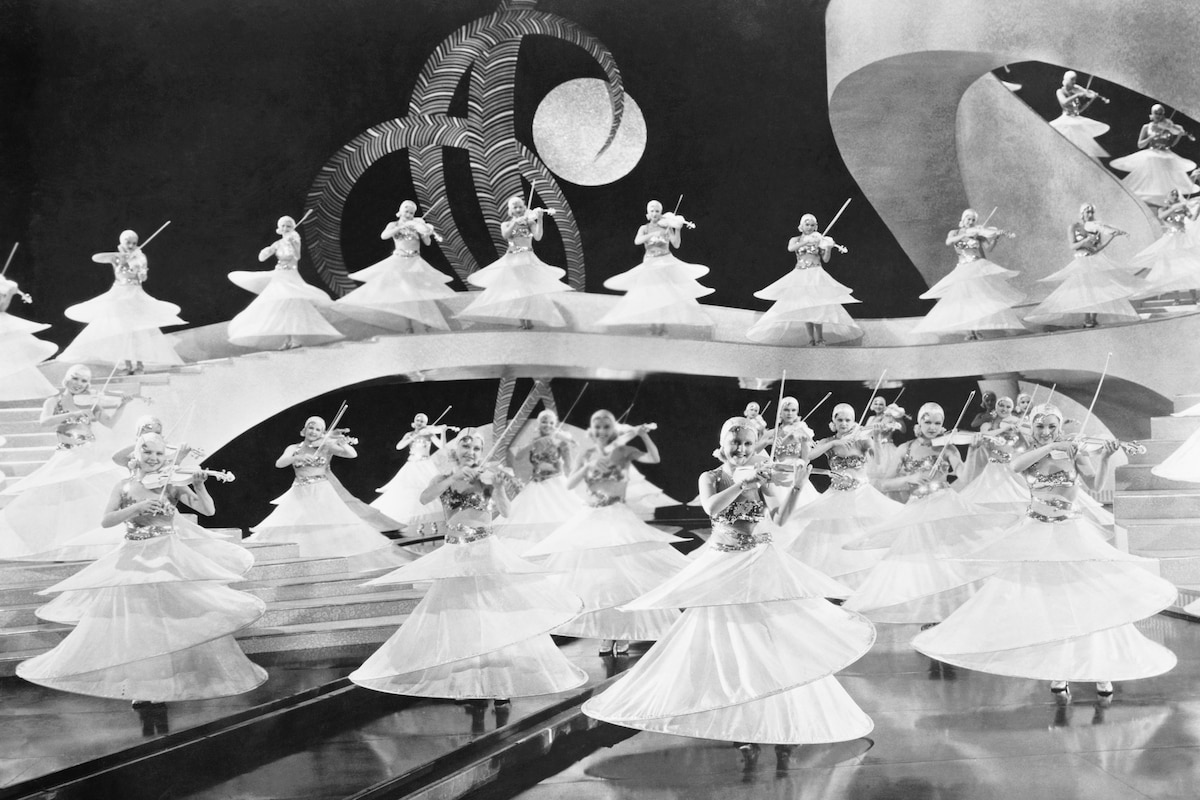
Although the film is directed by Mervyn LeRoy, one of the most successful producer-directors of the studio era, this is usually thought of as a Busby Berkeley picture, thanks to the unmistakable style brought to musical numbers he created and directed. Berkeley's surreal, geometric, often erotically charged stagings, raised to new heights in this picture, freed movie musicals from the confines of the proscenium, incorporating fluid camerawork and effects that moved the genre from mere records of theatrical performance to true cinematic spectacles.
Here then is the perfect example of everything done best by the studio that in many ways continues to define the 1930s in America. The same may be said for most of the big Warner Brothers musicals of the period. What distinguishes Gold Diggers from the rest is that it's the women, rather than a central male character, driving the story. The strong female camaraderie among the chorus girls here continues to be a fascination for critics and audiences, whether feminist or not.
by Rob Nixon
The Essentials - Gold Diggers of 1933
by Rob Nixon | February 27, 2013
SIGN UP FOR OUR NEWSLETTERS

CONNECT WITH TCM