SYNOPSIS
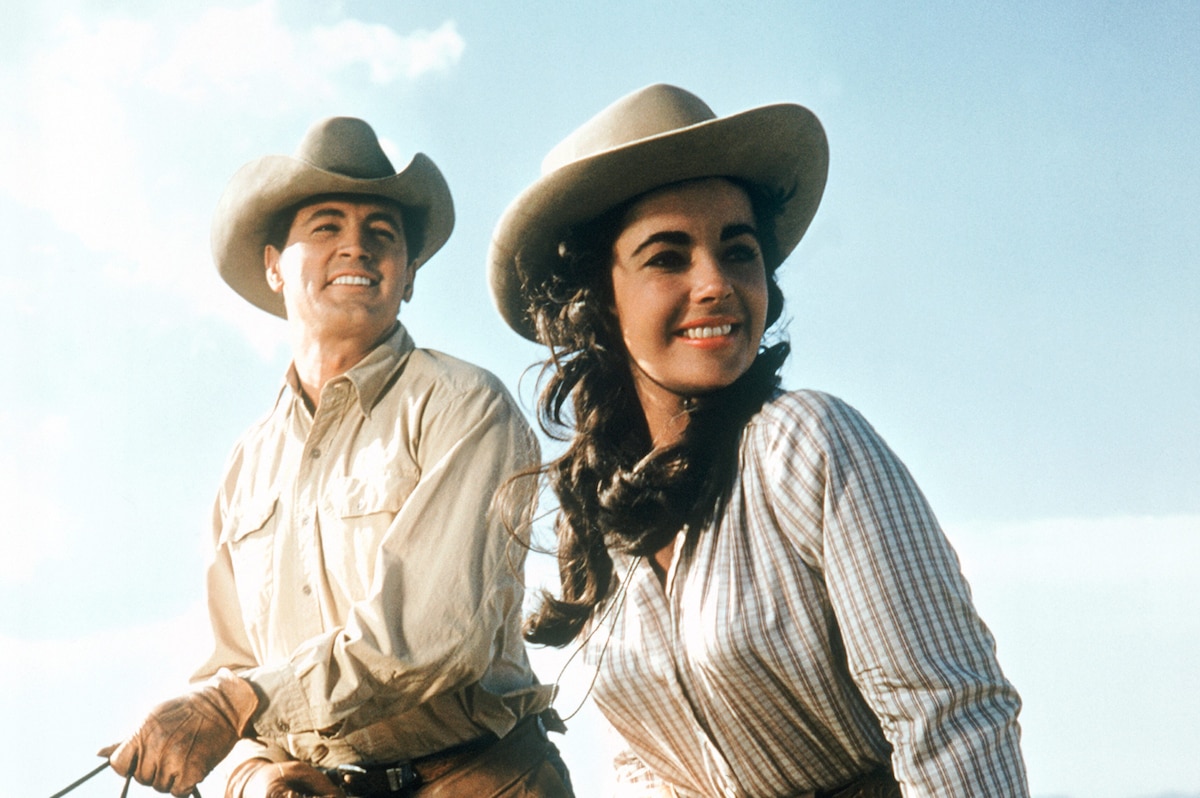
On a horse-buying trip to Maryland, Texas rancher Jordan "Bick" Benedict II falls for the beautiful, spirited Leslie Lynnton. Over the course of three decades, their marriage experiences ups and downs as Leslie rebels against Texas tradition by exercising her independence, building a friendship with the despised ranch hand Jett Rink and tending to the needs of the area's Mexican-American workers. Less broadminded than Leslie, Bick struggles to adjust to changing times as Jett strikes it rich with an oil well, eventually convincing him to drill for oil on Reata, the Benedict family ranch. Bick also has to adjust to his children's search for lives of their own, particularly when his eldest son, Jordan III, chooses medicine over ranching and marries a Mexican-American woman, putting him on a collision course with the prejudices he once upheld.
Director: George Stevens
Producer: George Stevens, Henry Ginsberg
Screenplay: Fred Guiol, Ivan Moffat
Based on the novel by Edna Ferber
Cinematography: William C. Mellor
Editing: William Hornbeck
Art Direction: Boris Leven
Music: Dimitri Tiomkin
Cast: Elizabeth Taylor (Leslie Benedict), Rock Hudson (Jordan 'Bick' Benedict, Jr.), James Dean (Jett Rink), Carroll Baker (Luz Benedict II), Jane Withers (Vashti Snythe), Chill Wills (Uncle Bawley), Mercedes McCambridge (Luz Benedict), Dennis Hopper (Jordan Benedict III), Sal Mineo (Angel Obregon II), Rod Taylor (Sir David Karfrey), Judith Evelyn (Mrs. Nancy Lynnton), Earl Holliman ('Bob' Dace), Paul Fix (Dr. Horace Lynnton), Alexander Scourby (Old Polo), Elsa Cardenas (Juana Guerra Benedict), Monte Hale (Bale Clinch), Sheb Wooley (Gabe Target), Barbara Barrie (Mary Lou Decker), Max Terhune (Dr. Walker).
C-201m. Letterboxed. Closed captioning.
Why GIANT is Essential
Giant combined two major trends of '50s Hollywood filmmaking -- the big-screen epic and the social problem film. Adapted from Edna Ferber's generation-spanning, 400-plus page novel, the film captured the breadth of Texas history from the '20s into the '50s as oil supplants cattle as the state's major export. Threaded through the story is a serious consideration of racism, with Maryland-transplant Leslie Benedict (Elizabeth Taylor) shocking her husband's friends and family by trying to help Mexican-Americans and, eventually, her son (Dennis Hopper) marrying a Mexican-American woman and facing prejudice as he introduces her to Texas society.
The film was James Dean's last and contains what many have called his best performance. After rising to stardom playing sensitive young men in East of Eden and Rebel Without a Cause (both 1955), he got to play a character who ages from misunderstood young rebel to middle-aged, corrupt business tycoon, a role pointing to what he might have accomplished had he lived.
Giant was one of the first films to reveal Taylor's potential as a dramatic actress and one of the few to give Rock Hudson a real chance to act. For Taylor, it marked the start of a period during which she would be increasingly in demand for strong dramatic roles, eventually winning five Oscar® nominations and two Oscars®. The film brought Hudson his only Oscar® nomination, though he would rarely be given another role that challenging.
Critics have labeled George Stevens' three big '50s films -- A Place in the Sun (1951), Shane (1953) and Giant -- his "American Trilogy." Each looks at some aspect of the American dream through the eyes of outsiders -- Montgomery Clift's ambitious factory worker in the first, the pioneering farmers in the second and both Taylor's Maryland transplant and Dean's ambitious ranch hand in the third. Stylistically they are marked by Stevens' use of extreme close-ups, symbolic sound and mise-en-scene, and slow dissolves that create a leisurely pace. Oddly, both A Place in the Sun and Giant present Taylor as a vision of the American Dream. The first and third won Stevens Oscars® for Best Director.
Standard practice for decades-spanning films in Hollywood had always been to cast older actors and make them look younger in the film's earlier scenes, usually by casting older actors along with them in those earlier scenes. Giant was one of the first Hollywood epics to cast younger actors and age them through the course of the film.
by Frank Miller
The Essentials - Giant
by Frank Miller | February 20, 2013
SIGN UP FOR OUR NEWSLETTERS

CONNECT WITH TCM