The Lady Eve grossed $115,700 in its first three weeks, a high figure for the period. It ended up one of the top 20 films at the box office for its year.
"With The Lady Eve, Preston Sturges is indisputably established as one of the top one or two writers and directors of comedy working in Hollywood today. A more charming or distinguished gem of nonsense has not occurred since It Happened One Night [1934]. Superlatives like that are dangerous, but superlatives like The Lady Eve are much too rare for the careful weighting of words. And much too precious a boon in these grim and mirthless times." -- Bosley Crowther, The New York Times.
"Barbara Stanwyck, who always struck me as a wooden portrayer of rather lugubrious roles, is enchanting. In a series of stunning get-ups, she is alluring as well as artful in performing the key role of the show. Fonda, as the rich sucker who is made a fool of after making a fool of himself, has a far easier job of make-believe, but he is splendid in any case." -- Howard Barnes, New York Herald Tribune.
"The sheer density of Sturges's dialogue is even more staggering today [1964] than it was at the time. He wrote more funny lines for his bit players than contemporary jokesmiths can write for their leads." -- Andrew Sarris, The Village Voice.
"A frivolous masterpiece. Like Bringing Up Baby [1938], The Lady Eve is a mixture of visual and verbal slapstick, and of high artifice and pratfalls...it represents the dizzy high point of Sturges's comedy writing." - Pauline Kael, 5001 Nights at the Movies.
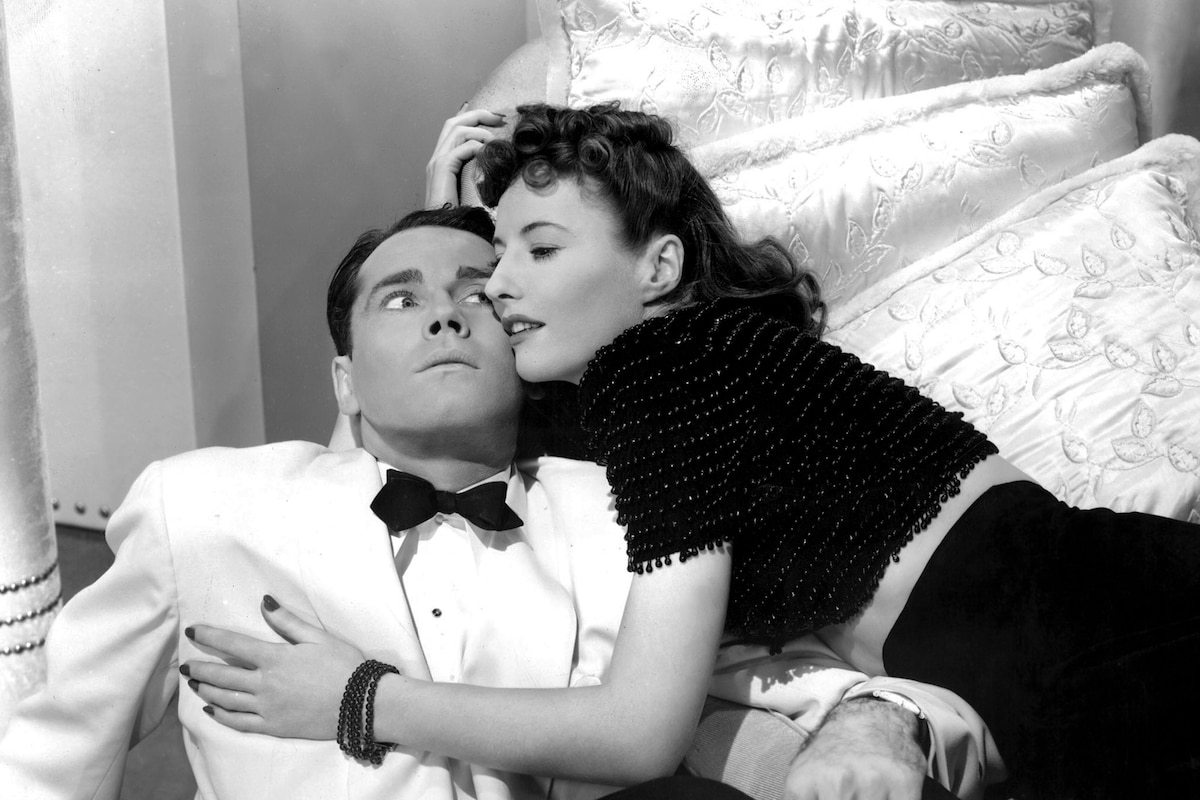
"If I were asked to name the single scene in all of romantic comedy that was sexiest and funniest at the same time, I would advise beginning at six seconds past the 20-minute mark in Preston Sturges's "The Lady Eve,'' and watching as Barbara Stanwyck toys with Henry Fonda's hair in an unbroken shot that lasts three minutes and 51 seconds." -- Robert Ebert, Chicago Sun-Times.
"Sturges takes standard screwball-comedy material and turns it into a zany classic. Film has an irresistible blend of quirky characters, snappy dialogue, slapstick, and sex. Fonda will surprise you with his skillful pratfalls. Stanwyck is so personable and vivacious that you feel that all the men whose money she stole got their money's worth..." - Danny Peary, Guide For the Film Fanatic.
"If The Lady Eve is his [Sturges'] best film, it is also the most conventional - the story is Hawksian in the pugnacity of its sexual conflict - and the one least troubled by background characters, delightful but foolish coincidence, and those sudden lurches in a new direction that suggest a magician losing control of his assistants." - David Thomson, The New Biographical Dictionary of Film.
"A beguilingly ribald sex comedy, spattered with characteristic Sturges slapstick (Fonda can hardly move without courting disaster) and speech patterns ("Let us be crooked, but never common," urges [Charles] Coburn's conman). Fonda and Stanwyck are superbly paired...not just funny, but surprisingly moving, given the tender romantic warmth of the early shipboard scenes..." - Tom Milne, TimeOut Film Guide.
AWARDS & HONORS
The Lady Eve was honored as Best Picture of the month by the trade paper the Hollywood Reporter. They also honored Preston Sturges for his directing and writing and Barbara Stanwyck for her performance.
Monckton Hoffe received an Oscar® nomination for Best Original Story. He lost to Harry Segal for Here Comes Mr. Jordan. Stanwyck was not nominated for Best Actress for The Lady Eve but for another 1941 comedy, Ball of Fire.
The Lady Eve was voted onto the National Film Registry in 1994.
In The Encyclopedia of Movie Awards (St. Martin's Paperbacks: 1996), Michael Gebert named Stanwyck Best Actress of 1941 for her performance in The Lady Eve.
Compiled by Frank Miller & Jeff Stafford
Critics' Corner - The Lady Eve
by Frank Miller & Jeff Stafford | February 20, 2013
SIGN UP FOR OUR NEWSLETTERS

CONNECT WITH TCM