As Rex Harrison arrived in Hollywood, he was very excited about launching his acting career in America. At the same time, he was also a little nervous.
When he was finally able to meet John Cromwell, the director of the film that could make or break him in Tinseltown, Harrison found him pleasant enough, but rather aloof. "At least two months passed before the production began," recalled Harrison in his 1975 autobiography Rex, "during which time, if we did come across each other, [Cromwell] withdrew, either physically or mentally; I was never able to sit down with him and discuss my fears and worries about playing an Oriental, and he never told me what he thought about the character."
Harrison, unfortunately, fared no better trying to communicate with the film's producer, Louis Lighton. He called Lighton "a highly intelligent man who had difficulty in articulating his thoughts. He talked in riddles, so abstruse that I used to sit in his office and try in vain to make out their meaning."
The man in charge at Fox, Darryl Zanuck, was not much help to him, either. With his hands too full trying to run a studio, Zanuck had little time to talk with actors about how they should play their roles. Rex Harrison felt alarmed. "I'd done lots of homework about the Siamese background before leaving England," he said, "but I'd never played an Oriental before, and I simply didn't know how to tackle it."
Harrison was shocked and frustrated by the seeming lack of interest that his new studio had in Anna and the King of Siam. "This lackadaisical attitude was not at all what I'd expected," said Harrison, "and I began feeling pretty desperate. Everything was so slow; I wasn't geared to relaxing around pools and drinking all day. I'd been used all my life to working hard, and now suddenly I was in a hot bath, growing weaker and weaker. The sets were only just being constructed, so there was no hope of beginning for weeks, and in the meantime there was nobody I could talk to constructively about how I was to tackle this frightfully difficult role, for which I was far too young and two feet too tall."
In the meantime, Harrison did as much research as he could about the role on his own. He cared deeply about doing a good job playing The King and spent time working with a private coach to work out the speech patterns and physicality of this new character. "Our [house] was high up in the hills," said Harrison, "and it had a tiny garden where I used to pace, day after day, like a caged animal, with the script in my hands, trying to work out what the devil I was going to do."
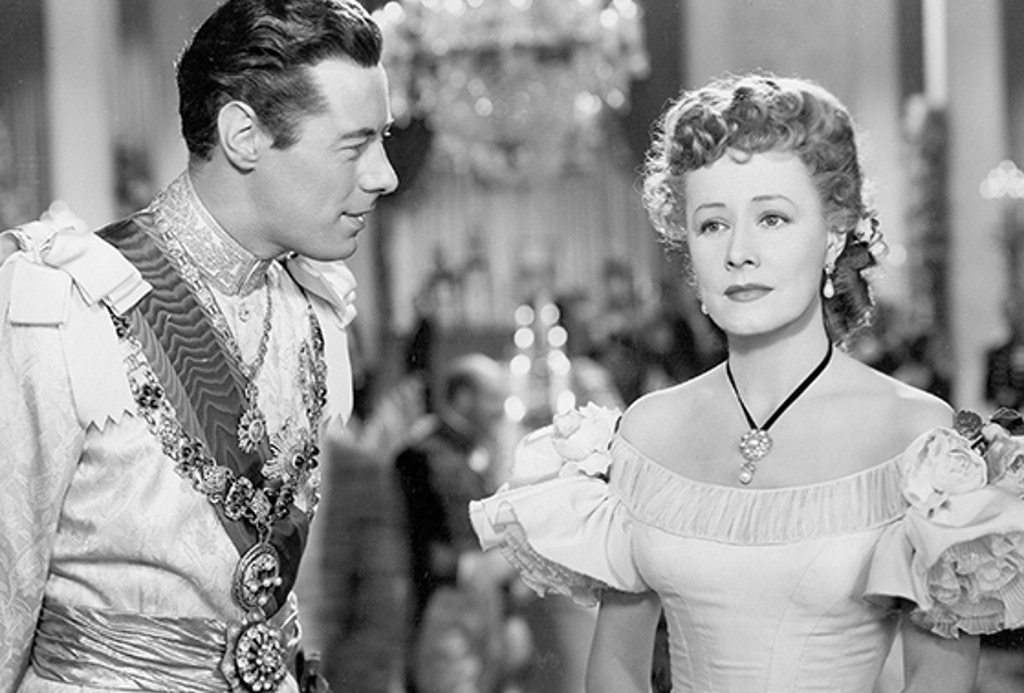
When it was nearing time for the cameras to actually roll on Anna and the King of Siam, Harrison was finally beginning to feel like he had some grasp on playing his character. The elaborate makeup created by the studio also helped make him feel more like The King. He had to endure having a plaster cast made of his head for the makeup as well as small rubber attachments for his eyes, but the final effect was worth it.
When production started on the film in November 1945, Harrison ended up going in front of the camera and directing his own performance, more or less. "Still without help I went to work," he said, "and having worked on the part for so long on my own, with no real contact with John Cromwell, I had to take my own course. This only widened the gap between us, because Cromwell saw that I wasn't waiting for him. I'd play each scene as I'd prepared it, to the best of my ability, always suspecting that I could never really get inside the mind of the King of Siam, and John Cromwell, from the beginning, just left it, never trying to make suggestions or improvements."
One particular problem that seemed to generate animosity on the set had to do with the speech pattern that Harrison had chosen to use for his characterization. "When we started shooting...John Cromwell was horrified to hear the authentic high-pitched laughs and strange guttural noises I made," said Harrison later, "and asked me to please speak in my normal, Rex Harrison, voice. After all, that was what they were paying for." The conflict over the matter was such that Harrison had to get studio head Darryl Zanuck to intervene on his behalf and back him up. To his surprise and delight, Zanuck supported him. However, it ended up causing a rift with Cromwell. "From then on," said Harrison, "I did my part as I wanted to, but John Cromwell never spoke another word to me."
Regardless of his difficulties working with Cromwell, Harrison thoroughly enjoyed co-starring with Irene Dunne. He thought her "an excellent actress" and was pleased that she had the confidence to follow her own instincts. "She too went her own way," said Harrison, "and tactfully used the director, as I later learned to do myself, to her own advantage; she listened to what he had to give, and discarded it or used it, as she wished."
Filming went on over the course of five months. Producer Louis Lighton ended up being the biggest help to Harrison along the way since he was willing to show him the dailies and give useful suggestions along the way about Harrison's performance, for which the actor was grateful.
Despite the challenges Harrison faced during shooting, he was still happy with the experience of making Anna and the King of Siam. "I have to admit that [the problems] did not stop me from enjoying the part enormously," he said. "It was quite a challenge, and I had a marvelous death scene at the end. There was also the great good fortune to be acting with Irene Dunne and Lee J. Cobb. Irene Dunne was a delight to work with, a dear woman and tremendously accomplished actress, and Lee J. Cobb one of the strongest American actors of his generation, and one I have always admired."
The sets for Anna and the King of Siam were some of the most elaborate ever built at Twentieth Century-Fox. Exquisitely detailed and painstakingly constructed, the expensive sets ended up covering several acres of the studio's backlot. According to a Time magazine article dated June 24, 1946, the film was "one of the first postwar productions to splurge on lavish, prewar-style props," which was shot "over five acres of lot covered with $300,000 worth...of Oriental rococo background. Notable eye-filling items: the King's four gold-and-diamond crowns ($84,000) and 23 silk-and-brocade costumes ($23,000);" along with "a coronation scene costing $80,000."
To write the film's musical score, Twentieth Century-Fox Music Department Head Alfred Newman approached famed composer Bernard Herrmann. Best known for his scores to classic films like Citizen Kane (1941) and numerous Alfred Hitchcock films including Vertigo (1958) and Psycho (1960), Herrmann researched the history of Siamese music to add veracity to the film's original score. "The music was based on authentic Siamese scales and melodic fragments," said Herrmann according to Steven C. Smith's 1991 book A Heart at Fire's Center: The Life and Music of Bernard Herrmann. "I tried to get the sounds of Oriental music with our instruments. The music made no attempt to be a commentary on, or an emotional counterpart of, the drama, but was intended to serve as musical scenery."
When Anna and the King of Siam opened in June 1946, it was a smash success, winning the favor of audiences and critics alike. It received five Academy Award nominations including Best Art Direction, Cinematography, Supporting Actress (Gale Sondergaard), Screenplay and Original Score. It went on to take home two of the golden statuettes for Best Art Direction and Cinematography (Black and White). The film also helped establish Rex Harrison's presence in Hollywood, which kick-started a long and distinguished acting career in the U.S.
The story of Anna and the King of Siam was later famously adapted into a musical stage version by the legendary team of Rodgers and Hammerstein called The King and I. Opening on Broadway in 1951, the musical became an instant sensation starring Yul Brenner as The King and Gertrude Lawrence as Anna. It took home five Tony Awards that year, including Best Musical. Twentieth Century-Fox went on to turn the musical stage version into the classic film The King and I in 1956 starring Yul Brenner and Deborah Kerr.
Over the years the story of Anna and her extraordinary experiences in Siam has continued to remain in the public's consciousness with contemporary film adaptations such as 1999's Anna and the King starring Jodie Foster and Chow Yun-Fat as well as countless revivals of the stage musical all over the world. With its vivid unique characters and exotic period locale, this beautiful and fascinating story continues to be discovered over and over again by new generations who are all able to find something new and relevant to take away. As the very first screen adaptation of the story, the excellence of 1946's Anna and the King of Siam set the standard for all versions that followed.
by Andrea Passafiume
Behind the Camera - Anna and the King of Siam
by Andrea Passafiume | February 20, 2013
SIGN UP FOR OUR NEWSLETTERS

CONNECT WITH TCM