The origins of Anna and the King of Siam can be traced back to the real-life story of Anna Leonowens, the British widow who traveled to Siam in 1862 to teach English to King Mongkut's numerous wives, concubines and children. After her eventual return to England and following the King's death in 1868, Leonowens began publishing stories in Atlantic Monthly magazine about her vivid experiences within the royal Siamese court.
The stories that Leonowens wrote were so popular that she ultimately compiled them into a book called The English Governess at the Siamese Court published in 1870. The book was such a success that she wrote a follow-up in 1872 called The Romance of the Harem in which she recalled even more tales about life in Siam that captured the public's imagination.
Many years later a writer named Margaret Landon, who lived in Siam herself from 1927-37, re-discovered these two remarkable books by Leonowens and promptly fell in love with them. Landon wanted to re-introduce Anna's stories to the world so that new generations could appreciate them. Using the original two books as a starting point, Landon set out to write her own romanticized version of Anna's adventures in Siam.
The book that Landon wrote was called Anna and the King of Siam, which was published in 1944. In this somewhat fictionalized account of Anna's story, Landon included the following author's note for clarification: "The method of presentation was determined by the form of the incidents as recorded by Anna Leonowens herself...If I were asked to give to fabric content of the book I should say that it is 'seventy-five per cent fact, and twenty-five per cent fiction based on fact'."
There was such interest in Landon's new book before it even hit stores that Twentieth Century-Fox production chief Darryl Zanuck snapped up the movie rights when it was still in galleys. He saw great cinematic potential in Anna's story and believed it would translate into a terrific film. Zanuck's instincts proved to be excellent, as Landon's book turned out to be a big success among readers when it was finally published. Translated into numerous languages, Anna and the King of Siam helped renew interest in Anna's story with modern audiences.
Zanuck quickly had a treatment for a screenplay adaptation written as a first step towards turning the story into a major motion picture at Fox. He initially saw great comic potential in the narrative. In a memo he wrote to producer Louis Lighton dated March 8, 1945, Zanuck wrote: "...This is a great personal story which cannot help but be a wonderful film in every respect. Its simplicity is its greatest charm and by keeping the story intimate between four or five characters we achieve a much larger picture than we could achieve if we went into spectacle, which, in my opinion, would ruin the wonderful personal drama...The comedy possibilities are enormous. This picture, with all its tenderness and conflict, is basically one of the funniest stories I have ever read. It is genuine comedy because it comes out of the characters themselves and is a result of clashes of personalities."
In the meantime, screenwriters Talbot Jennings and Sally Benson completed their adaptation of Landon's book. In their version, tweaked for the screen, a few liberties were taken with factual events. The tone became more dramatic than comic, although it retained some amusing moments throughout.
Zanuck soon began to mull over which actors to cast in the lead roles. For Anna, Zanuck initially wanted actress Dorothy McGuire. However, according to a memo he wrote at the time, David O. Selznick, who controlled McGuire's contract, was making things difficult. "Just as I anticipated," wrote Zanuck, "David is now asking for certain conditions that are not covered in our original contract with him for McGuire. Among many other petty things, he wants to announce that he has put her in the story; that he has thus approved the project, etc. etc...Dorothy McGuire would be great in the role, but I want you to know we are not going to get down on our knees to get her."
According to Zanuck there was a great deal of interest from other actresses in playing Anna. Jean Arthur, he reported, desperately wanted the role and was willing to "drop anything" for it. Myrna Loy and Olivia de Havilland were also pursuing the part. "I personally feel that while Dorothy McGuire would be great in every respect," wrote Zanuck, "Jean Arthur would give as great or even a greater performance, and of course with her name the enormous cost of the production would be completely safeguarded...If David [O. Selznick] comes off his high horse we will use McGuire; if not, we will have practically the pick of the industry for this role. I forgot to mention Irene Dunne, although in my opinion she is too old for it. She also wants to play it, and you cannot entirely thrust this aside when you consider that she has been in three great successes, one after another."
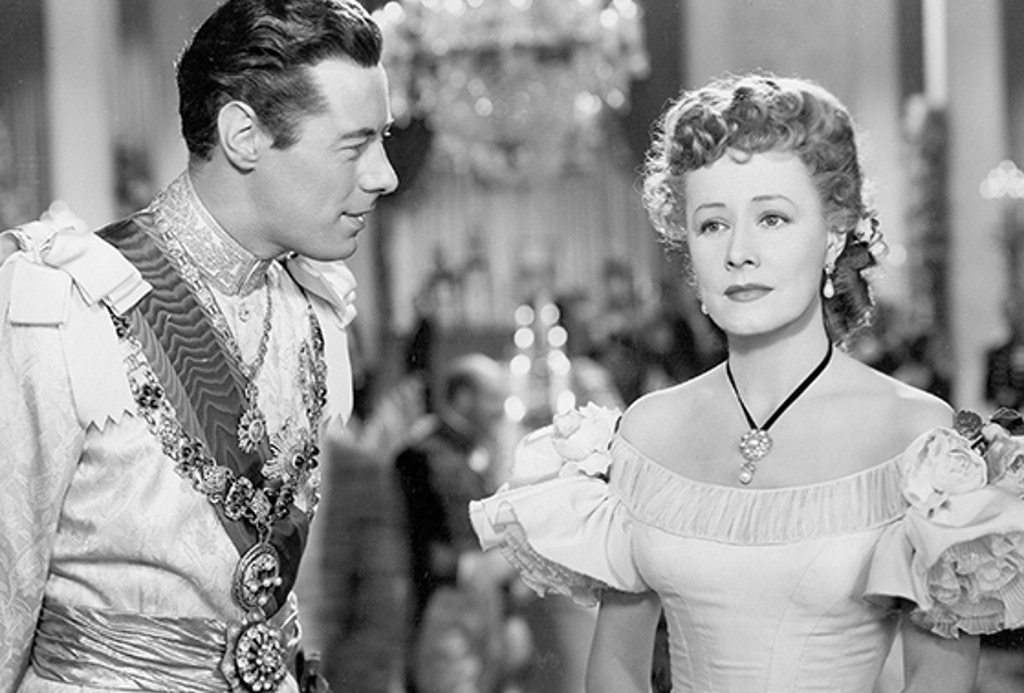
In the end, it was Irene Dunne who won the role, despite her age. As a four-time Academy Award nominee for Best Actress (her fifth nomination would come a few years later for I Remember Mama in 1948), Dunne was a superlative actress capable of tackling almost any role. At 47, it was true that Dunne was beyond playing ingénues. However, she looked far younger than her true age and made an attractive leading lady that would be very appropriate for the part.
For the role of The King, Zanuck originally thought of actor William Powell, whom he thought would be "sensational." Also mentioned along the way was Charles Boyer, who reportedly was also eager to sink his teeth into the role. Fearing that most actors might shy away at the thought of having to play second fiddle to the female lead, Zanuck made sure to keep the parts evenly distributed so that both roles would have the opportunity to shine.
Rex Harrison wasn't even mentioned to play The King in the beginning. He was a dynamically talented English actor who had been steadily building a name for himself in British theater and film productions. However, Harrison was virtually unknown to American audiences when he was offered a lucrative seven year contract with Twentieth Century-Fox to make movies in Hollywood. Basing their offer primarily on the success of his work in the British film Night Train (1940), Fox believed in his talent and set out to make him a leading man in America.
Ultimately, the first project chosen for Harrison was Anna and the King of Siam with him playing The King. In his 1991 memoir A Damned Serious Business: My Life in Comedy, Harrison recalled the feeling of anticipation for the new career that awaited him in Hollywood. "It was all very exciting," he said, "and though I didn't have a clue how I could play an oriental potentate, I booked myself on the first transatlantic liner out of Southampton I could find."
Eventually, the rest of the excellent supporting cast was named. Lee J. Cobb would play Prime Minister Kralahome, while sultry Linda Darnell would portray The King's rebellious favorite concubine Tuptim, and Gale Sondergaard would play Lady Thiang, The King's loyal first wife and mother to the young prince who will succeed him.
Names such as Elia Kazan, John M. Stahl and Ernst Lubitsch were initially discussed to direct the film. However, it was ultimately John Cromwell (Of Human Bondage [1934], Abe Lincoln in Illinois [1940]) who was tapped for the job.
With all the players set, Darryl Zanuck couldn't help but be excited about Anna and the King of Siam. "...I would like to go on record as saying that this, in my opinion, will be the best picture of the year," he wrote to producer Louis Lighton. "It is something entirely original and has great quality."
by Andrea Passafiume
The Big Idea - Anna and the King of Siam
by Andrea Passafiume | February 20, 2013
SIGN UP FOR OUR NEWSLETTERS

CONNECT WITH TCM