Before actual shooting was to begin on The Big Chill, Lawrence Kasdan wanted the cast to spend some significant time rehearsing together. As they traveled from California to Atlanta, Georgia and ultimately Beaufort, South Carolina, the actors had nearly three weeks of rehearsal time before the cameras rolled--something extremely rare for a film. Actress JoBeth Williams believed it was partly due to the studio not wanting to spend a lot of money on the actual shooting process. More importantly, however, Kasdan wanted to give the cast and crew a chance to work out how they would play their scenes together and get to know each other well enough to achieve the effortless camaraderie that comes with the close long-time friendships depicted in the story. It was a strategy that all of the actors found extremely helpful in making their characters' relationships believable. "It's like playing on a wonderful team," said Kevin Kline at the time, "and it's fun being part of that team. It's a sharing, like sharing a victory when you've won. There's a beautiful exhilaration in team play, which is about as apt a parallel as I can make to this ensemble."
The first thing actually shot was a key flashback scene in Atlanta that Kasdan always intended to be the ending of the film. It was a scene that showed all of the friends, including the deceased Alex, back during their college days making Thanksgiving dinner together. It was intended to depict how all of the friends were back then and finally show Alex as a contrast to everyone's different memories of him.
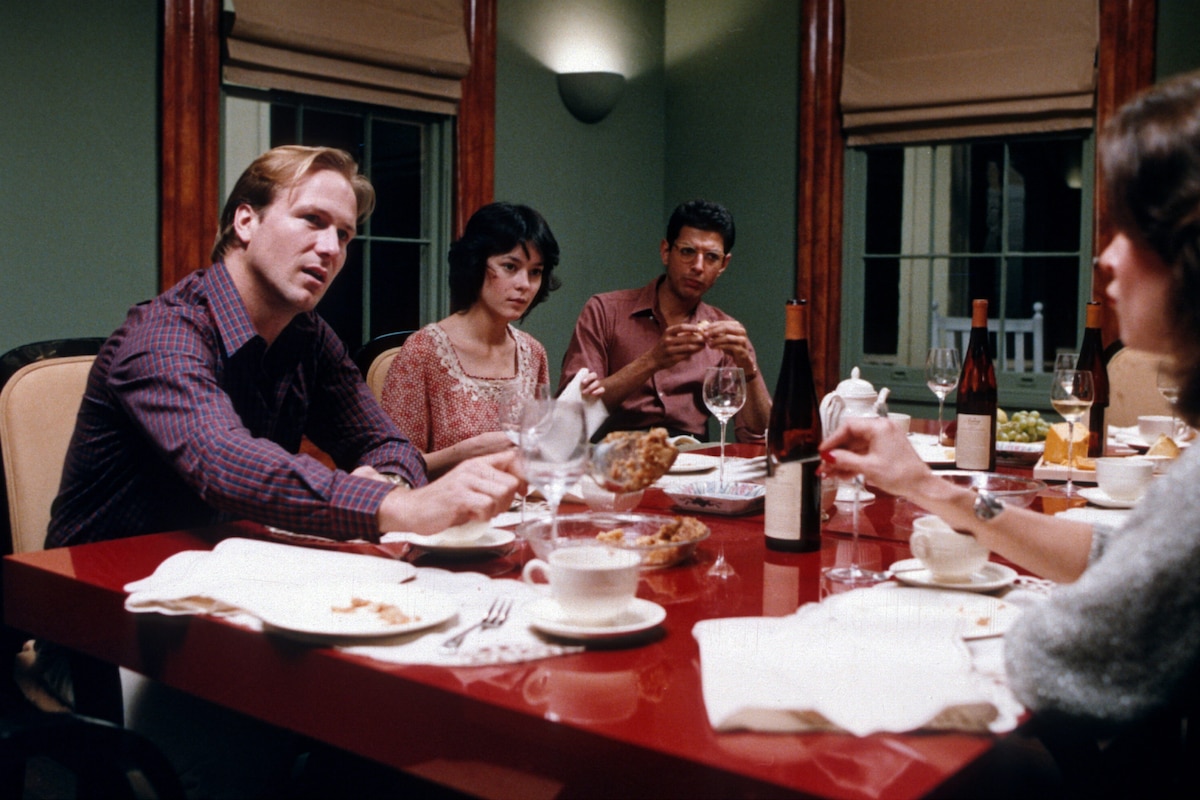
After filming the college Thanksgiving flashback scene, the cast and crew moved on to the picturesque town of Beaufort, SC and settled in for the remainder of the shoot. It was during the colder fall off-season for Beaufort, so the usual summer vacationers were absent, leaving a somewhat deserted feel to the area. With Hollywood so far away, and it being a time before cell phones or the Internet, contact with the outside world was limited, leaving the cast and crew to spend most of their time together off-camera as well, which helped in creating a tight communal atmosphere. When they weren't filming, the actors spent their time exploring the area, playing parlor games and having dinner together.
Kasdan made a point of encouraging all of the actors to be present in and around the house during shooting, even when they weren't the focus of the scene. He would have them be visible in the background, through windows or off to the side, which he felt gave the film a sense that the action of the story was always alive, ongoing and organic.
According to Mary Kay Place, Kasdan would often time scenes so that they would move along at a certain clip. It was an effort to keep the scenes from running too long so that Kasdan wouldn't be forced to cut them down later--something he hated having to do.
For scenes in which Kasdan anticipated using music, he would have the actors deliver their lines in voices much louder than normal. This was done so that when the songs were added to the soundtrack later in post-production the lines would be heard clearly above the music and sound natural.
When shooting was complete and The Big Chill moved into the post-production phase, editor Carol Littleton was faced with some challenges. Littleton, who had previously edited Body Heat (1981) and E.T.: The Extra-Terrestrial (1982), found that The Big Chill was a different kind of film. Not only did the vast majority of the action take place in one location, but the focus was on characters and dialogue rather than traditional story action. "It was really all about nuance and tone," said Littleton in a 2011 interview, "and constantly weighing the dramatic value. Looking for the small moments, the little remarks, that made the story."
Another crucial part of Littleton's job was to work with Music Consultant Meg Kasdan on cutting scenes to specific songs on the soundtrack. Upon the film's release Lawrence Kasdan explained why the music in the film was such an important element. "The 60s were an explosion, an incredibly varied explosion of pop music," he said. "For a lot of people in my generation, rock 'n' roll hasn't since equaled that period in terms of richness or emotional impact. The songs really spoke to us, spoke to a lot of our concerns. Even if it were just the fact that we were living vividly, these songs spoke to those emotions in a very strong way...It's not just background to these people. These songs mean something very real and different to each of these characters. It's a strong, strong reference for them--a sense memory of that time."
In the final film Kasdan didn't want all of the songs to necessarily be an obvious commentary on every scene, but rather something more subtle. He wanted it "in some oblique way to support the feeling of the movie." Editor Littleton worked with both Kasdans to look at various songs against certain scenes in the movie. "So we talked about a number of things they wanted to have included in the film," said Littleton, "then I added a few more, and we just started with a library of music matching it against the scene to find out which ones worked best rhythmically and thematically."
It was also during the post-production process that it became clear the flashback scene featuring Kevin Costner as Alex, originally slated to be the ending, did not work with the rest of the film. According to Littleton, they tried using the flashback in a couple of different spots in an effort to keep it in the film, but it never seemed to fit. "By showing Alex," explained Littleton in 2011, "we made the story specific to these characters. By not showing Alex, each member of the audience could...find their own Alex. We all know someone like Alex."
With the decision to finally cut the flashback scene entirely, it made for a better film. Unfortunately for Kevin Costner, it also left all of his footage (except shots of his body being prepared for the funeral) famously on the cutting room floor. "It was a turning point in my life," Costner told James Lipton in a 2001 episode of Inside the Actor's Studio, "...and when I was cut out of that movie, [Kasdan] called me very bravely and said, 'Kevin, I had to take you out of this movie, and I'm sorry.' And I said to him, 'Larry, it doesn't matter because it's already happened.' I was on my way, and he had confirmed what I thought about what acting could be and how actors should be treated, and that was a gift that I got from Larry." Kasdan believed in Costner's talent enough that he ended up giving him a starring role in his next film Silverado (1985), which later helped establish Costner as a leading man in Hollywood.
When The Big Chill opened in September 1983, it had an immediate impact on audiences, who instantly embraced the poignant and funny examination of friendship and the lost idealism of a generation. It struck a chord not only with the baby boomers on whom the story focused, but also with a surprisingly broad audience who all found something to take away from the film.
Following strong positive reviews from critics, The Big Chill went on to be nominated for three Academy Awards: Best Picture, Best Original Screenplay and Best Supporting Actress for Glenn Close. Unfortunately, however, it did not take home any of the golden statuettes.
All of the attention that Kasdan had given to the details of the film's memorable music paid off in a big way. The soundtrack to The Big Chill was an immediate sensation, staying on the Billboard charts for a total of 84 weeks. It was so successful that a follow-up soundtrack album was released a short time later called The Big Chill: More Songs from the Original Soundtrack, which was also a hit. The smooth sounds of the soul-inspired music from the late 60s and early 70s thoroughly permeated pop culture and renewed interest in the songs and musical groups featured on the albums.
The Big Chill went on to become a modern classic. Its structure and style influenced numerous other film and television projects aimed at the same demographic that attempted to tap into the same relatable themes that had made The Big Chill so popular. The film has remained a pop cultural touchstone throughout the years as it continues to be rediscovered by new generations. When the cast and director reunited in 1998 for a public screening in Los Angeles to celebrate the 15th anniversary of the film, they reminisced about the significance The Big Chill had taken on over the years. Kevin Kline said the film was a very personal one because "it's about reframing your perspective for real life after the youthful phase of your life is over, at least chronologically." Actress Meg Tilly added that it was a film that still moved her and made her laugh and cry all over again. Mary Kay Place said that people still stopped her on the street years later "to talk about how they have a group of friends like the movie's. People connect to that aspect of the film because it's about community and friendship."
by Andrea Passafiume
Behind the Camera - The Big Chill
by Andrea Passafiume | February 19, 2013
SIGN UP FOR OUR NEWSLETTERS

CONNECT WITH TCM