Harlem's world-famous basketball team, the Globetrotters, had been thrilling audiences with their performances of dexterous and humorous skills on the court for about a decade when The Harlem Globetrotters (1951) was released, but the team was actually formed in 1926 by Abe Saperstein as a serious barnstorming team. In 1940, the team won a world professional basketball tournament in Chicago, but the next year they switched from competitive playing to the kind of showmanship and on-court shenanigans for which they are still known today. In this film biography about the team, Thomas Gomez as Abe Saperstein explains to a sports reporter that the team began their comic routines to relax and relieve the pressure of their seven-nights-per-week barnstorming schedule back in the 1920s.
The story follows the standard formula used in a number of genres, particularly sports and military pictures, of the brash young hotshot who has to be taken down a peg and learn the value of fair play and teamwork. The up-and-comer here is Billy Townsend, played by real-life basketball player Billy Brown, a college kid who leaves his education behind to join the Globetrotters. In the course of his misadventures, he is chided by fellow players, coach, professors, and his young bride until he learns the necessary humility and self-sacrifice to become worthy of the Globetrotters name. The team members all play themselves here, and their on-court showmanship translates into effective screen portraits as well. Saperstein is played by busy character actor Thomas Gomez, usually known for heavies, as in two of his best roles in Key Largo (1948) and Force of Evil (1948). Gomez received a Best Supporting Actor Academy Award nomination for Ride the Pink Horse (1947).
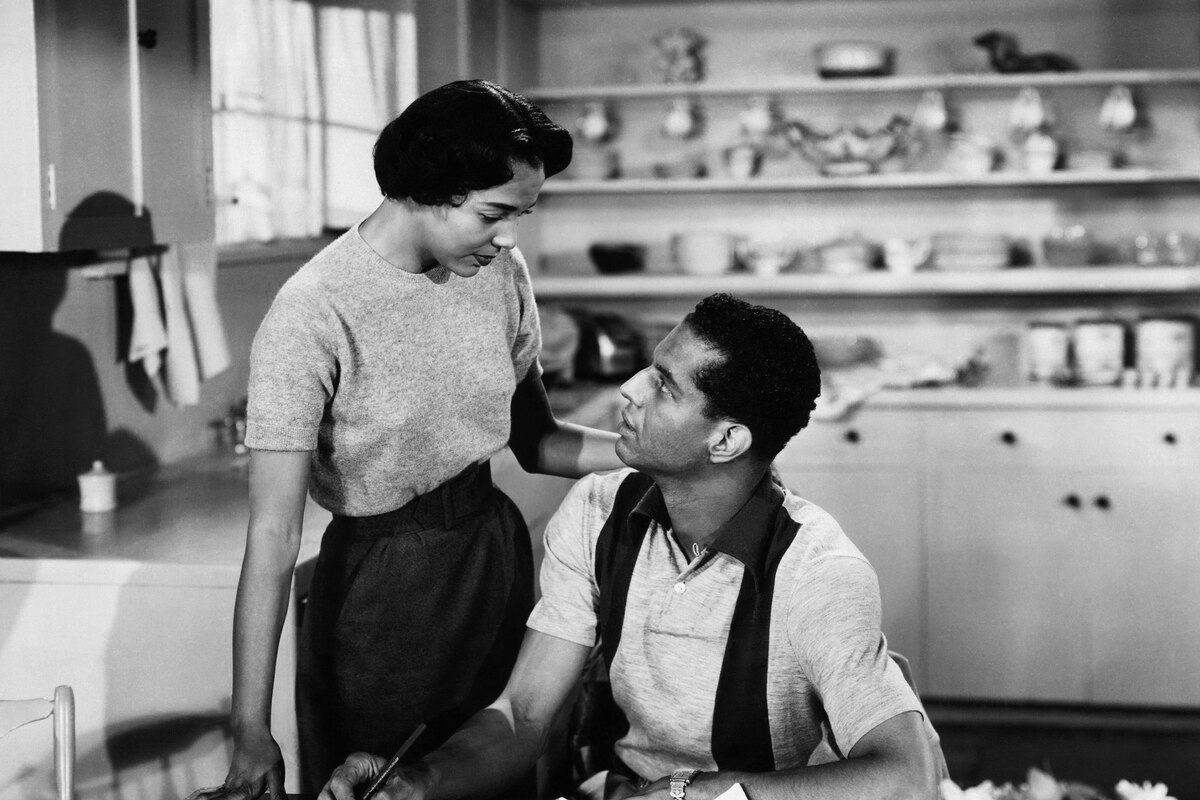
The chief interest in this cast, however, is Dorothy Dandridge, generally considered Hollywood's first African-American movie star. After more than a decade of uncredited bits, she broke through earlier this same year with her portrayal of the jungle queen in Tarzan's Peril (1951). Still just in her 20s, this was her second major role. Dandridge was cast in The Harlem Globetrotters either by producer Buddy Adler or director Phil Brown, depending on whose story you hear, and paid $500 a week for her work as Billy's sweetheart. A natural on screen, Dorothy also did much to bring out the best in non-actor Billy Brown, adding real warmth and sincerity to their scenes together. Writer-producer Al Palca later said he thought she was a bit embarrassed by the deluxe treatment given to her by Adler, who insisted she be dressed to the nines even though she was playing an ordinary middle-class girl. But her presence--and the star build-up afforded her--did much not only to advance her own career but to cast black actors in a new light. No longer a maid or entertainer or other background role, her "Ann Carpenter" in this film was beautiful, well-spoken, and intelligent.
The Harlem Globetrotters was a quiet landmark in many ways. Unlike the usual "problem" dramas associated with movies about African Americans made by major studios up to this point, this production for Columbia was treated like a mainstream entertainment, and even reviewers of the time noted how racial strife was not an issue in the story, which one critic said fostered "a good impression for the Negro race." Others noted it was "one of the finest sports pictures ever produced" and a "story of a great team with fine traditions."
The credit for getting such a subtle milestone onto the screen goes largely to Palca, a young writer-producer getting his first screen credit with The Harlem Globetrotters. Palca had seen the enthusiastic response of audiences to newsreel and documentary footage of the Globetrotters in action and decided the team would make a great basis for a fictionalized account of their success. "I'm an old lefty, and I thought I could do something to help the blacks," Palca recalled in a 1997 New York Times interview. "That mattered to me importantly. I could never write anything violent, I'm a softy in that regard, but politically I would do anything I could to help society, and as a Jewish fellow, I was for the underdog. I didn't have to do that story, but I liked that story. And I thought it had a basic commercial nut."
The idea of showcasing multi-dimensional aspects of African-American life was still very daring, but Columbia executives thought the story could draw sports fans as well as black audiences and gave it the go-ahead with a budget of either $250,000 or $400,000, depending on conflicting reports. It was shot over a period of less than two weeks by first-time director Phil Brown, with additional on-court footage shot in Milwaukee, Chicago, Scranton, and New York's Madison Square Garden, among other locations, under the direction of Will Jason. It wasn't exactly a blockbuster but did quite well at the box office and garnered highly favorable reviews.
Not convinced he had told the Globetrotters' story entirely to his satisfaction, Palca wrote and independently produced a prequel of sorts, on a $175,000 budget he had raised himself, recounting the formation of the team in the 1920s by the young Saperstein (played by Dane Clark). Go Man Go (1954) had an equally positive reception and has since become a classic among die-hard basketball fans, but it was not good news for Palca. In 1953, he was accused of being a Communist, and he had to take his name off the picture to find a distributor and pay back investors, including his father-in-law. Unlike other victims of the blacklist who were able to keep working at least occasionally through the use of "fronts" who put their names on the blacklisted artist's work, Palca's film career was finished. But in 1997, his name was finally restored to the picture by the Writers Guild of America.
Palca was not the only one involved in the production to run into career troubles. Director Phil Brown was also blacklisted shortly after The Harlem Globetrotters came out. He relocated his family to England where he continued directing and acting, a career he had begun with a featured role in I Wanted Wings (1941), Mitchell Leisen's military drama (with a similar formula of young recruits learning to be men). Brown, who died in 2006 at the age of 89, continued appearing in films up to 1999; one of his highest-profile later roles was as Luke Skywalker's uncle in Star Wars (1977).
The most tragic story, however, was that of Dorothy Dandridge. Her successes of the 1950s, including an Academy Award nomination as Best Actress (a first for a black performer) in Carmen Jones (1954), went very far toward breaking the race barrier in Hollywood, but as a black actress, she still had trouble finding work. Her last years were marked by problematic romantic relationships, dire financial woes, a stalled career, and alcoholism. She was found dead of a barbiturate overdose in her West Hollywood apartment in 1965, and was only 42 years old.
Directors: Phil Brown, Will Jason
Producers: Buddy Adler, Alfred Palca
Screenplay: Alfred Palca
Cinematography: Philip Tannura
Editing: James Sweeney
Art Direction: Cary Odell
Original Music: Arthur Morton
Cast: Thomas Gomez (Abe Saperstein), Dorothy Dandridge (Ann Carpenter), Bill Walker (Prof. Turner), Billy Brown (Billy Townsend), Angela Clarke (Sylvia Saperstein).
BW-78m.
by Rob Nixon
The Harlem Globetrotters
by Rob Nixon | March 14, 2012
SIGN UP FOR OUR NEWSLETTERS

CONNECT WITH TCM