Albert Brooks made his acting debut on television in the late 1960s and directed his first film
in 1976, a short called The Famous Comedians School, which aired on PBS. The same year, he
began making short films for the first season of Saturday Night Live. His feature film
directing career began with Real Life (1979), a take-off on cinema verite documentaries
like the 1973 PBS series An American Family, followed by Modern Romance (1981), a
comedy about a man in a difficult relationship and consumed by jealousy. Both films featured
Brooks in the lead role and established him as a creator of movies that derive their comedy from
very real characters and settings rather than exaggerated situations. The modest success of both
pictures enabled him to get backing for a new project that would be, in his words, a "realistic
and honest...modern love story in which marriage is depicted as an evolving process."
"I always loved the idea of making a life-long decision and finding out four days later that it
was wrong. You know, burning your bridges and then having to eat sh*t. Here was this successful
married couple who sell their house, buy a Winnebago, hit the road, lose everything in a week,
and realize they've made a mistake. So the concept was all about backing up and eating sh*t. We
all do it in little ways. I wanted to see it big." - Albert Brooks, explaining the genesis of
Lost in America in a 1999 Playboy interview
In the press kit for the film's release, Brooks explained that he was always attracted to the
notion of dropping out. "In or out of the system, people harbor the delusion that a new place, a
new job, will make everything better, that the solution to your life is just around the corner,"
he said. "Sometimes I think of opening a restaurant in Oregon, like a teacher of mine from
Carnegie Tech did. But mostly I think about fleeing to South America with all the money from this
production."
In a March 2012 interview with me for The Essentials, Brooks said that about two years after the
release of his previous picture, Modern Romance, he started working on the ideas
mentioned above to create a comedy that played on the notion of a 1960s Easy Rider (1969)
generation, now settled down and part of the mainstream but still entertaining the notion of
dropping out, "changing their entire lives when they should have just taken a two-week
vacation."
Brooks explained that he had a deal with ABC Motion Pictures to write a script for production.
The company was active briefly in the 1980s with such releases as Silkwood (1983) and
Prizzi's Honor (1985), but by the time he was finished with the script, the company was no
longer in the business of financing movies, so he had to look for other backing. He found it with
music mogul David Geffen, who had recently made a successful entry into motion pictures with
Personal Best (1982) and Risky Business (1983). Geffen had a long relationship
with Brooks, having produced Brooks's 1974 comedy album "A Star Is Bought."
Brooks collaborated with his frequent writing partner, Monica Mcgowan Johnson, on the script. The
two had also worked together on Real Life (along with Harry Shearer) and Modern
Romance. Brooks told TCM he and Johnson had a great work process. His method of developing a
script was to act out the movie into a tape recorder with Johnson present. "She was a great
audience, a great idea person, someone who knew how to throw things into the mix at just the
right moment," he said, comparing the working relationship to "a good talk show segment" with the
right amount of give-and-take. Her ability to just listen when he was on a roll or jump in to get
him on track was exactly what he needed. "It's hard in life to find someone I feel comfortable
doing that with."
The two writers sometimes worked on the script for Lost in America while driving in a car,
which Brooks said was a perfect place for the movie's subject and settings. After the story was
spoken into the recorder, it was transcribed, then shaped and reworked on paper.
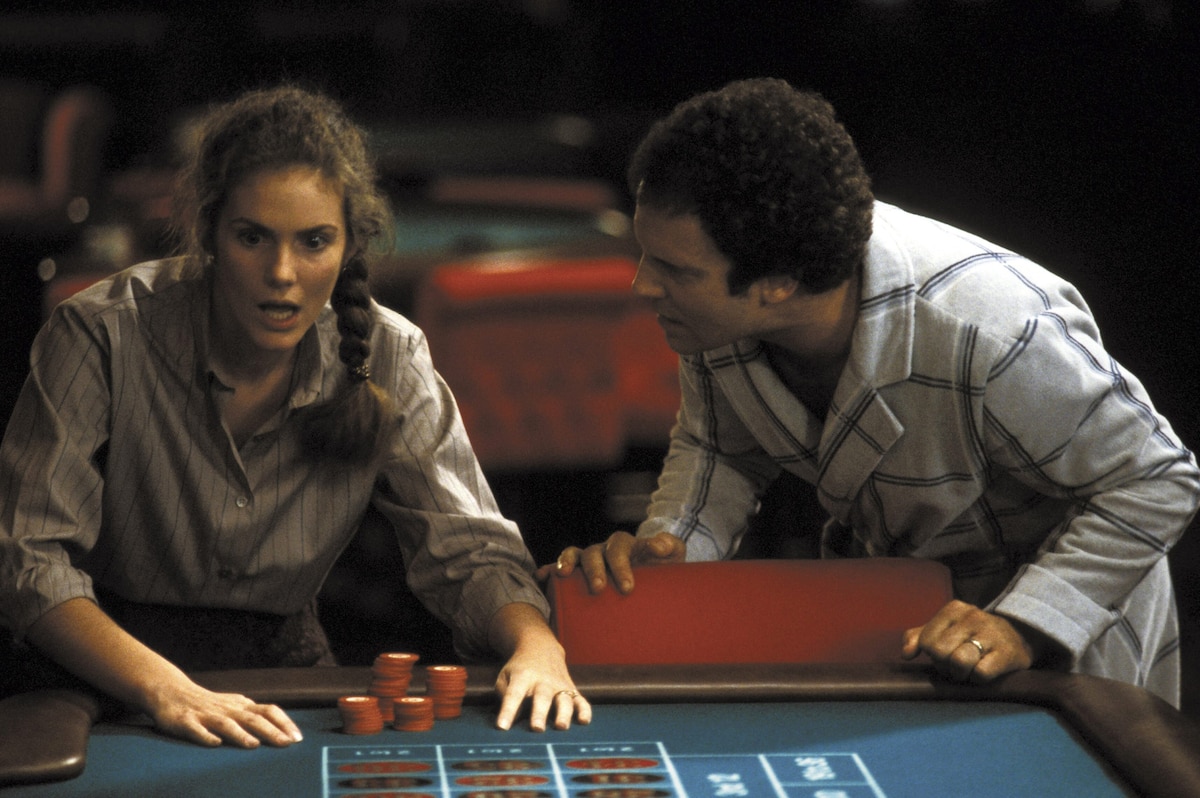
Brooks said a little bit of the character of Linda Howard came from Monica Mcgowan Johnson, who
actually did enjoy gambling.
Brooks told TCM that the idea of Linda losing all the money in one night in Vegas was in the
script from the very beginning, and that he never second-guessed whether it was best to put the
character in that position or whether the audience would question it. "She was so blocked, so
stifled, so needing this huge amount of fun," he explained.
by Rob Nixon
The Big Idea - Lost In America
by Rob Nixon | December 30, 2011
SIGN UP FOR OUR NEWSLETTERS

CONNECT WITH TCM