The Time of the Cuckoo was written by Arthur Laurents for Shirley Booth but despite the lead character being a woman, was based on Laurents himself and his time in Venice. In his own words, from his memoir, Original Story, "the central character, a woman, is based on me. Not on what I did during those six days - except for the sightseeing - but on what was going on inside me. I realized that as I wrote the play."
Shirley Booth had been persuaded by Katharine Hepburn herself that a film version of the play would not work but later the actress asked Booth for her permission to do the film. Why Hepburn changed her mind about a movie version of the play was easy to answer in two words: David Lean. Hepburn later wrote, "They called me and said that David Lean was going to direct it. Would I be ... They didn't need to finish that sentence. I certainly would be interested in anything that David Lean was going to direct." Despite winning an Oscar® for Come Back, Little Sheba (1952), Shirley Booth didn't carry the same box office clout as Katharine Hepburn and, besides, the producers felt she was too old for the part, a part she had originated only a year earlier and for which she was awarded a Tony. Nonetheless, Hepburn won the part and David Lean couldn't have been happier.
"David Lean was morose, cold, detached; much more interested in Katharine Hepburn than in The Time of the Cuckoo," wrote Arthur Laurents. Laurents went to London in December, 1954 to meet with Lean and producers Alexander Korda and Ilya Lopert about the screenplay for the filmed version. The first thing to go was the title. "What was that damn fool author thinking of? Not the public," Korda said, just as Laurents entered the room at the hotel where they were doing the prep work. Of course, what the author had been thinking was outlined on the first page of the play: "The cuckoo is a summer visitant to the whole of Europe. It proclaims its arrival by a cry heralding the season of love." Lean agreed with Korda that most people wouldn't know that and since movies don't have programs handed out to attending audience members, the title would be confusing and meaningless. Lopert suggested the title Summertime. It stuck, for American and European distribution, at least. In England, where John Woolf would be in charge of distribution, it was feared that the title would be confused for a production of George Gershwin's Porgy and Bess, it's most popular song being titled Summertime. The decision was made to name it Summer Madness for British distribution.
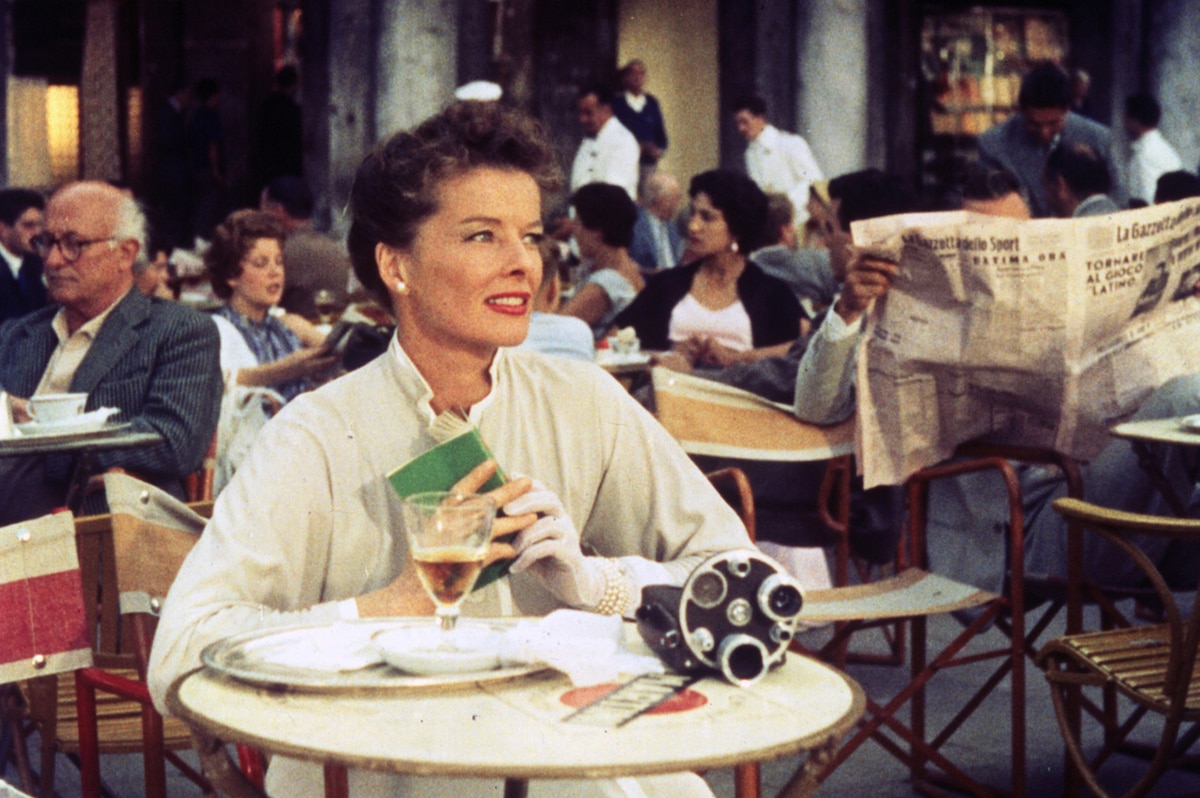
The decision to film entirely in Venice was made early on as well. "I am not afraid of spending big money on big pictures," Korda said about the budget for Summertime. Director Lean and star Hepburn were given whatever it took to get the right look and feel and the latitude they took was too much for the original author to handle. His screenplay was almost entirely scrapped in favor of one written by H.E. Bates at the behest of Lean. Even that screenplay quickly saw itself diminished by the input of Lean and Hepburn. Laurents lamented many of the changes, including the names and appearances of the characters. "The name of a character is very important to me. I go through endless candidates, searching for the one name that is the character, that suggests the character to a stranger." Among many other changes, the lead character's name was changed from "Leona Samish" to "Jane Hudson." Very unhappy with the final product, Laurents wrote, "The screenplay was credited to H. E. Bates, a first-rate English novelist; it should have been credited to K. Hepburn and D. Lean, true believers that stars can do anything they want, even write. In this aspect of the movie business, they were unoriginal." The end result of Summertime, and its box-office and critical success, would suggest that Laurents' opinions were firmly in the minority.
By Greg Ferrara
The Big Idea - Summertime
by Greg Ferrara | May 02, 2012
SIGN UP FOR OUR NEWSLETTERS

CONNECT WITH TCM