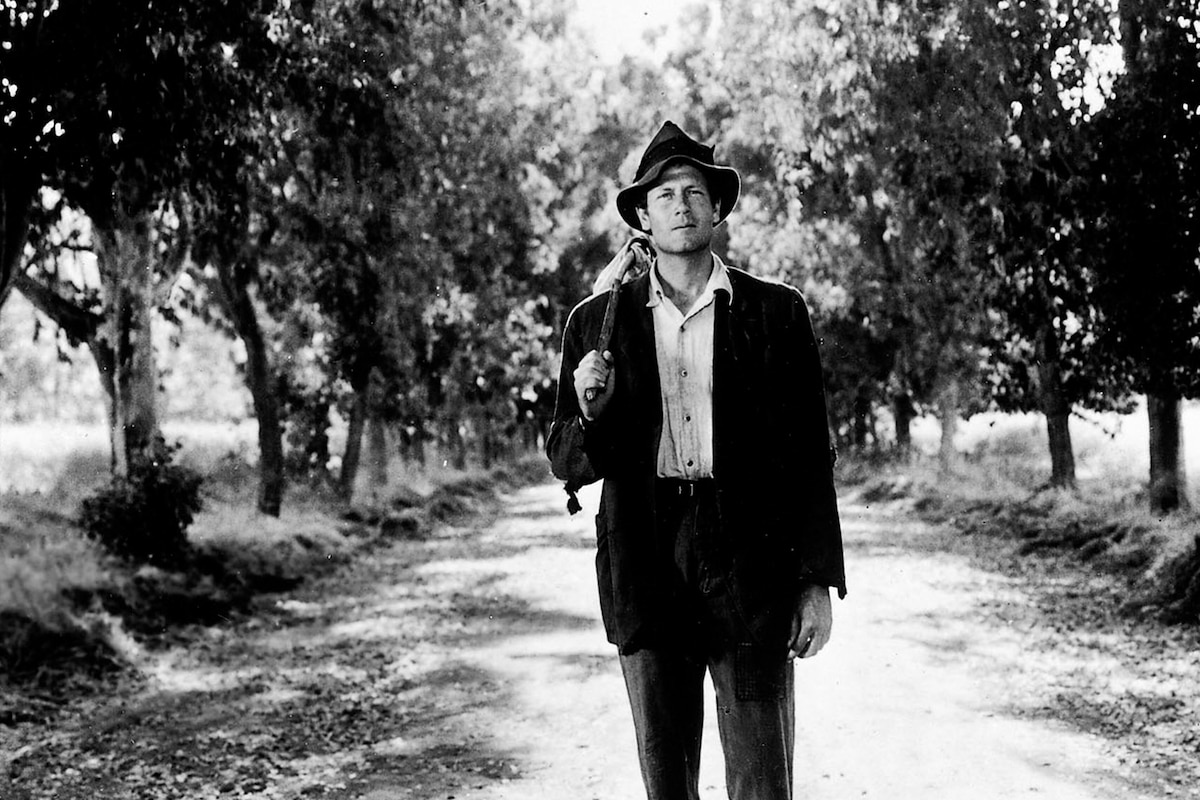
The part of John L. Sullivan was written for Joel McCrea, and it fit him to a tee. The experience of making Sullivan's Travels was a good one for him, and he credited Sturges with instilling confidence and treating him as if he were a bigger star than Gable. "I have to say the money I got for it was unnecessary," McCrea said later in life. "I don't know any other director where I had so much fun. I really felt like I'd do it for nothing."
The behind-the-camera team was equally impressed with the director and happy to work with him. For future director Anthony Mann, who was Sturges' assistant at the time, it was an education. "I'd stage a scene and he'd tell me how lousy it was," Mann said. "Then I watched the editing, and I was able to gradually build up knowledge. Preston insisted I make a film as soon as possible. He said it's better to have done something bad than to have done nothing."
Cinematographer John Seitz admired Sturges' unconventional approach to his work. The opening scene - Sullivan screens a socially conscious drama for his studio bosses and pleads his case to make "O Brother, Where Art Thou" - comprised ten pages of dialogue to cover about four and a half minutes of screen time. It was scheduled for two complete days of shooting. On the morning of the first day, Seitz found Sturges inspecting the set with a viewfinder, looking for where he could cut the scene and change camera set-ups. Seitz dared him to do it all in one take. Never one to refuse a dare, Sturges took him up on it, although the nervous Seitz had never attempted to complete a two-day work schedule in one day. With the endorsement of McCrea and the rest of the actors, Sturges pressed on, determined to set a record. The first take was fine, but the camera wobbled a little in the tracking shot following the men from screening room to office, so they tried again. They did two or three takes at the most and that was it - two full days work by 11 a.m. on the first day, a feat that had the entire studio buzzing.
On the down side, it wasn't all roses with the leading lady of Sullivan's Travels. Sturges wanted Veronica Lake from the very beginning after admiring her work in I Wanted Wings (1941). Studio brass thought Lake was wrong for the part and suggested a number of other actresses, including Ida Lupino, Lucille Ball, Frances Farmer, and Ruby Keeler. Sturges got Lake - but it was a mixed blessing. She proved her reputation for being difficult. "She wouldn't know her lines," McCrea later said. "This great dialogue and we would go through about fifteen takes while she was learning her lines. Then by the time she got it great, I was just going through the lines, kind of pooped out and tired. She was very unprofessional."
Lake pulled another unprofessional stunt that sent Sturges into a fury. He had heard a rumor before filming started that she might be pregnant. He asked her to be straight with him: "This is going to be a tough film, Ronni. I'd never want to see a pregnant gal do it." Lake denied the rumor and the filming began. Soon all the grueling location work and the physical demands of the role began to wear her out. She was, in fact, six months pregnant at the start of the shoot and she finally confessed when it became impossible to hide. Viewing the film, it's not hard to spot her condition, even hidden beneath the gowns and the floppy bum's outfits which were designed especially for her by Edith Head. The problems that drove the film over schedule and over budget have been largely attributed to Lake by most people involved in the production. But her performance is very good, possibly one of her best, but as McCrea said, "[Sturges] worked like the devil for it."
by Rob Nixon
Behind the Camera - Sullivan's Travels
by Rob Nixon | December 30, 2011
SIGN UP FOR OUR NEWSLETTERS

CONNECT WITH TCM