Like John Huston, who made the
transition from screenwriter to director at roughly the same time, Preston Sturges was one of the first
of the sound-era screenwriters to direct his own material. His films never lost the qualities that
made his screenplays for others so distinctive Ð fast-paced, witty dialogue alternating with scenes of
frenetic physical comedy, and narrative experimentation, conjoining styles, themes and cinematic
elements.
"The man was a brilliant writer," Joel McCrea observed looking back. "He wrote
dialogue I could just look at once and do." Co-star William Demarest agreed that an actor could learn
Sturges' dialogue faster than anybody's.
The idea for the story, Sturges said, was the result
of "an urge to tell some of my fellow filmwrights that they were getting a little too deep-dish and to
leave the preaching to the preachers....Sullivan's Travels could really have been a little
pamphlet sent around privately. Maybe it should have been."
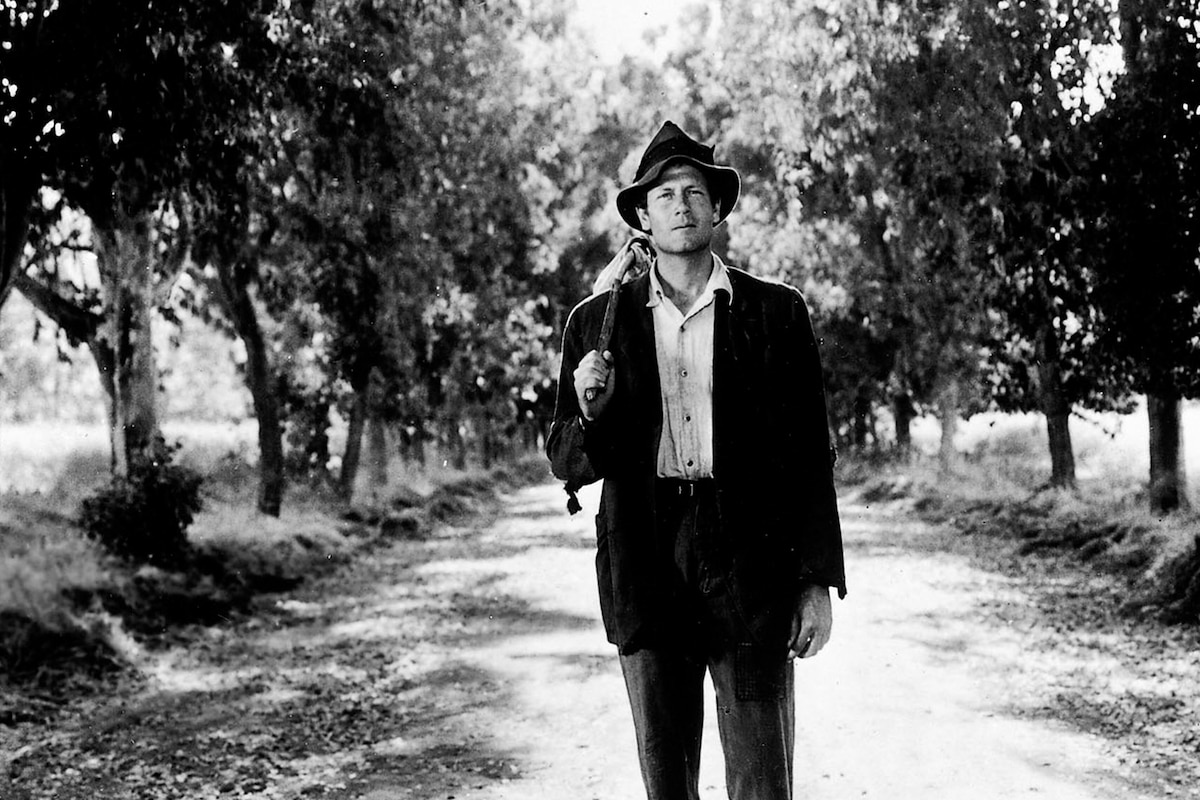
Sturges wrote the script for
Sullivan's Travels with one actor in mind: Joel McCrea. He liked the actor's low-key,
no-nonsense sincerity exhibited in movies for such directors as DeMille, Wyler, LaCava, Vidor and
others. McCrea, with characteristic modesty, said he felt Sturges knew he was malleable, unlike stars
such as Cagney, whose strong personality dominated almost every one of his films. The actor and
director had met casually years earlier on the set of The Power and the Glory (1933), where
McCrea complimented Struges on his script for the film. They met again a few years later, and Sturges
told McCrea of his ambition to direct. "They never put it on the screen just the way I write it, the
way I would like to see it," McCrea said Sturges told him. Three years later, their paths crossed
again in the Paramount commissary. "I've written a script for you," Sturges said. "No one writes a
script for me," McCrea replied. "They write a script for Gary Cooper, and if they can't get him they
use me." But the actor took a look at the script and loved it. It was one which Sturges had insisted
"is all original with me, it's not taken from anything, it's all mine."
The writer-director
was not exaggerating. The central character in Sullivan's Travels was a very successful
writer-director, primarily of comedies (like Sturges), working for a studio where the director is king
(like Paramount), a personal friend of Ernst Lubitsch (a fellow Paramount director and briefly head of
production at the studio), and the sort of man who never had to experience the privations of poverty or
the backbreak of hard manual labor (whether they had money or not, Sturges' mother made sure she and
her son lived in high style). But while the script certainly drew on Sturges' experiences in
Hollywood, it was no autobiography. In fact, Sturges said later he didn't necessarily share Sullivan's
final conclusion that making people laugh through hard times was the best path for an artist...or even
a worthy one. "I don't believe that now [the remaining days of the Great Depression and the start of
World War II] is the time for comedies or tragedies or spy pictures or pictures without spies or
historical dramas or musicals or pictures without music," he explained. "I believe that now is the
time for all forms of art, and that now is always with us."
And he did not necessarily know
Sullivan would come to that conclusion. Like any good writing, it was a process of discovery for its
creator. When he started it, he said, he had no idea what Sullivan would find. Bit by bit, he stripped
everything from his protagonist - money, health, name, pride, liberty Ð until all that was left was his
ability to laugh. "The less he had of other things, the more important became laughter," Sturges said.
"So, as a purveyor of laughs, he regained the dignity of his profession and returned to Hollywood to
make laughter."
Once he got his basic set-up and inspiration Ð create a character, pose a
problem, follow the character through the problem to its logical end - he barreled along. There was
very little revision between first draft and what finally appeared on the screen. Not that he was
entirely satisfied with the completed product. "The ending wasn't right, but I didn't know how to
solve the problem, which was not only to show what Sullivan learned but also to tie up the love story,"
he said later. "It would have been very easy to make a big finish either way, but one would have
defeated the other. There was probably a way of doing it, but I didn't happen to come across it. It
might be profitable for a young director to look at Sullivan's Travels and try not to make the
same mistakes I did."
by Rob Nixon
The Big Idea - Sullivan's Travels
by Rob Nixon | December 30, 2011
SIGN UP FOR OUR NEWSLETTERS

CONNECT WITH TCM