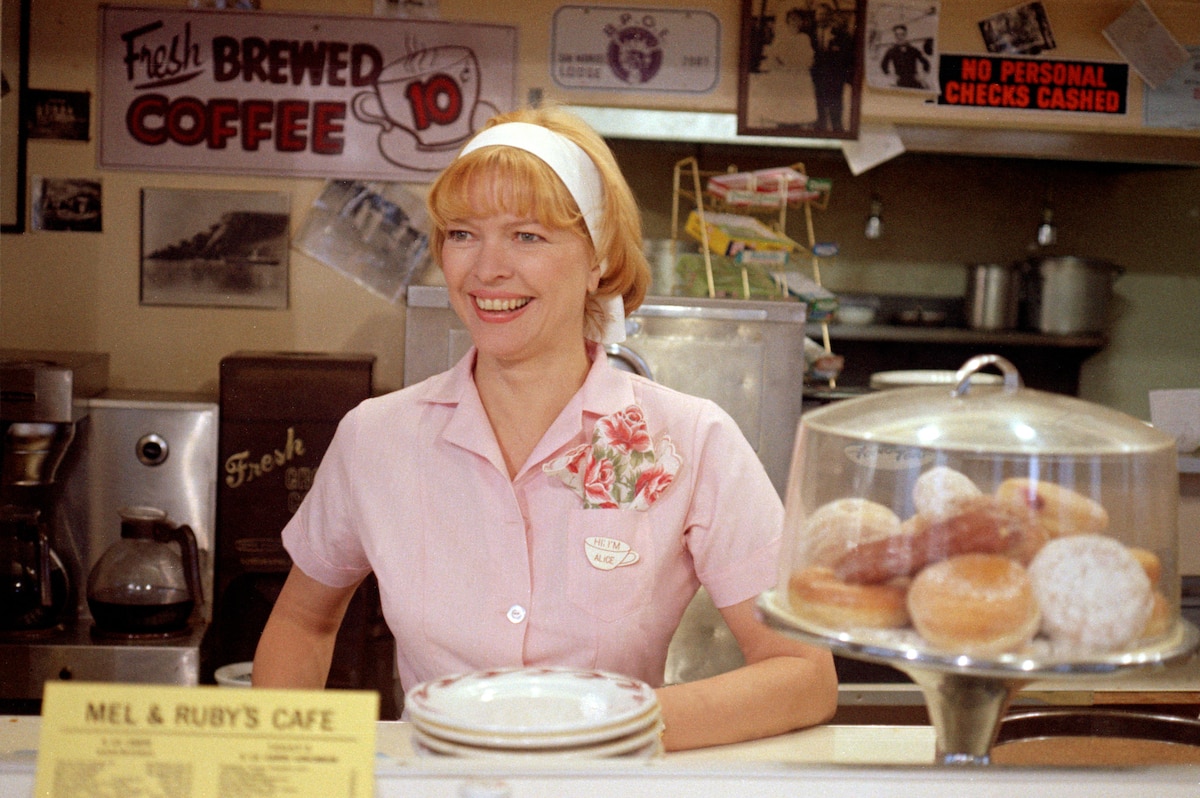
Alice Doesn't Live Here Anymore inspired the long-running TV sitcom Alice, with Linda Lavin as the title character.
The title was likely inspired by the old song "Annie Doesn't Live Here Anymore," originally recorded by Guy Lombardo and His Royal Canadians in 1933, with lyrics about a woman who tires of waiting for her suitor and leaves town with "a gentleman with a top hat." It was also recorded by Eartha Kitt, Marlene Dietrich, and others.
The 1933 song that inspired the title of this movie also inspired an episode of The Brady Bunch TV sitcom about the family's housekeeper, Alice, feeling the family no longer needed her. The episode, titled "Alice Doesn't Live Here Anymore," aired in October 1969, five years before this movie.
Johnny Doesn't Live Here Anymore (1944) is a comedy about a young woman who rents an apartment from a recently enlisted man who has given keys to several of his friends. It was based on a story by Alice Means Reeve.
A number of recent productions have played with variations on the title, including the Irish film Samuel Doesn't Live Here Anymore (2009) and the 1981 BBC comedy series Roger Doesn't Live Here Anymore starring Jonathan Pryce.
The title has been used as episode titles for a number of TV shows, with "Alice" replaced by the names of characters from the series, including Family Ties, Kate & Allie, The Simpsons, Roseanne, and Married with Children.
It has been noted that one can spot the highly stylized, studio-bound look of Martin Scorsese's New York, New York (1977) in the opening segment of Alice Doesn't Live Here Anymore.
The opening sequence of Alice as a little girl in Monterey deliberately called to mind old movies Scorsese knew well, most notably The Wizard of Oz (1939), Gone with the Wind (1939), Duel in the Sun (1946), and Invaders from Mars (1953).
Alice Doesn't: Feminism, Semiotics, Cinema (Indian University Press, 1984) is the title of a book by film theorist Teresa de Lauretis.
In an NBC news special entitled "Women and Men," footage from Alice was juxtaposed with footage from the Doris Day film My Dream Is Yours (1949), in which she plays a single mother struggling to make it as a singer. Interestingly, Martin Scorsese has cited the older film as a major influence on his musical New York, New York.
Shortly after Alice Doesn't Live Here Anymore came out, the National Organization for Women organized a one-day work strike called "Alice Doesn't Day" to raise awareness of the importance of women in the workplace.
Scorsese said in an interview he thought making Alice would be a way to try making a woman's picture much like a Bette Davis or Joan Crawford vehicle. Indeed, the opening credits, in cursive font against a draped blue satin background with Alice Faye singing "You'll Never Know," look very much like the opening of one of those movies, or a 1950s Technicolor melodrama by someone like Douglas Sirk.
Robert Getchell turned his script into a novel, published in 1975, that greatly expands the story, giving a much fuller picture of Alice's life prior to her husband's death, including their courtship and marriage. It also more fully details her relationship with her son.
by Rob Nixon
Pop Culture 101 - Alice Doesn't Live Here Anymore
by Rob Nixon | December 30, 2011
SIGN UP FOR OUR NEWSLETTERS

CONNECT WITH TCM