Filming Diabolique took a lot longer than expected. The shoot was originally scheduled for eight weeks but ran for sixteen. This caused tensions between Henri-Georges Clouzot and Simone Signoret to increasingly mount. "I knew that I was letting myself in for a hell of a time," Signoret said, "[but] I had no idea that it was going to be as wretched as it was for sixteen weeks."
Clouzot was convinced that Signoret was playing the character incorrectly because she, the actress, knew the ending of the movie and, thus, was giving away too much to the audience with her characterization. One day on the set, Clouzot said angrily, "I should have never let you read the end of the script!"
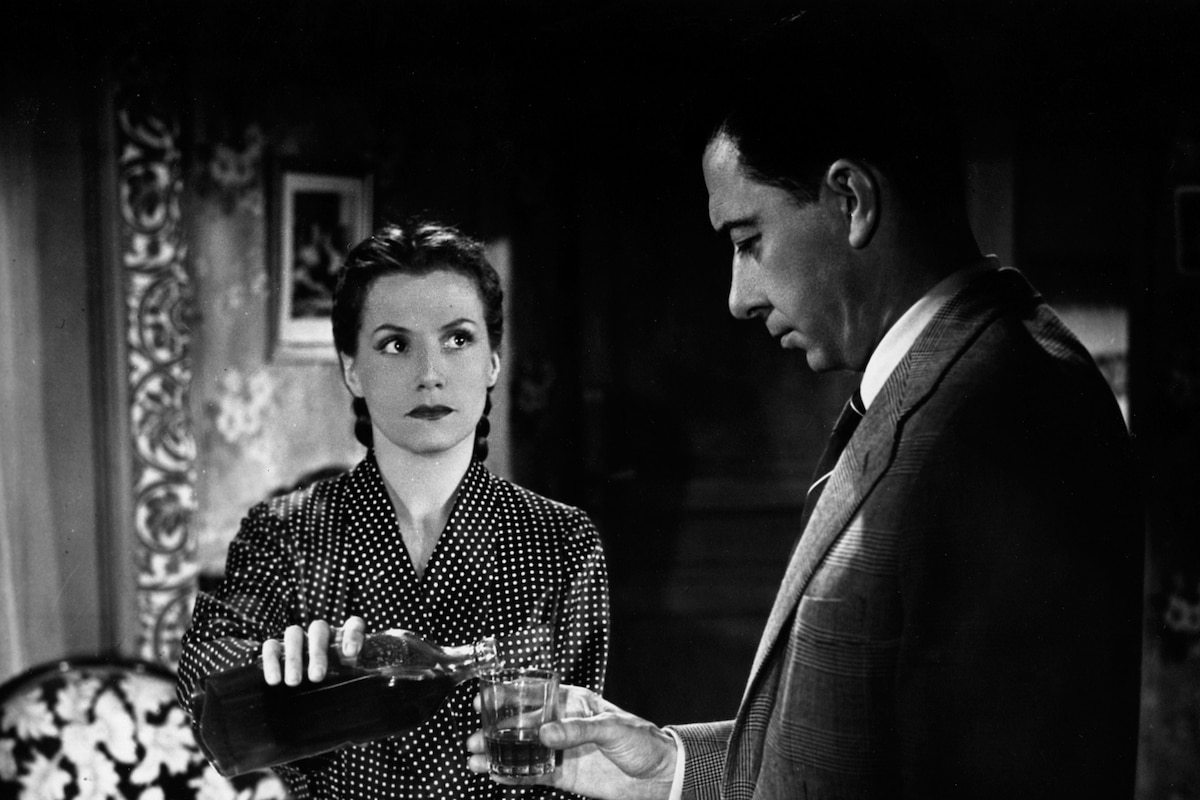
To make matters worse, Véra went up and down in spirits and when Henri and Simone would begin to fight, she would "arbitrate or pour oil on troubled waters, depending on the state she was in." The three of them, not unnoticed by observers on the set, mirrored the three characters of the movie, with Henri-Georges Clouzot standing in for Michel. In fact, in the movie, there is a scene where rotten fish is served because Michel is too cheap to replace it with fresh fish and refuses to let it go to waste. He forces Christina to eat it in front of everyone. The story goes, whether true or not has never been determined although it has been repeated by enough people involved in the production to point to its veracity, that Clouzot opted to serve spoiled fish so that he could get a genuine reaction of revulsion from his wife, Véra. On camera, Michel is ordering her to swallow the fish in front of everyone. Off camera, Clouzot was literally doing the same.
Some twelve weeks into the production, Signoret received notice that rehearsals had begun for a stage version of The Crucible in which she was starring. She had originally thought there would be no conflict since the Diabolique shoot was only supposed to go eight weeks and wrap a solid month before The Crucible rehearsals started. Clouzot would not rearrange the shooting schedule to accommodate her and she had to go straight from the set to rehearsals for the play, get a few hours of sleep in between (maybe) and start over again. As Signoret described it, "After a period of unbearable tension came a period of pure hell, and then the apocalypse..." As if that weren't enough, she hadn't read her contract closely before signing it and didn't realize she was to be paid for only eight weeks, regardless. After sixteen weeks and a wrap, she found out Clouzot was only going to pay her for the contractually obligated eight. She protested but the outcome didn't change. By the end of the shoot, according to Signoret, she, Véra and Henri were no longer on speaking terms. Paul Meurisse, her co-star, and director Jean Renoir, next door filming French Cancan (1954), were the only ones who made the shoot bearable for her.
After Clouzot wrapped the production and did the final editing, Diabolique made its way around Europe and across the ocean to America. It was a huge hit but despite its success, and a couple of awards for Best Foreign Film overseas, most notably The New York Film Critics Circle awards, Clouzot's reputation was not held in high regard by the influential critics of Cahiers du cinema, including Francois Truffaut and Jean-Luc Godard. They railed against old-guard filmmakers they felt played it safe. Of course, despite meticulously planning out his productions, Clouzot's films could hardly be accused of playing it safe. Terrence Rafferty had the final word on Clouzot when he wrote that Clouzot was, "an artist who, in his dedication to his own demons, his pitch-black vision of human nature, fulfilled at least some of the aesthetic criteria laid down by the Cahiers du cinema critics and nouvelle vague revolutionaries. It's a shame that they felt they had to get him out of the way."
by Greg Ferrara
Behind the Camera - Diabolique
by Greg Ferrara | December 30, 2011
SIGN UP FOR OUR NEWSLETTERS

CONNECT WITH TCM