When Alice Adams began shooting in the spring of 1935, the screenplay adaptation of Booth Tarkington's novel was still a work in progress. When the first draft by writer Jane Murfin was rejected, producer Pandro S. Berman brought in Mortimer Offner and Dorothy Yost to do an extensive rewrite. As a result, there were times during the production when new script pages were brought in on a daily last minute basis, keeping everyone on their toes.
Katharine Hepburn was happy to be surrounded by such a talented group of people both in front of and behind the camera for support. Still, Alice Adams belonged to Hepburn, and she was determined to make it as good as it could possibly be.
With much at stake, it was no surprise that Hepburn and director George Stevens often clashed over how she should play certain scenes. Hepburn's co-star Fred MacMurray once recalled, "I remember a scene on a porch; Kate was in a porch swing and I was sitting in a chair. Her concept of the scene was entirely different from George's," he said. "[Stevens] was quietly definite, and she was less quietly definite. Finally, he said, 'Let's shoot it.' We did it over and over, most of the morning, and we broke for lunch. We did it over. He said, 'It's not the way I want it.' After eighty takes, all day, at last she did it the way he wanted it."
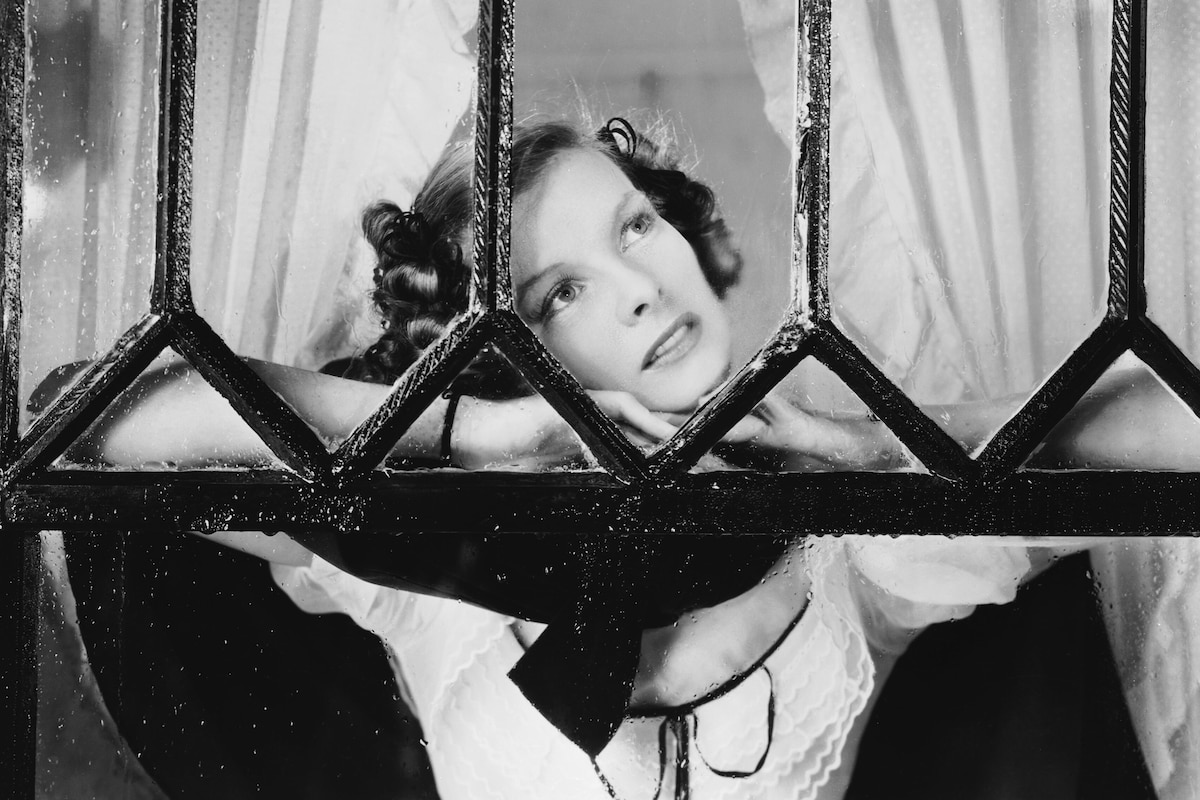
When they weren't butting heads over creative differences, Hepburn found that she liked George Stevens and began to trust his guidance. In her autobiography Me she acknowledged that he was a "brilliant" director and recalled how he helped her during an emotional scene in which Alice returns home from Mildred's society party at the beginning of the film. When she was having trouble crying, Stevens took her aside and deliberately shocked her by lashing out verbally. It was a calculated move designed to get the proper level of emotion out of her, and it worked. It was also Stevens' idea in the scene for Alice to enter her room slowly, gaze out the window and then dissolve into tears, creating one of the film's most poignant and memorable moments. It was an idea she called "excellent."
While the film version of Alice Adams followed Booth Tarkington's story relatively closely, there was one major change that the studio made: the ending. The novel's finale had Alice losing her suitor, getting a job and finally facing the grim reality that she would never be a part of high society. However, with Americans still in the sobering grip of The Great Depression, RKO felt that audiences would not want such a downbeat ending. As a result, the studio ordered a new "Hollywood Ending" in which Alice gets her man and presumably lives happily ever after.
The new implausible ending was something that critics made note of when the film opened in the late summer of 1935, but that didn't stop them from lavishing praise upon the beautifully realized production and Hepburn's remarkable performance.
by Andrea Passafiume
Behind the Camera - Alice Adams
by Andrea Passafiume | December 30, 2011
SIGN UP FOR OUR NEWSLETTERS

CONNECT WITH TCM